Plant Overview
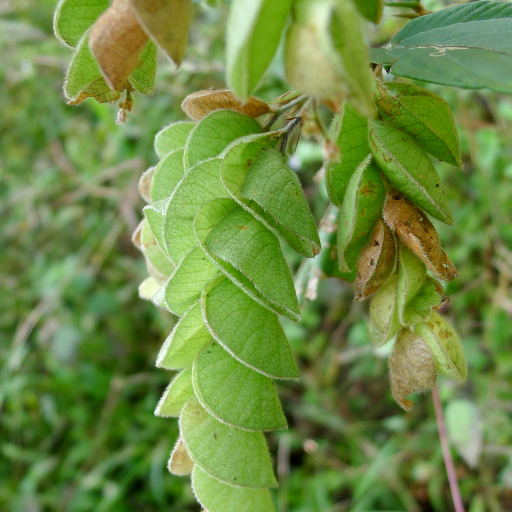
Often called Wild Hops or the Luck Plant, Flemingia strobilifera is a botanical curiosity that seems to be wearing a costume. Native to the tropical regions of South and Southeast Asia, this hardy shrub is famous for its unique, overlapping bracts that look remarkably like true hops used in brewing. In its native lands, it’s not just a pretty face—it’s a staple of traditional medicine and a symbol of resilience.
🔍 How to Identify
- 🌿 The "Hop" Bracts: The most striking feature is the zig-zagging clusters of kidney-shaped, papery bracts. These pale green (turning tawny brown) leaves fold over to hide the tiny, creamy-white flowers inside.
- 🍃 Leaf Texture: The actual foliage consists of simple, ovate leaves with a velvety underside and prominent veins that give the plant a lush, structural look.
- 🪵 Growth Habit: This is a perennial woody shrub that typically reaches 3 to 5 feet in height, branching out into a dense, bushy form if given enough space.
🏡 In Your Garden
- 💧 Humidity Lover: Coming from tropical climates, this plant thrives when the air is moist. If you live in a dry area, it appreciates being grouped with other plants to create a humid microclimate.
- ✂️ The "Leggy" Struggle: Without regular pruning, Wild Hops can become thin and spindly. Pinching back the tips early in the growing season encourages it to branch out, resulting in more of those iconic "hop" clusters.
- 🌞 Light Balance: While it loves the sun, intense afternoon heat can crisp the delicate papery bracts. It performs best in bright, dappled light or "filtered" sunshine.
⚠️ Safety & Toxicity
- 🟢 General Safety: Flemingia strobilifera is generally considered non-toxic to humans and is used in various traditional herbal remedies.
- 🐾 Pet Caution: While there are no widespread reports of toxicity to cats or dogs, it is always best to prevent pets from chewing on ornamental shrubs, as the fibrous material can cause mild stomach upset.
- 🧪 Medicinal Note: In folk medicine, the roots are sometimes used for sleep or pain relief, but you should never ingest any part of the plant without professional pharmacological guidance.
✨ Fun Fact
The species name strobilifera literally means "cone-bearing." Even though it isn't a conifer (like a pine tree), the way its bracts overlap so perfectly mimics the scales of a cone, a clever evolutionary trick to protect its delicate seeds from hungry insects!

Detailed Care Instructions
To grow Flemingia Strobilifera, follow these steps:
- Choose a suitable location: Flemingia Strobilifera prefers full sun to partial shade. Select a location with well-draining soil.
- Obtain seeds or seedlings: You can purchase seeds or young plants from a local nursery or online. If using seeds, soak them in warm water overnight before sowing.
- Prepare the soil: Dig the soil to loosen it and remove any weeds or debris. Flemingia Strobilifera can grow in a variety of soil types, but it thrives best in well-draining, slightly acidic soil.
- Plant the seeds or seedlings: If using seeds, sow them about 1 inch deep and 6 to 8 inches apart. If using seedlings, dig holes wide and deep enough to accommodate the roots. Place each seedling in a hole and cover it with soil, firming it gently around the base.
- Water properly: Keep the soil consistently moist but not soggy, especially during the early stages of growth. Water the plants regularly, especially during dry periods.
- Mulch the plants: Spread a layer of organic mulch around the base of the plants to help retain moisture and suppress weed growth.
- Support the plants: Flemingia Strobilifera tends to have sprawling branches. Consider providing support like stakes or a trellis to keep the plant upright.
- Prune regularly: Flemingia Strobilifera can benefit from regular pruning to maintain a neat shape and encourage bushier growth. Prune back any dead or damaged branches and shape the plant as desired.
- Fertilize as needed: Apply a balanced, slow-release fertilizer in spring and early summer to promote healthy growth. Follow the instructions on the fertilizer packaging for application rates.
- Monitor for pests and diseases: Keep an eye out for any signs of pests or diseases like aphids or leaf-spotting. Treat any issues promptly with appropriate organic pest control methods.
Remember that Flemingia Strobilifera is an invasive species in some regions, so it's important to check with local authorities or gardening experts to ensure it's safe and legal to grow in your area.

Place in a bright room that is sun drenched almost all day. Or directly in a south-facing window.

To water this plant, use a watering can or hose with a gentle flow of water. Allow the soil to slightly dry out between watering, but do not let it completely dry out. When watering, make sure to thoroughly soak the soil to ensure the roots receive enough moisture. Avoid getting water on the leaves as this can promote disease. Water the plant more frequently during hot and dry weather.
To fertilize this plant, use a balanced, water-soluble fertilizer. Dilute the fertilizer to half strength and apply every two weeks during the growing season. In the winter, reduce the frequency to once per month. Be careful not to over-fertilize as this can damage the roots of the plant. Always make sure the soil is moist before applying fertilizer.
For optimal growth and health, the ideal soil for this particular plant should be well-draining and nutrient-rich. A pH level between 6.0 and 7.5 would be best. It is also important that the soil is not compacted, as this can impede root growth and oxygen uptake. A mixture of loam and organic matter such as compost can be used to achieve these conditions. The plant prefers a soil that retains some moisture, but not one that is constantly waterlogged. When growing in containers, it is recommended to use potting soil mixed with perlite or vermiculite to improve drainage. Overall, ensuring proper soil conditions is essential for the successful growth and abundant flowering of this plant.
Propagation of this plant can be done through various methods such as seed propagation, cutting propagation, layering, and division. Seed propagation is the easiest way to grow this plant, and the seeds can be collected from the pods that develop after blooming. These seeds can be sown directly in well-draining soil and covered lightly with soil. The soil should be kept moist, and the seedlings will start to emerge in about 2-3 weeks.
Cutting propagation involves taking cuttings from the parent plant and rooting them in a rooting hormone. The stems should be about 5-6 inches long and should have a few nodes. The cuttings can be placed in a well-draining potting mix and kept moist until roots start to form in about 2-3 weeks.
Layering is another method that involves bending a low branch of the plant and burying it in the soil while it is still attached to the parent plant. Roots will form from the buried part, and once it has enough roots, it can be separated from the parent plant to create a new plant.
Division is done by separating the parent plant into smaller portions, making sure each portion has enough roots to survive independently. These divisions can be replanted in new pots or directly in the ground.
Overall, Flemingia Strobilifera is a fairly easy plant to propagate and grow, and it can be quite rewarding to watch it grow and flourish from your own efforts.








