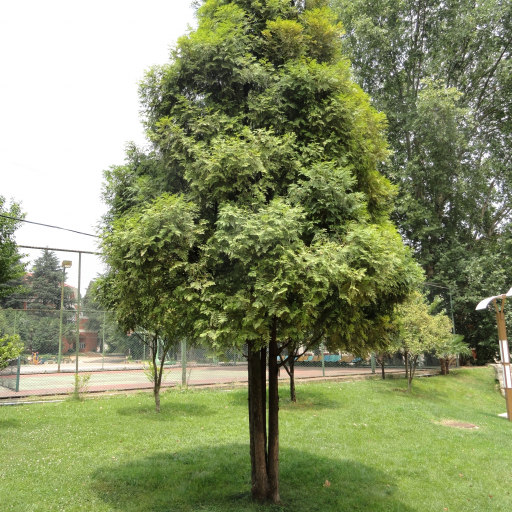
Plant Overview
Known as the Fujian Cypress, this elegant evergreen is a botanical bridge between the giant redwoods and common garden conifers. Native to the misty mountain ridges of China, Vietnam, and Laos, it is often called "Hodgins' Cypress" after the sea captain who first introduced it to the West. It carries an aura of ancient serenity, making it a prized choice for high-end landscape design and bonsai masters alike.
🔍 How to Identify
- 🍃 Frond-like Foliage: The leaves are arranged in distinctive, flattened sprays that fan out like a fern. They have a "jointed" appearance that looks almost like a green skeleton.
- ⚪ Silver Markings: The underside of each leaf spray features striking white stomatal bands, giving the tree a shimmering, silvery glow when caught in the wind.
- 🪵 Exfoliating Bark: As the tree matures, its bark turns a soft grey-brown and begins to peel away in long, thin vertical strips, adding beautiful texture to the trunk.
🏡 In Your Garden
- ☁️ The Humidity Factor: Unlike many hardy junipers, the Fujian Cypress craves atmospheric moisture. It thrives in "cloud forest" conditions; if you live in a dry climate, frequent misting or a sheltered, humid corner of the garden is essential.
- ⛰️ Drainage Nuance: It is highly sensitive to "wet feet." In its natural habitat, it clings to mountain slopes where water moves quickly. Use a gritty, acidic soil mix to prevent root rot while keeping the soil consistently moist but never soggy.
⚠️ Safety & Toxicity
- 🌿 Low Toxicity: The Fujian Cypress is generally considered non-toxic to humans, cats, and dogs. It does not produce the harmful berries or highly toxic alkaloids found in some other evergreens like Yew.
- 🧴 Slight Irritant: The aromatic oils and resins found in the foliage and wood can occasionally cause mild skin redness or a "prickly" sensation for those with sensitive skin. Wearing gloves while pruning is recommended.
✨ Fun Fact
The wood of the Fokienia is so naturally rot-resistant and fragrant that it was historically considered the "Gold Standard" for building palaces and high-end incense in Southeast Asia. Because it is so rare now, it is often referred to as "Green Gold" in its native regions.

Detailed Care Instructions
To grow Fokienia hodginsii, also known as Fujian cypress, follow these steps:
- Climate: This plant thrives in a warm, subtropical climate. It prefers temperatures between 60-85°F (15-29°C) and high humidity levels. Ensure that your location can provide these conditions.
- Soil: Use well-draining soil with a pH between 5.5 to 6.5. A mixture of organic compost, peat moss, and sand is suitable. Avoid heavy clay soils.
- Light: Provide partial shade to your Fokienia hodginsii plant. It can tolerate full sun in cooler climates, but intense direct sunlight may cause leaf burn. Place it in a location that receives bright, indirect light.
- Watering: Keep the soil consistently moist but not waterlogged. Avoid letting the soil dry out completely, as the plant prefers a more humid environment. Use a humidity tray or regularly mist the foliage to increase humidity levels.
- Fertilization: Use a balanced, slow-release fertilizer during the growing season (spring to fall). Follow the manufacturer's instructions for application rates. Avoid fertilizing during winter.
- Pruning: Trim any dead, damaged, or weak branches to maintain a healthy shape. You can also lightly prune to encourage bushier growth.
- Repotting: Fokienia hodginsii grows well in containers. Repot every 2-3 years or when the plant outgrows its current pot. Use a slightly larger pot with fresh potting soil.
- Pests and diseases: Monitor the plant for pests like aphids, spider mites, and scale insects. Treat infestations immediately using organic or chemical insecticides. Ensure good air circulation to prevent disease issues.
- Propagation: Fokienia hodginsii can be propagated from seeds or cuttings. Seeds take a long time to germinate, so using cuttings is a quicker option. Take 4-6 inch (10-15cm) long stem cuttings from healthy plants during spring or summer. Dip the cut end in rooting hormone, plant it in a well-draining medium, and keep it moist until roots develop.
Remember that Fokienia hodginsii is a slow-growing tree, and it may take several years to reach significant size. Patience is key when growing this plant.

Place in a bright room that is sun drenched almost all day. Or directly in a south-facing window.

Fokienia Hodginsii plant is a type of plant that typically prefers a consistently moist soil but not one that is waterlogged or too wet. Careful attention should be taken not to overwater this plant as it can lead to root rot and other issues. The best way to water this plant is to thoroughly moisten the soil when the top layer feels dry to the touch. This can be done by slowly pouring water onto the soil and allowing it to soak in before adding more. It is important not to let the plant sit in standing water as this can cause damage to the roots. Additionally, it is recommended to avoid getting water on the leaves or foliage as this can lead to fungal growth and other issues. Overall, consistent and thorough watering is key to ensuring healthy growth and development for this plant.
- Prepare a balanced fertilizer with equal amounts of nitrogen, phosphorus, and potassium.
- Apply the fertilizer during the growing season, which is typically from spring to early autumn.
- Dilute the fertilizer with water according to the manufacturer's instructions.
- Apply the fertilizer around the base of the plant, avoiding contact with the leaves and stem.
- Water the plant immediately after fertilization to help the nutrients reach the roots.
- Avoid over-fertilizing the plant, as this can cause damage to the roots and leaves.
The best type of soil to use for the Fokienia Hodginsii plant is a well-draining soil that is rich in organic matter. The soil should be pH-neutral to slightly acidic, with a pH range of 5.5 to 7.0. The ideal soil mixture should consist of a combination of peat moss, perlite, and pine bark, along with a slow-release fertilizer. This plant requires moist but well-drained soil that should not be allowed to dry out completely. Additionally, the soil should be avoided from having a high salt content, as it can be sensitive to salt and may damage the roots. Overall, it is recommended to use a soil mixture that mimics the plant's natural growing environment, which includes ample drainage and aeration for healthy and vigorous growth.
To propagate this plant, you can begin by taking a semi-hardwood cutting from the parent plant. Choose a branch that has not yet become woody, but has begun to harden. Cut the branch at an angle, ensuring that the cutting is at least 6 inches long with 2-3 pairs of leaves.
Remove the lower set of leaves and dip the cut end in rooting hormone powder. Make a hole in a potting mix and insert the cutting into it. Mist the cutting and cover the pot with a plastic bag to create a greenhouse-like environment. Keep the pot in a location with bright, indirect sunlight.
Check the soil frequently to ensure it remains moist, but not waterlogged. After approximately 6-8 weeks, check the cutting for root development. If the cutting has developed roots, it is ready to be transplanted into a larger pot or outdoors into a well-draining soil.
With proper care and maintenance, the propagated plant should grow into a healthy, mature plant that can eventually be propagated again using the same method.








