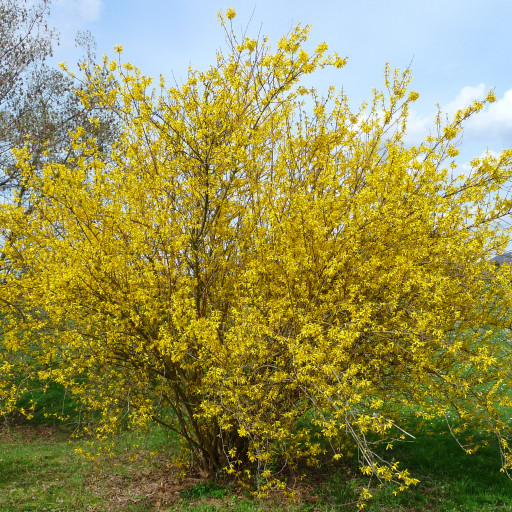
Plant Overview
Often called the "Golden Bell," the Forsythia X Intermedia is the ultimate herald of spring. Before most trees have even thought about waking up, this hardy hybrid shrub explodes into a fountain of neon yellow, signaling the end of winter for gardeners across the globe. It is a tough, fast-growing classic that bridges the gap between the grey of February and the lush green of April.
🔍 How to Identify
- 🌼 Vibrant Flowers: Clusters of bell-shaped, four-petaled yellow blossoms that smother the entire length of the branches before any leaves appear.
- 🌿 Serrated Foliage: Simple, dark green ovate leaves with "toothed" edges that emerge only after the flowers have begun to fade.
- 🪵 Lenticelled Stems: The arching branches are brownish-grey and covered in small, corky bumps called lenticels, which help the plant breathe.
🏡 In Your Garden
- ✂️ The Pruning Window: Because this plant sets its flower buds in the summer for the following year, you must prune it immediately after the spring flowers fade. If you prune in winter, you are accidentally cutting off your spring show!
- ☀️ Sun for Strength: While it is a "survivor" that tolerates partial shade, it needs at least six hours of direct sunlight to produce the dense, carpet-like flowering it is famous for.
- 🛡️ Living Privacy: Due to its rapid growth and arching habit, it makes an excellent "living fence." It is particularly resistant to deer, who usually find the taste unappealing compared to other garden shrubs.
⚠️ Safety & Toxicity
- ✅ Non-Toxic Status: Forsythia is generally considered non-toxic to humans, cats, and dogs. It is one of the "safest" ornamental shrubs for family backyards.
- 👅 Mild Irritation: While not poisonous, the plant contains saponins. If a curious pet or toddler eats a large amount of the foliage, they might experience a mild stomach ache or nausea, but serious reactions are extremely rare.
✨ Fun Fact
🎓 The Royal Name: The genus is named after William Forsyth, a Scottish botanist who was the head gardener for King George III and a founding member of the Royal Horticultural Society!

Detailed Care Instructions
To grow a Forsythia x Intermedia (also known as Forsythia or border forsythia), follow these steps:
- Choose the right location: Forsythias prefer full sun but can tolerate partial shade. They also prefer well-draining soil.
- Planting: Dig a hole that is twice as wide and as deep as the root ball of the plant. Place the plant into the hole, ensuring that the top of the root ball is level with or slightly above the ground. Backfill the hole with soil, firming it gently around the root ball.
- Watering: Water the plant thoroughly after planting and continue to water regularly, especially during dry spells. Make sure the soil is damp but not waterlogged.
- Mulching: Apply a layer of organic mulch, such as wood chips or bark, around the base of the plant. This helps to retain moisture, suppress weed growth, and insulate the roots during extreme temperatures.
- Pruning: After the plant has finished flowering in spring, you can prune it to shape and remove any dead or damaged branches. This encourages a more compact growth habit and promotes flowering for the next season.
- Fertilizing: Apply a balanced fertilizer, such as a slow-release granular fertilizer, in spring before new growth appears.
- Pest and disease control: Forsythias are generally not prone to major pest or disease problems. However, watch out for aphids, gall mites, and leaf spot. If necessary, you can manage these issues with organic or chemical controls.
- Propagation: Forsythias can be propagated through softwood or hardwood cuttings. Softwood cuttings can be taken in late spring or early summer, while hardwood cuttings can be taken in late autumn or winter.
By following these steps, you should be able to successfully grow a Forsythia x Intermedia plant. Remember to regularly provide water, sun, and fertilizer to ensure healthy growth and vibrant blooms.

Place in a bright room that is sun drenched almost all day. Or directly in a south-facing window.

To properly water this plant, first assess the soil moisture by inserting a finger or moisture meter into the soil. If the soil is dry to the touch, water the plant thoroughly, making sure to saturate the soil and not just the surface. It is important to ensure that water does not pool around the base of the plant as this can lead to root rot. Instead, water slowly and deeply, allowing the water to permeate the soil. During hot and dry weather, the plant may require more frequent watering. It is also important to water the plant at the base, as watering from above can cause the flowers to become damaged and discolored.
Fertilizing instructions for the plant are as follows:
- Choose a balanced, slow-release granular fertilizer with an NPK ratio of 10-10-10 or similar.
- In early spring, just before the new growth starts, scatter the fertilizer evenly around the base of the plant.
- Avoid direct contact of fertilizers with the stems or foliage, as it may cause damage.
- Use the recommended amount of fertilizer as stated on the product label, typically based on the size of the plant or area covered.
- Gently work the fertilizer into the soil surface, using a gardening fork or rake, without causing damage to the plant's roots.
- Water the plant thoroughly after fertilizing to help the nutrients penetrate the soil and reach the roots.
- Repeat the fertilization process once or twice during the growing season, based on the specific product's instructions or the plant's needs.
- When fertilizing, take care not to over-fertilize, as it can burn the roots or promote excessive growth.
- Regularly monitor the plant's overall health and appearance to ensure it is receiving adequate nutrition from the fertilizer.
The ideal soil for the plant in question is one that is well-draining, rich in organic matter, and has a slightly acidic pH level. It should also be moist but not waterlogged, as excess moisture can lead to root rot. A good mix for planting the plant could include equal parts of peat moss, compost, and a well-draining soil such as sand or perlite. An occasional application of fertilizers rich in nitrogen can also help keep the plant healthy and promote growth.
Sure, here's a detailed explanation on how to propagate the Forsythia X Intermedia plant:
- Selecting a healthy stem: Choose a mature and healthy stem from an established Forsythia X Intermedia plant. Look for a stem that is flexible and free from any signs of disease or damage.
- Pruning the stem: Using clean and sharp pruning shears, cut a 5 to 6-inch (12 to 15 cm) long stem from the parent plant. Make a clean cut just below a node, which is where the leaves emerge from the stem.
- Removing lower leaves: Strip off the lower set of leaves from the stem, leaving around 2 to 3 sets of leaves at the top. This will ensure that energy goes into root development rather than maintaining unnecessary foliage.
- Preparing the cutting: If possible, dip the bottom end of the cutting into a rooting hormone powder or gel. While this step is optional, it can help accelerate the rooting process.
- Planting the cutting: Fill a small pot or container with a well-draining potting mix. Make a hole in the soil using a pencil or your finger, and gently place the cutting into the hole. Press the soil around the stem to ensure good contact.
- Watering and humidity: Give the cutting a thorough watering, making sure the soil is well-moistened but not waterlogged. To increase humidity around the cutting, you can cover the pot with a transparent plastic bag or place it in a propagator to create a mini greenhouse effect.
- Placement and care: Find a location with bright, indirect light for the cutting. Avoid placing it in direct sunlight to prevent scorching. Maintain consistent moisture in the soil, ensuring it doesn't dry out completely. However, be careful not to overwater and cause root rot.
- Root development: After a few weeks, gently tug on the cutting to check for resistance. If you feel resistance, it means the roots are developing. You can also check for root growth by looking for new leaves or signs of growth.
- Transplanting: Once the cutting has established roots, which may take a few months, it can be transplanted into a larger container or directly into the garden. Ensure it has well-draining soil and receives appropriate sunlight for its growth.
- Maintenance: Water the newly propagated plant regularly, keeping the soil moist but not waterlogged. Prune the plant in early spring to maintain its shape and remove any dead or damaged branches.
Remember that propagating plants can be a delicate process, so it requires patience and attention to detail. With proper care and nurturing, you should be able to successfully propagate your Forsythia X Intermedia plant. Best of luck!








