Plant Overview
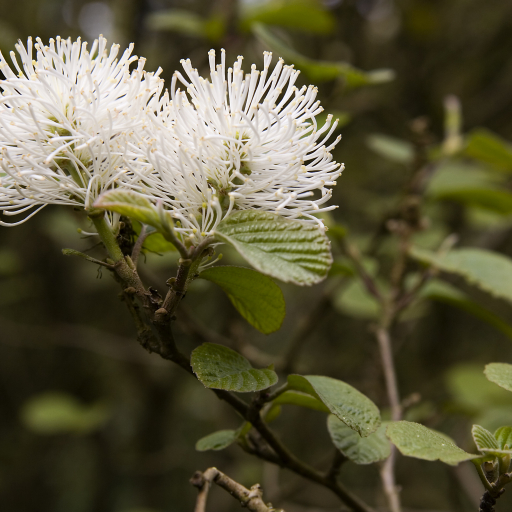
Known affectionately as the "Mountain Witch Alder," Fothergilla major is the show-stopping relative of the Witch Hazel family. Native to the woodland slopes of the Allegheny Mountains, it is famous for its "bottlebrush" flowers that smell like sweet honey and a fall foliage display that rivals any maple tree. It’s a multi-seasonal workhorse that brings a touch of wild Appalachian magic to any backyard.
🔍 How to Identify
- ☁️ The Bloom: In mid-spring, before the leaves fully emerge, it produces upright, 2-to-3-inch spikes of creamy white flowers. Look closely: these "brushes" have no petals at all; they are actually clusters of long, showy stamens.
- 🍃 The Foliage: The leaves are thick, leathery, and broadly oval with wavy edges. They are a cool blue-green in the summer, but turn spectacular shades of electric orange, fiery red, and deep purple in autumn.
- 🌿 The Structure: It grows as a slow-moving, rounded shrub with a somewhat "zig-zag" branching pattern. It typically reaches a height of 6 to 10 feet if left unpruned.
🏡 In Your Garden
- ⛰️ Soil & pH: Because it’s related to azaleas and blueberries, this plant is an "acid-lover." It thrives in rich, well-drained, acidic soil. If your soil is too alkaline, the leaves may turn yellow (chlorosis), so adding peat moss or sulfur can help.
- ☀️ Light for Color: While it is perfectly happy in the dappled shade of a woodland garden, if you want the most intense "neon" fall colors, give it more sunlight. The more sun it gets, the more sugar it produces, which leads to those vibrant red and orange pigments.
- ⏳ Patience is Key: This is a slow-growing shrub. It doesn't like to be moved once it is established because of its sensitive root system, so pick its permanent home carefully!
⚠️ Safety & Toxicity
- ✅ Status: Non-Toxic.
- 🐾 Details: Fothergilla major is generally considered safe and non-toxic to dogs, cats, and horses. It is also safe for humans, making it an excellent choice for family gardens. Unlike some other ornamental shrubs, it does not have thorns or irritating sap.
✨ Fun Fact
The Fothergilla genus was named in honor of Dr. John Fothergill, an 18th-century English physician and plant collector who was so obsessed with American plants that he created one of the most extensive botanical gardens in Europe just to house them!

Detailed Care Instructions
To grow Fothergilla Major (also known as Witch Alder), follow these steps:
- Choose the right location: Fothergilla Major prefers full sun to partial shade. Select a location with well-draining soil that is slightly acidic to neutral. It grows best in USDA hardiness zones 5-8.
- Prepare the soil: Improve the soil by adding organic matter like compost or well-rotted manure. This will help with drainage and provide necessary nutrients.
- Planting: Dig a hole slightly larger than the root ball. Place the plant in the hole, ensuring that the top of the root ball is level with or slightly above the soil surface. Backfill the hole with soil, gently firming it around the plant.
- Watering: Water the plant thoroughly after planting to settle the soil around the roots. Ensure the soil remains consistently moist but not waterlogged. Deep watering once a week is generally sufficient, but adjust according to weather conditions.
- Mulching: Apply a layer of organic mulch around the base of the plant, but keep it a few inches away from the trunk. Mulch helps retain moisture, suppresses weeds, and insulates the roots during extreme temperatures.
- Pruning: Fothergilla Major doesn't require extensive pruning but can be lightly shaped if desired. Prune dead or damaged branches to maintain plant health. Prune after flowering to avoid cutting off next year's buds.
- Fertilizing: Fothergilla Major generally doesn't require much fertilizer if the soil is enriched with organic matter. However, you can apply a slow-release fertilizer in early spring if the plant shows signs of nutrient deficiency.
- Protecting from pests and diseases: Fothergilla Major is generally resistant to pests and diseases. However, you should regularly inspect the plant for any signs of issues and promptly address them if detected.
By following these steps, you can successfully grow Fothergilla Major and enjoy its beautiful foliage and fragrant flowers.

Place in a bright room that is sun drenched almost all day. Or directly in a south-facing window.

The best way to water this plant is to provide it with a slow, deep watering that reaches its entire root system. This can be achieved by using a soaker hose or drip irrigation system. Watering should be done when the soil feels dry to the touch, but be careful not to overwater as this can lead to root rot. It's important to water the plant at the base and avoid getting the foliage wet to prevent leaf diseases. During periods of drought, it may be necessary to water more frequently to ensure the plant's survival.
To fertilize this type of plant, use a balanced fertilizer with equal amounts of nitrogen, phosphorus, and potassium. Apply the fertilizer in the early spring when the new growth is just beginning. Follow the instructions on the fertilizer package for the recommended amount to apply. Be sure to water the plant well before and after fertilizing to ensure the nutrients are distributed evenly. Avoid over-fertilizing as this can harm the plant.
Fothergilla Major plant prefers a well-draining soil that is slightly acidic with a pH between 4.5 and 5.5. The soil should be rich in organic matter and nutrients, but not overly fertile. A mixture of peat moss, compost, and loamy soil is suitable for this plant. It is important to ensure that the soil is neither too wet nor too dry, and it is recommended to mulch the plant to retain moisture. Overall, the ideal soil for Fothergilla Major should provide adequate drainage, optimal nutritional content, and a slightly acidic environment.
Propagation of this plant is best done through softwood or hardwood cuttings. For softwood cuttings, select a stem that is new growth and has no flower buds. Cut a piece about 4-6 inches long, remove any leaves on the bottom half of the stem, and dip it in rooting hormone. Plant the stem in a pot filled with a well-draining soil mix and keep it moist and in indirect sunlight until it roots.
For hardwood cuttings, select a stem that is older and has hardened off. Cut a piece about 6-8 inches long, remove any leaves except for a few at the top, and dip it in rooting hormone. Plant the cutting in a pot filled with a well-draining soil mix and keep it moist and in indirect sunlight until it roots.
Another method of propagation is through division. Dig up the parent plant and carefully separate the roots into smaller sections. Each section should have several stems and a healthy root system. Replant these sections in a well-draining soil mix and keep them moist until they establish themselves.
Propagation can also be achieved through seed, however, this method is less predictable and may result in plants with different characteristics than the parent plant. If collecting seeds, be sure to allow the seed pods to dry on the plant and then collect and store them in a cool, dry place until planting.








