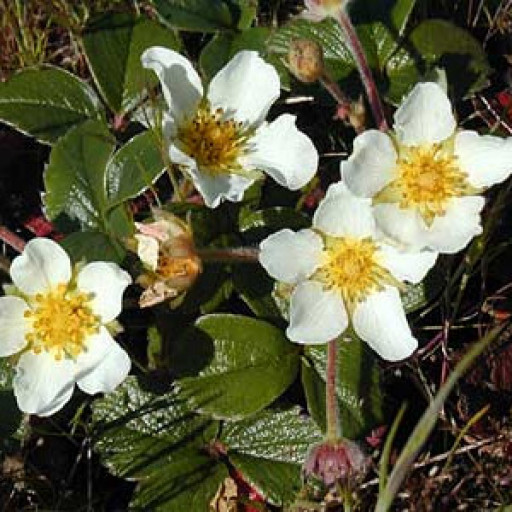
Plant Overview
Known as the Beach Strawberry or Coastal Strawberry, this resilient evergreen is a botanical traveler of the Pacific coastline. It holds a royal place in history as one of the two primary "parents" of the modern garden strawberry we buy in supermarkets today. Often found hugging the wind-swept dunes from Alaska to Chile, it brings a touch of wild, rugged sweetness to seaside landscapes.
🔍 How to Identify
- 🍃 The Foliage: Unlike the thin leaves of garden varieties, these leaves are thick, leathery, and dark green with a high-gloss sheen—a specialized armor that protects the plant from salty sea spray.
- 🌸 The Blooms: It produces classic strawberry flowers with five bright white petals surrounding a sunny yellow center, typically appearing in mid-spring.
- 🍓 The Fruit: The berries are small, round, and range from deep red to a pale, blush-white. They are heavily dimpled with seeds and are much smaller than commercial strawberries.
- 🌱 Growth Habit: It stays very low to the ground, spreading rapidly via long "runners" (stolons) to create a dense, emerald-green carpet.
🏡 In Your Garden
- 🏖️ Erosion Expert: Because of its vigorous spreading habit and deep roots, it is a superstar for stabilizing sandy slopes or filling in coastal garden gaps where other plants might fail.
- 💧 Salt & Sand Tolerance: It thrives in poor, sandy soils and can handle salt air with ease, making it the go-to groundcover for beach houses and maritime climates.
- 🐝 Pollinator Magnet: The flowers are a vital early-season food source for native bees, while the tiny berries provide a high-energy snack for local songbirds.
⚠️ Safety & Toxicity
- 🍓 Status: Completely edible and safe for human consumption.
- 🐾 Pet Safety: This plant is non-toxic to dogs, cats, and horses. It is often used as a "steppable" lawn alternative in pet-friendly backyards.
- 👅 Flavor Note: While edible, the berries are often hidden under the leaves and require a lot of picking to make a meal—but the flavor is often described as more intense and aromatic than store-bought fruit.
✨ Fun Fact
In 1714, a French spy named Amédée-François Frézier was sent to Chile to scout Spanish fortifications. He ended up being more interested in the local botany and smuggled several Fragaria chiloensis plants back to France in his luggage, unknowingly setting the stage for the creation of the modern strawberry!

Detailed Care Instructions
| Lighting | Full Sun |
| Hardiness Zones | 4A - 9B |
To grow Fragaria chiloensis (beach strawberry) plants, follow these steps:
- Select a suitable location: Choose a location with full sun exposure and well-draining soil. Keep in mind that beach strawberries can tolerate a range of soil types but prefer slightly acidic soil.
- Prepare the soil: Loosen the soil by removing any weeds, rocks, or other debris. Add organic matter like compost or aged manure to enhance soil fertility and drainage.
- Planting: Plant the Fragaria chiloensis plants in early spring or fall. Dig small holes that are slightly larger than the plant's root ball. Space each plant about 12-18 inches apart. Place the plants in the holes, making sure that the crown (where the stem meets the roots) sits level with the soil surface.
- Watering: Water the plants immediately after planting to help establish their roots. Keep the soil consistently moist but not waterlogged throughout the growing season. Gradually reduce watering in the winter months, as beach strawberries are dormant during that time.
- Mulching: Apply a layer of organic mulch around the plants to conserve soil moisture, suppress weeds, and regulate soil temperature. Straw, wood chips, or shredded leaves are good mulching options.
- Fertilizing: Apply a balanced, slow-release fertilizer in early spring and again in mid-summer. Follow the manufacturer's instructions for proper dosage.
- Weed control: Regularly check for weeds around the plants and remove them promptly. Weeds can compete for nutrients and space, negatively impacting the Fragaria chiloensis plants' growth.
- Pruning: To maintain plant health, remove any dead or damaged leaves or runners (long leafy stems that extend from the parent plant). This will help promote air circulation and prevent disease.
- Propagation: Fragaria chiloensis plants can spread through their runners. If desired, you can propagate new plants by allowing the runners to take root in a potting mix or directly in the ground. Once rooted, you can detach them from the parent plant and transplant them to a new location.
- Pest and disease management: Monitor for common pests like slugs, snails, aphids, or spider mites. Apply organic pest control methods if needed. Ensure good air circulation and avoid overcrowding to reduce the risk of fungal diseases.
- Harvesting: Beach strawberries produce small, red, flavorful berries. Harvest them when fully ripe, generally when they easily detach from the plant with a gentle tug. Enjoy them fresh, use them in recipes, or preserve them by freezing or making jam.
By following these steps, you can successfully grow Fragaria chiloensis plants and enjoy their delicious fruits.

Place in a bright room that is sun drenched almost all day. Or directly in a south-facing window.

To properly water this plant, it is important to keep the soil consistently moist, but not waterlogged. This can be achieved by watering deeply and thoroughly, allowing excess water to drain away from the roots. It is best to water early in the morning to allow the plant sufficient time to absorb the moisture before the heat of the day sets in. Additionally, it is important to avoid getting water on the leaves, as this can lead to damage or disease. Finally, be sure to regularly check the soil moisture level and adjust watering as needed based on the plant's individual needs.
To fertilize the plant, apply a balanced 10-10-10 fertilizer during the growing season. Apply the fertilizer according to the manufacturer's instructions, typically every 4-6 weeks. Water the plant well after applying the fertilizer to help distribute it evenly in the soil. Avoid fertilizing in the fall or winter when the plant is dormant.
Fragaria Chiloensis plants prefer a well-draining soil that is fertile and loamy. The soil should have a neutral pH of around 6 to 7.5 for optimal growth. The plant also prefers soil that is rich in organic matter and nutrients. It is best to provide the plant with a soil mixture that includes compost, peat moss, and perlite, which will help to retain moisture and provide necessary nutrients. Additionally, it is important to ensure that the soil remains moist but not waterlogged, as this may cause root rot. Pests such as nematodes and root maggots can also be a concern with Fragaria Chiloensis plants, and it is important to regularly inspect the soil and treat any infestations promptly.
Fragaria Chiloensis can be propagated through several different methods including runner division, crown division, and seed propagation.
Runner division involves selecting a healthy plant and identifying a runner that has rooted or put out new growth at the end. This runner is then severed from the parent plant and carefully dug up. The new plant can be separated from the runner and replanted in a new location.
Crown division involves carefully digging up the parent plant and separating the crown, which is the central growing point where new leaves and stems emerge. The crown can then be cut into smaller pieces, each containing some roots and foliage, and replanted in a new location.
Seed propagation involves harvesting mature fruit from the plant and removing the seeds. The seeds can be sown directly into potting soil or seed trays and kept moist in a warm location. Once the seedlings have grown to a suitable size, they can be transplanted into individual pots or into the ground.
It is important to note that Fragaria Chiloensis is a perennial plant and will produce runners naturally, which can be used for propagation. Plants propagated through division or seed propagation may take longer to establish than those propagated through runners.
Common pests of the beach strawberry include Spider mites, aphids, thrips, whiteflies. Make a habit of checking your beach strawberry frequently for pests so that any infestations can be caught and managed early.








