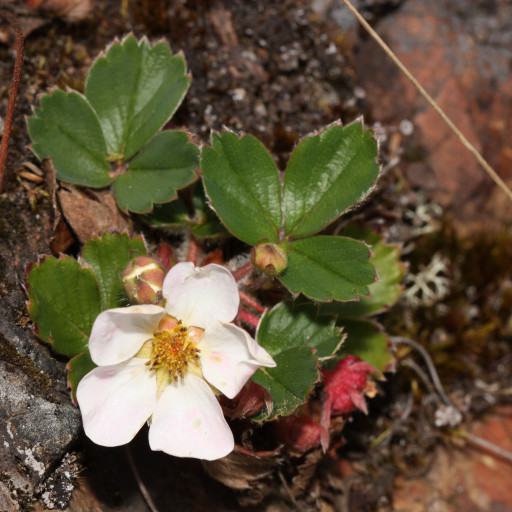
Plant Overview
Known as the Virginia Strawberry, this modest groundcover is the secret ancestor of the modern garden strawberry. While its fruits are tiny compared to store-bought varieties, they pack a concentrated punch of sugar and aroma that many foragers consider the gold standard of wild berries. In various Native American cultures, these heart-shaped fruits are celebrated as symbols of spring, health, and the "strawberry moon."
🔍 How to Identify
- 🍃 The Foliage: Look for compound leaves consisting of three oval, saw-toothed leaflets. A key ID trick: the end tooth on the central leaflet is usually shorter than its neighbors.
- 🌸 Spring Blooms: In late spring, clusters of delicate white flowers with five rounded petals and bright yellow centers emerge on hairy stems.
- 🍓 The Berries: The small, deep-red fruits are pendant-shaped. Crucially, the seeds are "sunken" into pits on the surface, which distinguishes them from certain lookalikes.
🏡 In Your Garden
- 🏃 A Rapid Spreader: This plant moves quickly across the soil via "stolons" (runners). It is an excellent choice for a native groundcover, as it will naturally fill in empty gaps to create a lush, green carpet that suppresses weeds.
- 🌞 The Sweet Spot: While it can survive in partial shade, more sunlight directly translates to more (and sweeter) berries. It prefers slightly acidic, well-drained soil and can be sensitive to "wet feet" or stagnant water around the roots.
⚠️ Safety & Toxicity
- ✅ Edible and Safe: The berries are safe for humans and are a high-value food source for birds, box turtles, and small mammals.
- 🍓 Allergy Note: People with known strawberry allergies should exercise caution. Also, be mindful of the Indian Mock Strawberry (Potentilla indica); it has yellow flowers and tasteless, upward-pointing fruit. While not toxic, it is a major culinary disappointment!
✨ Fun Fact
The modern garden strawberry only exists because a Fragaria virginiana plant from North America was accidentally crossed with a Fragaria chiloensis from Chile in a French botanical garden back in the 1700s!

Detailed Care Instructions
| Humidity | Normal |
| Lighting | Part Sun |
| Difficulty | Medium |
| Hibernation | Cold Period |
| Hardiness Zones | 3 - 7 |
To grow a Fragaria Virginiana (Virginia strawberry) plant, you can follow these steps:
- Choose a suitable location: Virginia strawberries prefer full sun, so select a spot in your garden that receives at least 6-8 hours of direct sunlight each day. The soil should be well-draining and fertile.
- Prepare the soil: Remove any weeds or grass from the planting area. Dig up the soil to a depth of around 6-8 inches and incorporate compost or well-rotted manure to improve fertility and drainage.
- Planting: Virginia strawberries can be grown from seeds or transplants. If starting from seeds, sow them in seed trays filled with a mix of seed-starting compost and sand. Keep the soil moist and maintain a temperature of around 70°F (21°C) until germination occurs. Transplants are easier to grow and widely available for purchase. Plant them in the prepared soil, ensuring the crown is level with or slightly above the soil level.
- Watering: Keep the soil evenly moist, but don't let it become waterlogged. Water the plants regularly, especially during dry spells and while they are establishing. Mulching around the plants with straw or wood chips can help retain soil moisture.
- Fertilization: Apply a balanced organic fertilizer according to the package instructions during the growing season. This will provide the necessary nutrients for healthy plant growth and fruit development.
- Pruning: Trim off any dead or damaged leaves as well as runners that are not required for propagation. Regularly thinning the plants and removing excess runners will promote better air circulation, reducing the risk of diseases.
- Pest and disease control: Keep an eye out for common strawberry pests such as aphids, slugs, and snails. Remove them by hand or use organic pest control methods if necessary. Monitor for diseases such as powdery mildew or gray mold, and promptly treat any affected plants with appropriate fungicides.
- Harvesting: Virginia strawberries are typically ready to harvest about 4-6 weeks after flowering. Pick the ripe fruits when they have fully developed their red color and are firm to touch. Be gentle while harvesting to avoid damaging the delicate fruits.
With proper care and maintenance, your Fragaria Virginiana plant should thrive and produce delicious strawberries for many years to come.

Place in a window with dappled sun or a spot in the middle of a room. Or directly in a window facing west or east.

To water this plant, it is important to keep the soil consistently moist, but not waterlogged. This can be achieved by watering deeply and thoroughly once per week or more frequently in hot, dry weather. It is important to avoid getting water on the leaves as this can encourage fungal growth. A watering can or a drip irrigation system can be used to water the plant at the soil level. It is recommended to water in the morning or evening when temperatures are cooler to prevent water evaporation. It is also important to regularly check the soil moisture level with a soil moisture meter or by sticking a finger into the soil to ensure it is not too dry or too wet.
To fertilize the Fragaria Virginiana plant, use a balanced fertilizer with equal amounts of nitrogen, phosphorus, and potassium. Apply the fertilizer once a month during the growing season, starting in early spring and ending in late summer. Follow the package instructions for the correct amount of fertilizer to apply based on the size of the plant. Avoid over-fertilizing as this may cause damage to the plant.
The ideal type of soil to use for this particular plant species should have a slightly acidic pH level, ranging from 5.5 to 6.5. It should be well-draining and not waterlogged, so a mixture of coarse sand, perlite, and peat moss could be a good option. This plant also prefers loose and fertile soil, so adding some aged compost or well-rotted manure to the blend would provide it with the necessary nutrients to thrive. Finally, it is important to ensure that the soil is sufficiently aerated, as the plant's roots require oxygen to function properly.
To propagate this plant, start by collecting mature seeds from the fruits that have ripened on the parent plant. Then, clean and dry the seeds, and stratify them in the refrigerator for a few weeks to promote germination.
Alternatively, you can propagate this plant by dividing its crown or runners. To do this, carefully dig up the parent plant and separate any young shoots or offsets that have formed around the main plant. replant these cuttings in well-draining soil, and keep them moist while they establish roots.
Another method of propagation is by using stem cuttings. Select a healthy stem from the parent plant, and make a clean cut at a 45-degree angle. Remove any leaves from the lower third of the stem, and dip the cut end in rooting hormone. Then, plant the stem in a pot filled with moist soil and cover it with a plastic bag to create a humid environment. Keep the cutting in bright, indirect light, and mist it occasionally to keep the soil moist.
Common pests of the wild strawberry include Spider mites, aphids, thrips, whiteflies. Make a habit of checking your wild strawberry frequently for pests so that any infestations can be caught and managed early.








