Plant Overview
Known globally as the Garden Strawberry, this beloved fruit is a "hybrid superstar" born from a chance encounter in 18th-century France between wild species from North America and Chile. It is the undisputed king of the home garden, prized for its sweetness and the ease with which it transforms a sunny patch of soil into a snack bar.
🔍 How to Identify
- 🍃 The Leaves: They grow in groups of three (trifoliate) with distinctively jagged, saw-toothed edges and a deep, quilted green texture.
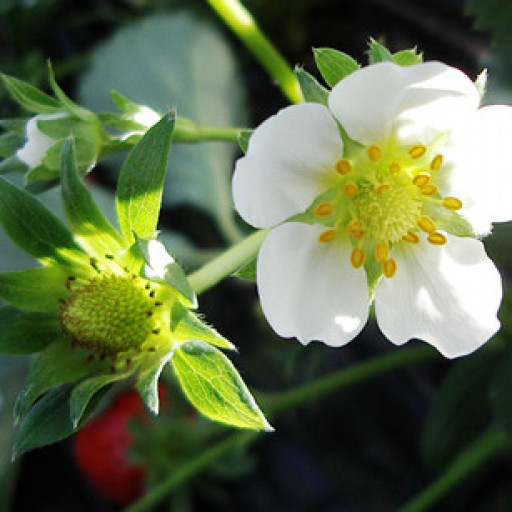
- 🌸 The Blooms: Look for charming five-petaled white flowers with a bright yellow "button" center that eventually swells into the fruit.
- 🍓 The Fruit: Heart-shaped and bright red when ripe, these are unique because their "seeds" (called achenes) are located on the outside of the skin rather than the inside.
🏡 In Your Garden
- 🏃 The Runners: This plant is a natural explorer. It sends out long, leafless stems called "runners" or stolons that root into the ground to create identical baby clones of the parent plant.
- ☀️ Energy for Sugar: While the plant can grow in partial shade, it requires full sun to convert starches into the sugars that make the berries sweet.
- 🧺 Mulching Nuance: The name "strawberry" likely comes from the practice of placing straw under the ripening fruit. This keeps the berries off the damp soil, preventing rot and keeping them clean for your morning cereal.
⚠️ Safety & Toxicity
- ✅ Safe for All: The fruit and foliage are non-toxic to humans, dogs, cats, and even horses. They are a healthy, Vitamin C-packed treat.
- 🍎 Pesticide Caution: Because strawberries have porous skin, they can absorb chemicals easily. If growing for food, stick to organic fertilizers and natural pest control.
- 🤧 Oral Allergy Syndrome: Some people with birch pollen allergies may experience an itchy mouth or throat after eating raw strawberries, as the proteins are very similar.
✨ Fun Fact
🍓 Botanical Lie: Botanically speaking, a strawberry is not a berry at all! A "true" berry (like a blueberry or even a tomato) has its seeds on the inside. The strawberry is actually an "aggregate accessory fruit," where the red part is just the swollen base of the flower.

Detailed Care Instructions
| Humidity | High |
| Lighting | Part Sun |
| Difficulty | Easy |
| Hibernation | Cold Period |
| Temperature | 20°C - 24°C |
| Hardiness Zones | 5 - 6 |
To grow Fragaria X Ananassa, commonly known as strawberry plants, follow these steps:
- Choose a suitable planting site: Strawberries require full sun exposure (at least 6-8 hours of direct sunlight per day) and well-draining soil. Select a location with fertile soil that is rich in organic matter.
- Prepare the soil: Clear the area of any weeds or grass. Amend the soil with compost or well-rotted manure to improve its fertility and drainage. Work the soil to a depth of around 8-10 inches.
- Planting: Strawberry plants can be grown from seeds, bare-root plants, or pre-grown seedlings. The easiest and most common method is using pre-grown seedlings. Dig holes spaced around 12-18 inches apart (depending on the variety) and deep enough to accommodate the roots of the plant. Place each seedling in a hole, ensuring that the roots are well-spread and not crowded. Backfill the hole with soil, gently firming it around the plant.
- Watering: Water the plants immediately after planting to settle the soil around the roots. Water regularly but avoid overwatering, as strawberries are susceptible to root rot. Aim for moist (but not waterlogged) soil.
- Mulching: Apply a layer of straw or mulch around the base of the plants to suppress weed growth, prevent soil erosion, and maintain soil moisture. This also helps keep the fruits off the soil, reducing the risk of rot or pest damage.
- Fertilization: Strawberries are heavy feeders and benefit from regular fertilization. Apply a balanced organic fertilizer recommended for strawberries or use a slow-release granular fertilizer according to the package instructions. Feed the plants every 4-6 weeks during the growing season.
- Pest and Disease Control: Protect your strawberry plants from pests like slugs, birds, and insects by using physical barriers, netting, or organic pest control methods. Monitor the plants regularly for any signs of disease such as fungal infections like powdery mildew or gray mold. If necessary, treat with appropriate pesticides or organic fungicides.
- Pruning: Remove any dead or yellow foliage regularly to promote air circulation and prevent disease. After the fruiting season, trim back the runners (long stems that produce new plants) to prevent the plants from becoming overcrowded.
- Harvesting: Depending on the variety, strawberries typically mature and become ripe for harvest within 4-6 weeks after flowering. Harvest the strawberries when they turn fully red and are firm. Gently twist or cut the fruit from the plant, leaving the green cap intact.
By following these steps, you will be able to successfully grow Fragaria X Ananassa plants and enjoy delicious strawberries in your garden.

Place in a window with dappled sun or a spot in the middle of a room. Or directly in a window facing west or east.

To water this plant, ensure the soil is dry to the touch before watering. This plant prefers to be watered deeply and infrequently, rather than shallow, frequent watering. When watering, make sure to water at the base of the plant and avoid getting the leaves wet. This will help prevent disease and rot. It is also recommended to water in the early morning or late afternoon to avoid evaporation and minimize stress on the plant.
To fertilize this plant, apply a balanced fertilizer with a N-P-K ratio of 10-10-10. Apply the fertilizer in early spring before new growth emerges and then again in late spring after flowering. Apply the fertilizer again in early fall to promote root growth. Water the plant deeply after fertilizing to help the nutrients reach the roots. Avoid applying too much fertilizer or applying it too late in the growing season, as this can lead to excessive vegetative growth and reduced fruit production.
The ideal soil type for Fragaria X Ananassa plants is a well-draining, loamy soil with a pH range of 5.5 to 7.0. The soil should be rich in organic matter and nutrients, and should not be too compacted or heavy. It is recommended to mix in compost or other organic matter before planting, and to ensure good drainage by making sure the soil does not become waterlogged. The use of a balanced fertilizer throughout the growing season can also benefit the plants.
There are several ways to propagate this plant, but one common method is through runners.
- Choose a healthy and vigorous plant with plenty of runners.
- Once the runners have developed small plants at their tips, carefully detach them from the mother plant.
- Plant the runner in a new location, making sure to cover the roots with soil and keep the plant watered.
- The new plant will establish roots and grow into a mature plant that will also produce runners and allow for further propagation.
Another method of propagation is through division, where the plant is carefully separated into smaller sections and planted separately to form new plants. This should be done in early spring before the plant begins to actively grow.
Finally, Fragaria X Ananassa can also be propagated through seeds, although this method is less common as it usually produces less desirable fruit and takes longer to establish. Seeds should be planted in the fall and will germinate the following spring.
Regardless of the method used, it's important to select healthy and disease-free plants to ensure successful propagation.
Common pests of the strawberry include Spider mites, aphids, thrips, whiteflies. Make a habit of checking your strawberry frequently for pests so that any infestations can be caught and managed early.








