Plant Overview
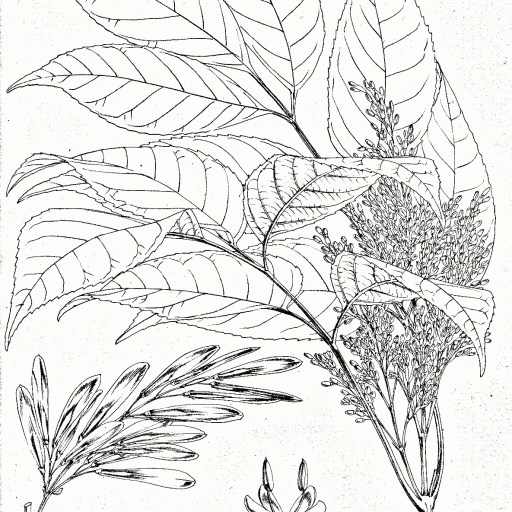
Often called the Himalayan Manna Ash, this tree is a true mountain celebrity. Standing tall against the rugged backdrop of the Himalayas, it is celebrated for its froth-like white flowers that scent the mountain air in late spring. Unlike many other ash species that have inconspicuous flowers, the Fraxinus floribunda demands attention with an elegant, airy canopy that looks as if it’s been dusted with snow.
🔍 How to Identify
- 🌿 Compound Leaves: It features large, pinnate leaves typically composed of 7 to 9 leaflets with finely toothed edges, which transition to a soft gold in the autumn.
- 🌸 Feathery Blooms: Look for massive, white, lace-like clusters (panicles) that appear at the tips of branches; they are much showier than the flowers of the Common Ash.
- 🪵 Smooth Bark: The bark begins its life grey and remarkably smooth, only developing shallow, decorative fissures as the tree reaches maturity.
🏡 In Your Garden
- 🏔️ Mountain Heritage: Naturally adapted to slopes and valleys, this tree thrives in deep, moist soil. It is surprisingly resilient to cold but will struggle in parched, shallow soil where its deep root system cannot find consistent hydration.
- 🌳 Space Requirements: Give it room to breathe! This is a large-growing specimen that develops a wide, spreading crown. It is best suited for large gardens or parks where it can provide dappled shade without competing with building foundations.
⚠️ Safety & Toxicity
- ✅ Generally Safe: The Himalayan Manna Ash is considered non-toxic to humans, dogs, and cats, making it a "friendly" giant for family landscapes.
- 🧤 Sap Sensitivity: While not poisonous, the sap contains compounds that can occasionally cause mild skin irritation or "phytophototoxicity" in very sensitive individuals if they handle freshly cut wood in bright sunlight.
✨ Fun Fact
🍯 The Sweet "Manna": This tree earns its name from a sweet, edible resin that can be harvested from its bark. In traditional Himalayan cultures, this "manna" was collected and used as a natural sweetener and a gentle medicinal remedy long before commercial sugar was available!

Detailed Care Instructions
To water this plant, it is important to assess the moisture level of the soil. This can be done by sticking your finger or a moisture meter into the soil to a depth of about 1-2 inches. If the soil feels dry at this depth, it is time to water.
When watering, it is important to avoid getting water on the leaves or foliage. This can cause damage or encourage the growth of fungal diseases. Instead, water at the base of the plant, slowly and evenly, allowing the water to soak into the soil.
Watering should be done deeply and infrequently, rather than shallowly and frequently. This encourages the plant's roots to grow deeper, making it more resilient and drought-tolerant. It is also important to avoid overwatering, as this can lead to root rot and other problems.
During hot or dry weather, it may be necessary to water more frequently. In general, it is better to water deeply once or twice a week rather than giving the plant small amounts of water every day.
The ideal soil for the Fraxinus Floribunda plant should have good drainage, a slightly acidic pH level, and should be rich in organic matter. A mixture of loam, sand, and peat moss can work well, as it provides nutrients while promoting good drainage. It is also important to avoid heavy clay soils, as they do not allow for proper root growth and can lead to issues with waterlogging. Additionally, adding some perlite or vermiculite to the soil mixture can help improve aeration and drainage.








