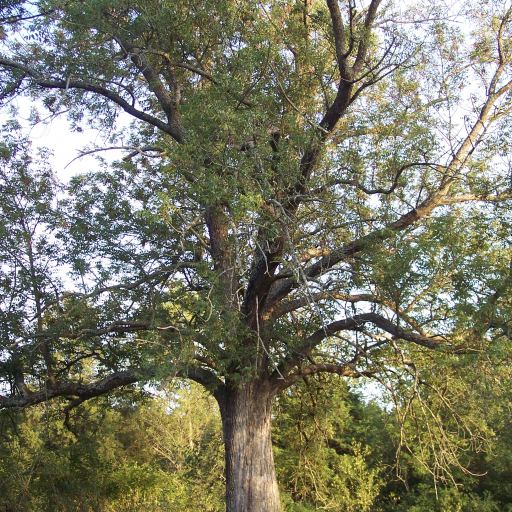
Plant Overview
Known as the Blue Ash, this North American native is the "architect" of the ash family. While many of its cousins are currently struggling, this tree stands tall with a unique geometric secret and a historical reputation for coloring the frontier. It earned its name because pioneers discovered that its inner bark, when crushed and boiled, produced a vivid blue dye.
🔍 How to Identify
- 🟦 Square Twigs: The most iconic feature—young branches have four distinct corky ridges or "wings," making the stems feel unmistakably square when rolled between your fingers.
- 🌿 Serrated Foliage: It features opposite, compound leaves typically made up of 7 to 11 thick, lance-shaped leaflets with sharply toothed edges.
- 🪵 Scaly Bark: Unlike the neat "diamond" furrows of other ash trees, the Blue Ash develops shaggy, plate-like gray bark as it matures, giving it a rugged, textured appearance.
🏡 In Your Garden
- 🧱 Limestone Specialist: This tree is a "calciphile," meaning it loves alkaline soil. It is one of the best large shade trees for landscapes with heavy limestone or high-pH soils where other trees might struggle.
- 🛡️ The Survivor: Interestingly, the Blue Ash shows a much higher natural resistance to the Emerald Ash Borer (EAB) compared to its relatives. It is often planted today as a "hopeful" ash species to maintain biodiversity in the face of pest threats.
⚠️ Safety & Toxicity
- ✅ Non-Toxic: The Blue Ash is considered safe and non-toxic for humans, dogs, cats, and horses.
- 🍂 Low Irritant: While it produces wind-borne pollen in the spring which may affect hay fever sufferers, it does not possess thorns or skin-irritating saps.
✨ Fun Fact
The blue dye derived from this tree was so effective that it was used to color the iconic blue wool uniforms of some early American infantry units! If you scrape a small twig and place it in water, you can still see a faint blue glow under UV light.

Detailed Care Instructions
Ash trees can sometimes survive for 200 to 300 years, depending upon the location and level of care. Many trees will live a century or more. Of course, that depends on the tree avoiding infestation by emerald ash borer or another serious pest or disease.Be aware, though, that older trees become steadily more brittle, and toppling during major wind storms is fairly common.
How do I distinguish blue ash from other common ash species, such as green ash or white ash?
All ash trees have compound leaves, usually with seven to nine individual pointed lobes arranged opposite on the stems. But on blue ash, the stems themselves have wings that give them a squarish appearance. This is the easiest way to identify a blue ash. Also, the bark of a blue ash is somewhat shaggier than that of the green or white oak, which have well-defined flattish plates.
Why is it called the "blue" ash?
The common name "blue ash" comes from a substance found under the bark that turns blue when exposed to air and immersed in water. The pulvarized inner bark was used by early American settlers to make a fabric dye.
Are there any ash tree species that are immune to emerald ash borer?
Unfortunately, no. Blue ash does seem to be less devastated by EAB than other ash species, but it is by no means immune.There are some early results with Asian ash trees, as well as cultivars that have crossed North American and Asian ash species, that show some resistance to the insect, but the evidence is not definitive. It's possible that in future years we may have hybrid trees that can once again make ash a valuable residential shade tree.If you do happen to have a blue ash tree in good health, it may well be worth protecting with regular chemical treatment. The same cannot be said of green ash or white ash, both of which will eventually succumb to EAB as the insect inevitably spreads into a region.
| Color | Purple |
| Soil Ph | 6.8-7.2 |
| Soil Type | Average, Dry, Well-Drained |
| Bloom Time | April To May |
| Plant Type | Tree |
| Mature Size | 50.00 To 75.00 Feet |
| Native Area | Midwestern United States |
| Sun Exposure | Full Sun |
| Hardiness Zones | 4-7 |
To grow Fraxinus Quadrangulata (Blue Ash) plant, follow these steps:
- Choose a suitable location: Blue Ash thrives in full sun or partial shade. Ensure the soil is well-draining, as this plant doesn't tolerate wet or waterlogged soil.
- Prepare the soil: Blue Ash prefers fertile, loamy soil. It's a good idea to amend the soil by adding organic matter, such as compost or well-rotted manure, to improve its quality and drainage.
- Planting: Dig a hole that is slightly larger than the root ball of the plant. Place the plant into the hole, making sure the top of the root ball is level with or slightly above the soil surface. Gently backfill the hole with soil, firming it around the roots. Water the plant thoroughly after planting.
- Watering: Blue Ash requires regular watering, especially during the first year of growth. Keep the soil consistently moist, but not waterlogged. Avoid overwatering to prevent root rot. Once established, the plant can tolerate some periods of drought.
- Mulching: Apply a layer of organic mulch, such as wood chips or bark, around the base of the plant. This helps conserve moisture, regulate soil temperature, and suppress weed growth. Ensure the mulch doesn't come into direct contact with the trunk of the plant.
- Pruning: Pruning is not always necessary for Blue Ash. However, if you want to maintain a particular shape or remove dead or damaged branches, aim for minimal pruning during the dormant season (late winter or early spring) to minimize stress on the plant.
- Fertilizing: Blue Ash generally doesn't require frequent fertilization. If the soil is poor or lacking in nutrients, you can apply a balanced, slow-release fertilizer in early spring.
- Pest and disease control: Blue Ash is generally resistant to pests and diseases. However, it may occasionally face issues like the ash-lilac borer, which can be treated with preventive insecticides or biological control methods.
- Winter protection: Blue Ash is hardy and can withstand cold temperatures. However, if you live in an area with severe winters, you can protect the young plant by wrapping the trunk with burlap or using a protective cover.
Remember that growing plants can have its challenges and results may vary. It's always a good idea to consult local gardening experts or nurseries for specific guidance based on your region and conditions.

Place in a bright room that is sun drenched almost all day. Or directly in a south-facing window.

The Fraxinus Quadrangulata plant is a deciduous tree that is native to North America. To water this plant, it is important to first consider the soil conditions and climate of the area where it is planted.
If the soil is consistently moist, then watering the tree every 7-10 days may be sufficient. However, if the soil is dry or the climate is hot and dry, the plant may require more frequent watering.
When watering, it is important to water deeply to encourage strong root growth. This can be accomplished by using a soaker hose or by slowly watering around the base of the tree until the soil is saturated.
It is also important to avoid watering the foliage of the tree as this can lead to fungal growth and diseases. Instead, focus the watering on the soil and root area.
In periods of drought or extreme heat, it may be necessary to water the plant more than once a week. Keep an eye on the tree and adjust the watering schedule as needed based on the weather and soil moisture levels.
To fertilize this plant, first assess the nutrient deficiencies and pH level of the soil. Use a balanced, slow-release fertilizer with equal amounts of nitrogen, phosphorus, and potassium. Apply the fertilizer at a rate recommended for the size of the plant and the soil conditions, being careful not to over-fertilize. Water the plant deeply after fertilizing to help nutrients reach the roots. Repeat fertilization every 2-3 months during the growing season, but stop fertilizing in late summer to avoid promoting new growth that may not have time to harden off before winter.
Fraxinus Quadrangulata plant prefers well-draining soil that is rich in nutrients and organic matter. It thrives in a soil that is slightly acidic, with a pH range of 5.5 to 6.5. It is important to use a soil that provides good aeration to the roots, as this plant is susceptible to root rot if subjected to overly damp conditions. It is recommended to use a soil mix of equal parts of peat moss, perlite, and vermiculite, which will provide excellent drainage and help retain moisture. Mixing in compost or other organic materials will also help ensure a healthy growing environment for this plant.
Fraxinus Quadrangulata plant can be propagated through both sexual and asexual means. The sexual propagation method involves collecting seeds from the plant and sowing them in a suitable growing medium. The best time to collect the seeds is during the autumn months when the fruits of the plant start to dry out. After collecting the seeds, remove the fleshy outer layer and soak them in water for a day to soften the hard outer seed coat. Then, sow the seeds in a well-draining soil mix and keep them moist until they start to germinate.
Asexual propagation methods include taking cuttings or layering. Stem cuttings can be taken during the summer months from the current season's growth. Select a healthy, well-formed stem with at least two nodes and remove all leaves except for the top few. Dip the cut end of the stem in rooting hormone and plant it in a suitable rooting medium. Keep the cutting moist and in a warm, bright area until it starts to develop roots.
Layering involves bending a low-hanging branch down to the ground and covering a section of it with soil. The covered section of the branch will eventually develop roots and can be cut from the parent plant to become a new plant. This method is best done in the spring or early summer when the plant is actively growing.
Regardless of the method used, Fraxinus Quadrangulata plants require well-draining soil and a consistent supply of moisture to ensure successful propagation.








