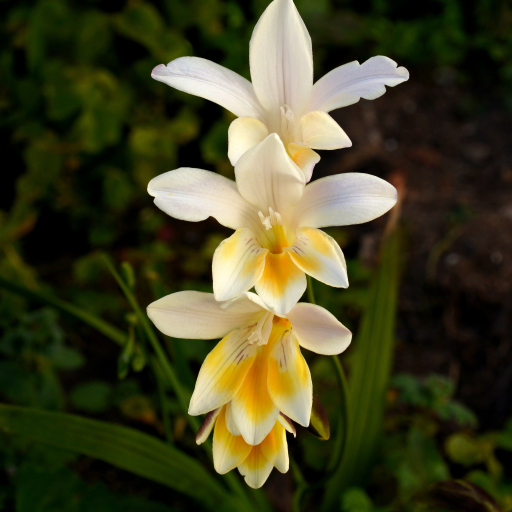
Plant Overview
Known for its intoxicating scent that bridges the gap between citrus and jasmine, the White Freesia (Freesia alba) is a South African treasure. Often called the "Wild Freesia," this elegant bulb is a primary ancestor of the colorful hybrids found in florist shops worldwide. In the Victorian language of flowers, these snowy blooms were used to symbolize purity, innocence, and the "ultimate trust" between friends.
🔍 How to Identify
- 🌸 The Bloom: Features pure white, funnel-shaped flowers that typically display a soft, lemon-yellow "signal" patch deep within the throat to guide pollinators.
- 🏹 The Spike: The flowers are arranged in a unique, one-sided row along a wiry stem that takes a sharp, horizontal bend, making the blossoms face upward toward the sky.
- 🍃 The Foliage: Slender, sword-shaped green leaves emerge in a fan-like arrangement directly from the underground corm (a bulb-like structure).
🏡 In Your Garden
- ☀️ Mediterranean Rhythm: Unlike many garden plants, these are "winter growers." They sprout when the weather cools and go completely dormant in the heat of summer. If the leaves turn brown in July, don't worry—the plant is simply "sleeping" underground.
- 💧 Drainage is Key: Because they grow from corms, they are highly susceptible to rot. They prefer "sandy" or gritty soil that allows water to pass through quickly, mimicking the rocky slopes of their native Cape Province.
⚠️ Safety & Toxicity
- 🐾 Pet Safety: Freesias are generally considered non-toxic to dogs, cats, and horses. However, the corms (the "bulbs") are the most concentrated part of the plant and can cause mild tummy upset if a curious pet digs them up and chews them.
- 🧤 Skin Sensitivity: While safe to handle, the sap of the plant may cause very minor skin irritation in professional florists or individuals with extremely sensitive skin.
✨ Fun Fact
- 👃 A Scent Mystery: While we have bred Freesias to come in every color of the rainbow, the original Freesia alba remains the most fragrant. Interestingly, its scent is "zygomorphic" just like its shape—meaning the fragrance actually changes its chemical profile as the flower ages throughout the day!

Detailed Care Instructions
To grow Freesia alba plants, follow these steps:
- Choose a sunny and well-drained location: Freesia alba prefers full sun but can tolerate partial shade. Ensure the soil is well-drained and not soggy.
- Prepare the soil: Freesia alba prefers slightly acidic soil with a pH between 6 and 7. Add organic matter, such as compost or well-rotted manure, to improve soil fertility and drainage.
- Plant the bulbs: Plant Freesia alba bulbs in the fall, at least 2–3 inches deep and around 4–6 inches apart. Ensure the pointed ends of the bulbs face upwards. If you live in a region with harsh winters, plant the bulbs in early spring, after the last frost.
- Water properly: During the growing season, water Freesia alba regularly, keeping the soil moist but not waterlogged. Reduce watering during the dormant period.
- Fertilize: Apply a balanced, slow-release fertilizer in early spring and mid-summer to provide necessary nutrients.
- Mulch: Mulch the planting area with a layer of organic mulch, such as straw or wood chips, to conserve moisture, suppress weeds, and regulate soil temperature.
- Stake if necessary: In windy areas, use stakes or plant supports to prevent the tall flower stems from bending or breaking.
- Deadhead spent flowers: Remove faded flowers to stimulate further blooming and prevent seed development.
- Protect from frost: If you live in a region with frost, protect Freesia alba bulbs by covering them with mulch or moving potted plants indoors during cold spells.
- Divide bulbs every few years: To promote healthier growth and more flowers, divide overcrowded clumps of Freesia alba bulbs every two to three years in autumn or early spring.
By following these steps, you should be able to successfully grow Freesia alba plants and enjoy their fragrant blooms.
To water this plant, make sure to avoid getting water on the leaves or blooms. Water at the base of the plant and ensure the soil is moist but not waterlogged. In particularly dry conditions, this plant may require more frequent watering.
- Prepare the soil: Mix a slow-release fertilizer with the soil before planting.
- Feed regularly: Once the plant is established, feed it with a balanced liquid fertilizer every two weeks.
- Water thoroughly: Water the plants deeply before applying fertilizer to prevent burning the roots.
- Apply fertilizer correctly: Fertilizers should be applied at the base of the plant, not on the foliage.
- Stop fertilizing: Cease fertilizing the plants after flowering to allow them to enter a dormant period.
Freesia Alba plants prefer a well-draining soil that is rich in organic matter. The soil should be slightly acidic to neutral with a pH range of 6.0 to 7.0. A sandy loam soil is ideal for these plants as it provides good drainage and good aeration which helps to prevent waterlogging and root rot. The soil should also be fertile, with adequate levels of nitrogen, phosphorous, and potassium. Regular fertilization is necessary during the growing season. Additionally, these plants prefer a soil that is kept consistently moist, but not waterlogged. Therefore, it is important to ensure that the soil is not allowed to dry out completely between watering. Mulching around the base of the plant can help to maintain soil moisture and prevent weeds from growing.
Freesia Alba is a plant that can be propagated through division of its corms or through seeds. To propagate through division, carefully dig up the plant in the dormant season and separate the individual corms. Each corm should have at least one growing point. Replant the corms immediately in a well-draining soil mixture and water thoroughly.
To propagate through seeds, collect seeds from the plants when the seedpods have turned brown and are dry. Sow the seeds in well-draining soil and keep them moist until they germinate. Once the seedlings have reached a couple of inches in height, they can be carefully transplanted into individual pots of well-draining soil and gradually acclimated to full sun.
In both cases, it is important to provide the plant with appropriate amounts of water and sunshine to help them thrive. Freesia Alba prefers a sunny location with well-draining soil. Fertilize the plant with a balanced fertilizer every two weeks during the growing season.








