Plant Overview
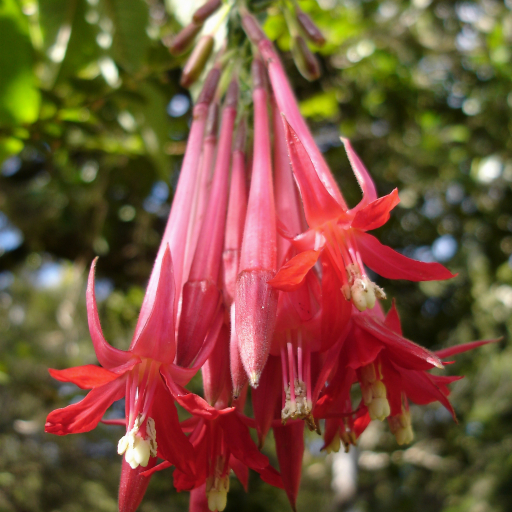
Often called the "Bolivian Fuchsia" or "Red Trumpet," this is not your typical hanging basket plant. Native to the cool, misty cloud forests of the Andes, it is a magnificent, tree-like shrub that carries a regal presence. In its homeland, it was a botanical treasure of the Incas, admired for its cascading clusters of neon-red flowers that seem to drip from the branches like living jewels.
🔍 How to Identify
- 🍃 The Leaves: Large, matte-green, and remarkably soft. They have a velvety, hairy texture that distinguishes them from the waxy leaves of common fuchsia hybrids.
- 🎺 The Flowers: Extraordinary, elongated tubes that can reach up to 3 inches in length. They hang in heavy, dramatic bunches (racemes) at the ends of the branches, usually in shades of vibrant scarlet or creamy white.
- 🍇 The Fruit: After the flowers fade, the plant produces small, cylindrical, dark purple-to-black berries that look somewhat like elongated grapes.
🏡 In Your Garden
- ☁️ Cloud Forest Cues: Because it originates from high-altitude forests, this plant thrives in "eternal spring" conditions. It dislikes "hot feet" and scorching afternoons; it prefers its roots kept cool and its leaves bathed in high humidity.
- 🌳 Space to Stretch: Unlike common garden fuchsias, this species is a fast grower that can easily reach 10 to 15 feet in height. It needs a sheltered spot where its brittle, woody stems won't be snapped by high winds.
- 🐦 Pollinator Magnet: The unique, long-tubed flowers evolved specifically for hummingbirds. If you plant this, expect a flurry of activity as birds with long beaks compete for the nectar deep inside the trumpets.
⚠️ Safety & Toxicity
- ✅ Status: Generally considered non-toxic and safe for a family garden.
- 🐶 Pets & Kids: It is safe for cats, dogs, and children. Unlike many exotic garden plants, it does not contain common irritants or deadly alkaloids.
- 🍴 Edibility: Surprisingly, the ripe, dark berries are edible! They have a mild, slightly sweet, and peppery flavor, though you should always ensure the plant hasn't been treated with chemical pesticides before tasting.
✨ Fun Fact
While most people think of fuchsias as strictly ornamental, the berries of Fuchsia boliviana were once a staple in South American markets. They are still used today in some Andean regions to make specialty jams and preserves!

Detailed Care Instructions
| Humidity | Normal |
| Lighting | Full Sun |
| Difficulty | Medium |
| Hibernation | Cold Period |
| Temperature | 18°C - 29°C |
| Hardiness Zones | 9 - 11 |
To grow Fuchsia Boliviana, you can follow these steps:
- Choose a suitable location: Fuchsia Boliviana prefers partial shade to full sun. Ensure the location has well-draining soil that is rich in organic matter.
- Planting: Dig a hole slightly larger than the root ball of the plant. Place the plant in the hole, making sure the top of the root ball is level with the soil surface. Backfill the hole with soil and gently firm it around the plant.
- Watering: Fuchsia Boliviana requires consistent moisture but should not be overwatered. Water the plant regularly, especially during dry periods. Avoid letting the soil become waterlogged.
- Mulching: Apply a layer of organic mulch around the base of the plant to help retain moisture, suppress weeds, and regulate soil temperature.
- Fertilizing: Feed the Fuchsia Boliviana with a balanced, slow-release fertilizer or a liquid fertilizer once a month during the growing season. Follow the manufacturer's instructions for application rates.
- Pruning: Prune the plant in early spring to remove dead or damaged branches and to shape the plant. This will encourage new growth and flowers.
- Pests and diseases: Monitor the plant for common pests like aphids, spider mites, and whiteflies. Treat any infestations promptly with appropriate methods such as insecticidal soap or horticultural oil. Ensure good air circulation around the plant to prevent diseases like powdery mildew.
- Winter care: In areas with frost, Fuchsia Boliviana is not frost-tolerant. Protect the plant during winter by moving it indoors or providing some form of frost protection. Alternatively, you can take cuttings in late summer to propagate new plants for the following year.
Remember to regularly monitor the plant, adjust watering and fertilizing as needed, and provide proper care to ensure healthy growth and vibrant flowers.

Place in a bright room that is sun drenched almost all day. Or directly in a south-facing window.

Fuchsia Boliviana is a plant that requires regular and consistent watering to thrive. The soil around the plant should always be moist but not waterlogged to avoid root rot. It is important to water the plant deeply, ensuring that the water reaches the roots and not just the surface of the soil.
To water the Fuchsia Boliviana plant, the soil should be checked frequently to ensure that it is moist. During the hot summer months, the plant may need to be watered twice a day. When watering, it is best to use a watering can or a hose with a gentle spray to avoid damaging the plant or the soil around it. It is important to avoid getting water on the leaves or flowers of the plant, as this can cause leaf spotting or fungal diseases.
In addition to regular watering, the Fuchsia Boliviana plant should be fertilized every two weeks during the growing season to encourage healthy growth and flowering. It is also important to provide the plant with adequate sunlight and protection from harsh winds to ensure its health and longevity. With proper care, the Fuchsia Boliviana plant can be a beautiful addition to any garden or indoor space.
To fertilize this plant, use a balanced fertilizer with equal parts nitrogen, phosphorus, and potassium. Apply every two weeks during the growing season, and reduce frequency during the dormant season. Water the plant before applying fertilizer to prevent fertilizer burn. Avoid using too much fertilizer as it can damage the plant's roots and foliage.
The ideal soil for Fuchsia Boliviana plant should be rich in organic matter and well-draining. It should have a slightly acidic pH between 6.0 and 6.5. The soil should also be able to retain moisture without becoming waterlogged. It is recommended to mix the soil with peat moss or compost to improve its texture and fertility. Additionally, the soil should be free from any pests and diseases that may harm the plant.
Fuchsia Boliviana is a popular ornamental plant that is commonly propagated through stem cuttings. To propagate this plant, follow these steps:
- Choose a healthy stem from the parent plant. The stem should be at least 6 inches long and have at least four sets of leaves.
- Cut the stem just below a node using a sharp, sterilized knife or scissors.
- Remove the bottom two sets of leaves, leaving only the top two sets of leaves.
- Dip the cut end of the stem in rooting hormone powder, which will encourage root growth.
- Plant the stem in a pot filled with well-draining soil mix. Make a hole in the soil with your finger or a pencil and gently insert the cutting into the soil, making sure that the bottom sets of leaves are buried in the soil.
- Water the cutting thoroughly and keep the soil moist but not waterlogged.
- Cover the cutting with a plastic bag or a clear plastic container to create a mini greenhouse effect.
- Place the pot in a warm, bright location but out of direct sunlight.
- After about two to four weeks, check for root growth by gently tugging on the cutting. If you feel resistance, roots have formed.
- Once the cutting has established roots, remove the plastic covering and transplant the new plant to a larger pot or into the ground.
By following these steps, you can successfully propagate Fuchsia Boliviana and grow new healthy plants.
Common pests of the bolivian fuchsia include Spider mites, aphids, thrips, whiteflies. Make a habit of checking your bolivian fuchsia frequently for pests so that any infestations can be caught and managed early.








