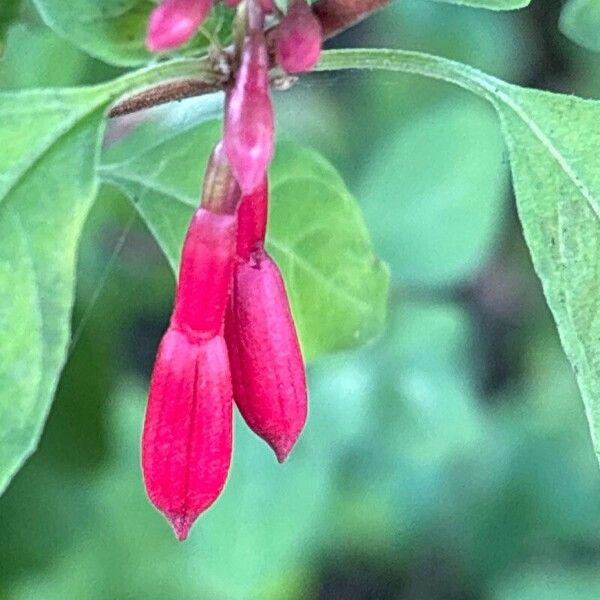
Plant Overview
The Thyme-leaf Fuchsia is a delicate masterpiece of the botanical world, looking as though it belongs in a miniature fairy garden. Unlike its showy, oversized cousins, this species from the high-altitude forests of Mexico and Guatemala trades dramatic blooms for thousands of tiny, jewel-like flowers. Its nickname comes from its remarkably small foliage, which mimics the texture of a kitchen herb garden while maintaining the elegant structure of a woody shrub.
🔍 How to Identify
- 🍃 The Foliage: Tiny, ovate leaves that rarely exceed half an inch in length. They are a deep, glossy green and arranged densely along thin, reddish stems, creating a soft, fern-like appearance.
- 🌸 The "Micro" Blooms: The flowers are exceptionally small—about the size of a teardrop. They hang downward like delicate bells and are unique for their color-changing ability, often starting as a pale pink or white and deepening to a rich burgundy as they age.
- 🪴 Growth Habit: It typically forms a neat, rounded mound or a small, airy shrub. It lacks the heavy, weeping branches of hybrid fuchsias, instead standing upright with a wiry, refined grace.
🏡 In Your Garden
- 💧 Moisture Consistency: Because its leaves and roots are so fine, it doesn't have much of a "storage tank" for water. It thrives in soil that stays consistently damp but never soggy; if the soil dries out completely, the plant may drop its leaves in protest.
- ⛅ Dappled Light: This plant is a forest-dweller at heart. It loves "goldilocks" light—bright enough to encourage blooming, but protected from the harsh afternoon sun which can easily scorch its diminutive foliage.
- ❄️ Temperature Sensitivity: While it is slightly more cold-tolerant than many tropical fuchsias, it still shivers in a hard frost. It is best treated as a container plant in cooler climates so it can be moved indoors for the winter.
⚠️ Safety & Toxicity
- ✅ Safe for All: The Thyme-leaf Fuchsia is considered non-toxic to humans, dogs, and cats.
- 🍓 The Berries: Like all fuchsias, it produces small purple-black berries after flowering. While technically edible and not poisonous, the fruit of this specific species is usually described as bland or slightly peppery, so it's best left for the birds.
✨ Fun Fact
The Thyme-leaf Fuchsia is "gynodioecious," meaning some plants have only female flowers while others have "perfect" flowers (both male and female). If you see a plant that never seems to produce pollen, you’ve likely found a female-only specimen!

Detailed Care Instructions

Place in a window with dappled sun or a spot in the middle of a room. Or directly in a window facing west or east.

The presence of a dry surface layer of soil does not indicate that the plant requires water. Instead, stick your finger 1-2" (3-5 cm) deep in the soil to feel dampness or moisture content. If the soil seems dry, it's time to water your greens. If the soil is still moist, however, it is better not to water your plant and instead wait a day or two. Overwatering or waterlogging raises the risk of root rot. So if the soil takes longer than a week to dry, check the light conditions because it's likely that the plant isn't getting enough light. It's fine if the upper layer of soil is dry between waterings, but the deeper soil layer should always have some moisture.
These plant needs regular fertilizing during growing seasons. Fertilizing your plants in dormant state during the winter, might result in scorching or browning of the leaf tips. If mature plants display signs of nutrient insufficiency, fertilizer administration is necessary to restore the plant to its previous state.
You may use All Purpose Plant Food or Flower Fertilizer or All Purpose Fertilizer for your Fuchsia Thymifolia
Common pests of the fuchsia thymifolia include Spider mites, aphids, thrips, whiteflies. Make a habit of checking your fuchsia thymifolia frequently for pests so that any infestations can be caught and managed early.







