Plant Overview
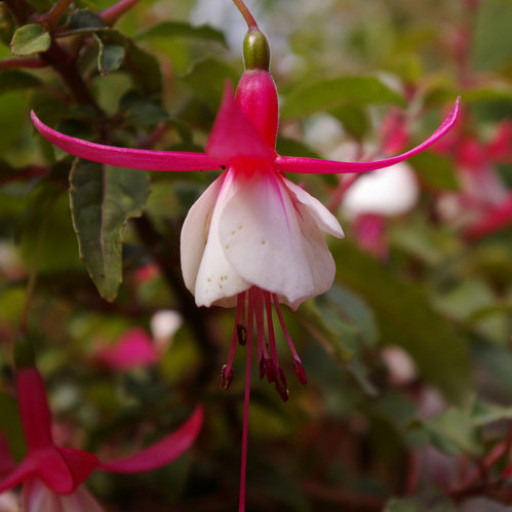
Known as "Lady’s Ear Drops" or the "Dancing Doll," the Fuchsia x hybrida is the undisputed ballerina of the shade garden. These stunning hybrids are famous for their pendulous, bi-colored flowers that look like tiny Victorian dancers wearing elaborate, ruffled tutus. Whether trailing from a hanging basket or growing as a small shrub, they bring an air of elegant drama to the cooler, quieter corners of a landscape.
🔍 How to Identify
- 🌸 The "Skirt" and "Cape": The flowers feature a unique two-tiered structure; an outer layer of sepals (the cape) that curves upward to reveal a contrasting inner circle of petals (the skirt or corolla).
- 🍃 Pointed Foliage: The leaves are typically ovate or heart-shaped with slightly "toothed" or serrated edges, often appearing in pairs or groups of three along the stem.
- 🎀 Dangling Stamens: Look for the long, delicate filaments that hang far below the petals, tipped with pollen-heavy anthers that resemble the tassels on a fine silk curtain.
🏡 In Your Garden
- ☁️ The Cloud Forest Connection: Most fuchsias trace their roots to cool, misty mountain forests. They "breathe" through their leaves and hate intense, dry heat. If the temperature climbs too high, they may go into a temporary dormancy until things cool down.
- 🥤 The Goldilocks Rule: They are notoriously picky about water. They want to stay consistently moist—like a wrung-out sponge—but will suffer from root rot if left in a soggy saucer. They are heavy feeders and require regular "meals" of liquid fertilizer to keep those heavy blooms coming.
⚠️ Safety & Toxicity
- ✅ Pet & Human Friendly: Great news for families—Fuchsia x hybrida is considered non-toxic to cats, dogs, and humans. It is one of the safest choices for a colorful patio.
- 🍓 The Berries: After the flower fades, the plant produces a small, dark purple berry. While edible in many species (tasting slightly tart or peppery), they aren't particularly tasty in most garden hybrids and are best left alone.
✨ Fun Fact
- 🐦 Designed for Hovering: Fuchsias evolved their bright, drooping flowers specifically to accommodate hummingbirds. The lack of a "landing pad" (unlike daisies or sunflowers) ensures that only hovering pollinators with long tongues can access the nectar, keeping the plant's resources reserved for its favorite feathered friends.

Detailed Care Instructions
To successfully grow Fuchsia X Hybrida plants, follow these steps:
- Location: Fuchsia plants prefer partial shade to full shade. Choose a location that receives a few hours of direct sunlight in the morning or evening, while providing protection from intense afternoon sun.
- Soil: Fuchsia plants prefer well-draining soil that is rich in organic matter. Amend the soil with compost or well-rotted manure before planting.
- Planting: Dig a hole that is slightly larger than the container the fuchsia plant is in. Gently remove the plant from its container and place it in the hole, ensuring the top of the root ball is level with the soil surface. Fill the hole with soil and pat it down gently.
- Watering: Fuchsias prefer consistently moist but not waterlogged soil. Water when the top inch of soil feels dry, and avoid overwatering to prevent root rot. However, do not let the soil dry out completely. Using a mulch layer around the plant can help retain soil moisture.
- Fertilizing: Fuchsias benefit from regular feeding during the growing season. Use a balanced, water-soluble fertilizer diluted according to the product instructions. Apply the fertilizer every two weeks or as directed on the label.
- Pruning: Fuchsia plants may require pruning to maintain their shape and promote healthy growth. Prune in early spring before new growth begins, removing any dead, damaged, or crossing branches. Pinch off the tips of young plants to encourage branching and bushier growth.
- Pests and Diseases: Fuchsia plants can be susceptible to aphids, whiteflies, and spider mites. Monitor your plants regularly for signs of infestation and treat as necessary. Additionally, ensure good airflow around the plants to prevent fungal diseases.
- Winter Care: In colder climates, fuchsia plants can be grown as annuals or overwintered indoors. Before the first frost, move potted fuchsias inside or into a protected area. Prune back the foliage and reduce watering. Store them in a cool, dark place, and resume regular care when spring arrives.
By following these guidelines, you should be able to successfully grow Fuchsia X Hybrida plants and enjoy their beautiful blooms.

Place in a window with dappled sun or a spot in the middle of a room. Or directly in a window facing west or east.

To water this plant, you should moisten the soil around its roots without letting it become waterlogged. Water on a regular basis during the growing season, but avoid over-watering, as this can cause the plant to rot. Allow the soil to dry out slightly before watering again. It is also important to avoid getting the leaves wet when watering, as this can lead to fungal diseases.
To fertilize this plant, use a balanced fertilizer with equal amounts of nitrogen, phosphorus, and potassium. Apply the fertilizer once every two weeks during the growing season, beginning in early spring and continuing through mid-fall. Be careful not to over-fertilize as this can cause damage to the plant. Water the plant thoroughly before and after fertilizing.
For best results when planting a Fuchsia x Hybrida plant, it is recommended to use a slightly acidic and well-draining soil that is rich in organic matter. The ideal soil pH level for this plant is typically between 5.5 and 6.5. It is also important to ensure that the soil is consistently moist but not waterlogged, as this can lead to root rot and other issues. Adding a layer of compost or mulch to the soil around the plant can help to retain moisture and provide additional nutrients over time. When choosing a soil mix or fertilizer, be sure to read the packaging carefully to ensure that it is appropriate for use with this type of plant.
To propagate the plant, you will need to take a cutting from a mature plant. Choose a stem that is healthy and has several leaves. Use a clean, sharp pair of scissors or pruning shears to make a clean cut on the stem. It is important that the cut is clean and not jagged as this can damage the stem and reduce its chances of rooting successfully.
Next, remove any leaves from the bottom of the stem, leaving only a few at the top. This is where the new growth will appear. You may also wish to dip the cut end of the stem in rooting hormone to encourage the growth of new roots.
Pot the cutting into a well-draining potting mix and water it well. Keep the soil moist but not waterlogged, and place the pot in a warm, bright spot that receives indirect sunlight.
Be patient as it may take several weeks for the cutting to root and start growing new foliage. Once the cutting has established roots and has grown new leaves, you can transplant it into a larger pot or into the ground.
Common pests of the hybrid fuchsia include Spider mites, aphids, thrips, whiteflies. Make a habit of checking your hybrid fuchsia frequently for pests so that any infestations can be caught and managed early.







