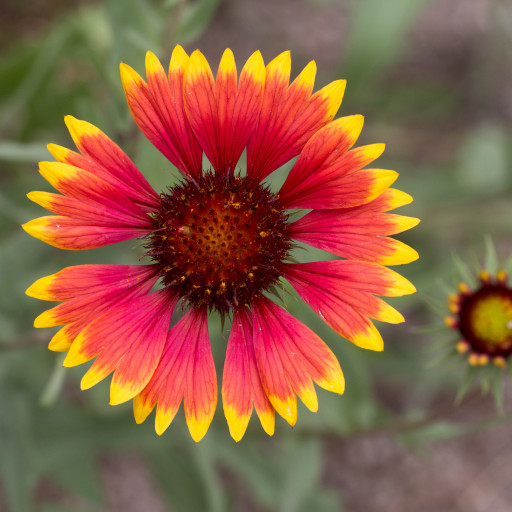
Plant Overview
Often called the Blanket Flower, Gaillardia is the ultimate "sun worshiper" of the prairie. Legend has it that these flowers first grew over the grave of a legendary Native American weaver, whose colorful blankets were mirrored in the plant's fiery petals. These hardy survivors are beloved for their ability to thrive in harsh, hot conditions where other garden favorites might wilt.
🔍 How to Identify
- 🌼 The Petals: These daisy-like flowers feature a "bullseye" pattern, usually starting with a deep wine-red or burgundy center that transitions into brilliant orange and bright yellow tips.
- 🧶 Fuzzy Foliage: The stems and lance-shaped leaves are covered in fine, grayish-green hairs, giving the plant a soft, slightly textured appearance that helps it retain moisture.
- 🏐 The "Buttons": Once the petals drop, the plant leaves behind distinctive, spherical seed heads that look like soft, spiky pom-poms, adding visual interest even after the bloom fades.
🏡 In Your Garden
- ☀️ Sun or Bust: These plants are true heat-lovers. To prevent them from becoming "leggy" or falling over, they need at least six to eight hours of direct sunlight. The more sun they get, the more intense their colors become.
- 🏜️ Poor Soil Preference: Unlike many perennials, Gaillardia actually dislikes rich, heavy soil. They thrive in "lean" or sandy ground with excellent drainage. If their roots stay too wet, especially in winter, the plant may not survive to the next year.
- ✂️ The Short-Lived Perennial: While technically perennials, individual plants often burn out after two or three years. Gardeners often let the last flowers of the season go to seed, allowing the plant to "self-sow" and keep the colony going for a lifetime.
⚠️ Safety & Toxicity
- 🌿 Skin Irritation: Gaillardia contains compounds called lactones that can cause "blanket flower dermatitis" (a mild itchy rash) in some people. It is wise to wear gloves if you are doing extensive pruning.
- 🐾 Pet Safety: These plants are generally considered non-toxic to dogs, cats, and horses, making them an excellent choice for pet-friendly landscapes.
✨ Fun Fact
- 🦋 A Butterfly Buffet: Gaillardia is a top-tier pollinator plant. Its nectar is "easily accessible," meaning insects with shorter mouthparts, like native sweat bees and small butterflies, can feast just as easily as the larger species!

Detailed Care Instructions
To grow Gaillardia plant, also known as Blanket Flower, follow these steps:
- Choose the right time: Gaillardia is a perennial plant that should be planted in the spring or fall, depending on your growing zone. Check your gardening zone to determine the appropriate time to plant.
- Select a location: Gaillardia plants prefer full sun, so choose a spot in your garden that receives at least six to eight hours of direct sunlight each day. The soil should be well-draining and slightly acidic to neutral pH.
- Prepare the soil: Before planting, loosen the soil and remove any debris or weeds. If the soil is heavy or clay-like, amend it with organic matter like compost or well-rotted manure to improve drainage and nutrient content.
- Plant the seeds or plants: Gaillardia can be grown from seeds or purchased as seedlings from a nursery. If planting seeds, sow them directly in the garden, barely covering them with soil. If using seedlings, dig a hole twice the size of the root ball, place the plant in the hole, and gently firm the soil around the roots.
- Watering: Initially, water the newly planted Gaillardia regularly to help establish root growth. Once established, Gaillardia is drought-tolerant and generally only requires watering during prolonged dry periods. Water deeply but infrequently, allowing the soil to dry slightly between waterings.
- Mulching: Apply a layer of organic mulch, like straw or wood chips, around the plants to help conserve moisture, suppress weed growth, and maintain a consistent soil temperature.
- Fertilizing: Gaillardia plants typically don't require heavy fertilization. However, you can apply a balanced, slow-release fertilizer in spring to promote healthy growth. Follow the package instructions for application rates.
- Deadheading: To encourage continuous blooming and maintain a neat appearance, deadhead faded flowers regularly by twisting or cutting the spent blooms off at the stem.
- Pruning: Trim back Gaillardia plants in early spring, cutting them back to basal foliage. This helps rejuvenate the plant and promotes compact growth.
- Pests and diseases: Gaillardia plants are relatively resistant to most pests and diseases. However, keep an eye out for common garden pests like aphids or spider mites. If necessary, apply insecticidal soap or use organic pest control methods.
Following these steps should ensure healthy growth and abundant blooms of the Gaillardia plant in your garden.

Place in a bright room that is sun drenched almost all day. Or directly in a south-facing window.

Here are the steps for watering a Gaillardia plant:
1. Check the soil moisture level by inserting a finger into the soil up to the first knuckle.
2. If the soil feels dry, it’s time to water the plant.
3. Slowly pour water onto the soil around the base of the plant. Avoid watering the leaves as this can encourage fungal growth.
4. Water the plant deeply, allowing the water to soak into the soil. Stop watering when you see water pooling on the surface.
5. Ideally, the soil should be moist but not waterlogged.
6. In hot, dry weather, you may need to water your Gaillardia plant more frequently.
7. Avoid underwatering or overwatering, as both can harm the plant.
To fertilize this plant, you should use a balanced fertilizer with an N-P-K ratio of 10-10-10 or 20-20-20. Apply the fertilizer in the spring before new growth appears, and again in mid-summer. Be sure to follow the package instructions for application rates. Avoid over-fertilizing, as this could lead to leaf burn or reduced flowering. Water the plant before and after fertilizing to help the nutrients absorb into the soil.
When planting Gaillardia, it is recommended to use well-draining soil that is rich in organic matter. It should have a pH level of around 6.0-7.0 and be able to retain moisture without becoming waterlogged. A mix of sand and loam is ideal for growing these plants. It is important to avoid heavy clay soils that can lead to waterlogging and root rot. Additionally, adding a layer of mulch on top of the soil can help to retain moisture and regulate temperature.
To propagate this plant, start by collecting the seeds from the flower head after it has dried out. Once the seeds are collected, prepare a seed-starting mix by mixing peat moss, perlite, and vermiculite in equal parts. Sow the seeds at a depth of 1/8 inch and water them lightly. Keep the soil moist and place the container in a warm and sunny location.
Once the seedlings have grown large enough to handle, transplant them into individual pots filled with potting soil. Water the plants thoroughly and keep them in a sunny location. Pinch back the tips of the plants to encourage branching and fuller growth.
Another way to propagate this plant is by division. Dig up the mature plant in the early spring or fall and use a sharp knife or garden shovel to divide the root ball into several sections. Each section should have a few shoots and a healthy root system. Plant the divided sections in well-draining soil and water them thoroughly. Keep the plants in a sunny location and they should start growing within a few weeks.







