Plant Overview
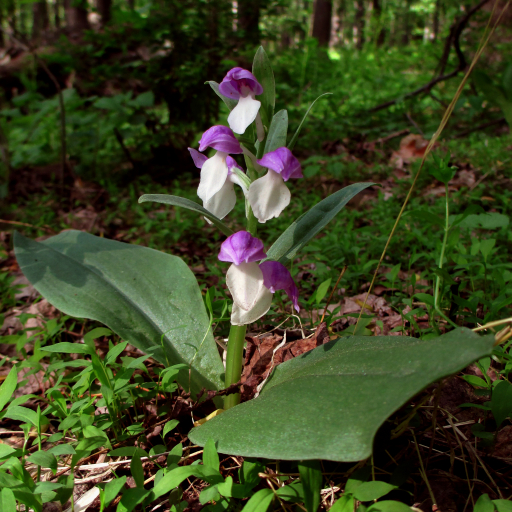
The Showy Orchis is one of the most enchanting treasures of the North American spring forest. Often called the "Gay Orchis" in older botanical texts, this small but vibrant wildflower is a member of the orchid family that acts as a herald for the deep greening of the woods. It is a slow-growing perennial that favors the quiet, undisturbed corners of ancient deciduous forests.
🔍 How to Identify
- 🌸 The Bi-Colored Bloom: The most striking feature is the flower, which consists of a pink-to-lavender "hood" (sepals and petals fused together) and a bright, contrasting white lower lip.
- 🍃 Glossy Basal Leaves: Unlike many plants that have leaves along the stem, the Showy Orchis typically has only two large, fleshy, oval leaves that sit flat near the ground.
- 📏 Stature: It is a diminutive plant, usually reaching only 4 to 8 inches in height, making it easy to miss if you aren't looking closely at the forest floor.
🏡 In Your Garden
- 🍄 The Fungal Connection: This orchid has a complex, symbiotic relationship with soil fungi (mycorrhizae). Because it relies on these specific underground partners for nutrients, it is notoriously difficult to cultivate and almost never survives being transplanted from the wild.
- 🌳 Preferred Neighbors: In the wild, it is most often found near the base of old-growth trees like Maples, Beeches, or Oaks, where the leaf mulch creates a rich, "sweet" (calcium-rich) soil. If you are lucky enough to have it on your property, the best care is simply to leave its habitat undisturbed.
⚠️ Safety & Toxicity
- 🟢 Non-Toxic: The Showy Orchis is generally considered non-toxic to humans, cats, and dogs.
- ✋ Handle with Care: While not poisonous, the plant is physically delicate. Because it is becoming increasingly rare due to habitat loss and deer overgrazing, it should never be picked or disturbed. Most states list it as a species of conservation concern.
✨ Fun Fact
The Showy Orchis features a long "nectar spur" tucked behind the flower. This spur is so deep that only heavy-bodied bumblebees with long tongues are strong enough to force their way into the flower to reach the reward, acting as the plant's primary pollinators!

Detailed Care Instructions
| Lighting | Part Sun |
| Hardiness Zones | Max 8B |
To grow Galearis spectabilis, also known as Showy Orchid, follow these steps:
- Climate: Check if your climate is suitable for growing Galearis spectabilis. It is native to North America and thrives in temperate regions with cool summers.
- Location: Find a suitable location that receives partial shade to full shade. Galearis spectabilis prefers shaded areas with filtered sunlight. Avoid direct sunlight as it can scorch the leaves.
- Soil: The plant prefers rich, well-draining soil. Amend the soil with organic matter like compost or leaf mold to improve fertility and drainage.
- Planting: Plant the Galearis spectabilis rhizomes in early spring or fall. Dig a hole that is large enough to accommodate the rhizomes and place them in the hole with the growing tips facing upwards. Backfill the hole with soil and gently firm it around the rhizomes.
- Watering: Keep the soil evenly moist, but avoid overwatering as it can lead to root rot. Water the plant thoroughly when the top inch of soil feels dry, especially during hot summer months.
- Mulching: Apply a layer of organic mulch, like wood chips or leaf litter, around the base of the plant to help retain moisture, regulate soil temperature, and suppress weed growth.
- Fertilizer: Galearis spectabilis does not require heavy feeding. A light application of balanced organic fertilizer in early spring or during active growth can be beneficial.
- Division: After a few years, the clumps of Galearis spectabilis may become crowded, affecting the plant's health and flower production. Divide the rhizomes in autumn when the plant is dormant for best results. Gently dig up the clump, separate the rhizomes, and replant them in suitable locations.
- Pests and diseases: Galearis spectabilis is generally resistant to pests and diseases. However, keep an eye out for slugs, snails, and fungal diseases in overly moist conditions.
- Maintenance: Remove any dead or withered foliage and spent blooms regularly to maintain a tidy appearance. Trim back any spreading or invasive growth as necessary.
Remember, growing Galearis spectabilis can take time and patience, so don't be discouraged if you don't see immediate results.

Place in a dark room with little light, like a dark bedroom or a spot far away from a window or directly in a north-facing window.

Galearis Spectabilis plants thrive in moist soil and require regular watering to survive. The best way to water these plants is to use a watering can or a hose with a soft spray attachment to avoid damaging the delicate leaves and stems.
When watering, make sure to dampen the soil evenly and thoroughly, ensuring that water reaches the roots without causing waterlogging. It is essential to avoid letting the soil dry out completely before watering, as this can cause stress to the plant and may lead to stunted growth or even death.
It is best to water Galearis Spectabilis plants early in the day or late in the evening when the sun is not at its strongest, as this will reduce water loss due to evaporation. During hot and dry weather, it may be necessary to water the plants more often to maintain moisture levels in the soil.
Overall, consistent and balanced watering is essential for the health and vitality of Galearis Spectabilis plants, ensuring that they thrive and produce beautiful blooms year after year.
To fertilize this plant, begin by choosing a water-soluble fertilizer with a balanced ratio of nitrogen, phosphorus, and potassium. In the growing season, mix the fertilizer with water and apply it to the soil once per month, taking care not to over-fertilize. During the dormant season, fertilizing should be reduced or stopped altogether. Be sure to follow the instructions on the fertilizer packaging carefully, and avoid getting any fertilizer on the plant's foliage, as this can damage it.
For Galearis Spectabilis plants, it is recommended to use a well-draining soil that is rich in organic matter. The optimal pH range is 5.5 to 6.2. The soil should be moist but not waterlogged, as these plants prefer consistent moisture but can rot if the soil is too wet. A recommended soil mix for Galearis Spectabilis plants is a mix of peat moss, perlite, and pine bark. This will provide good drainage and aeration while also supplying nutrients to the plant. It is important to avoid using soils that are heavy in clay, as they can retain too much moisture and lead to root rot.
The propagation of Galearis spectabilis can be done in the spring. This plant can be propagated using its rhizomes, which are underground stems that produce new shoots and roots. To propagate the plant, separate the rhizomes with a sharp, clean knife. Each rhizome should have at least one growth point, or eye, which will produce new shoots. Plant the rhizomes in a well-draining soil mixture and water them well. Keep the soil evenly moist and avoid overwatering. The new shoots should appear within a few weeks, at which point the plant can be cared for like an established Galearis spectabilis plant.








