Plant Overview
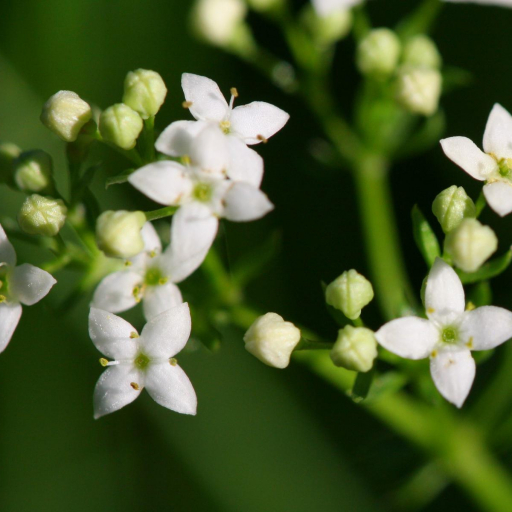
Known as Heath Bedstraw, this delicate, low-growing herb is the "scented mattress" of the wild. It often blankets acidic hillsides and moorlands with a snowy dusting of tiny white flowers. Historically, its soft, fragrant dried foliage was used to stuff mattresses, as the scent was thought to induce sleep and keep pests away.
🔍 How to Identify
- 🌿 Leaf Whorls: Look for small, lance-shaped leaves that grow in circular groups (whorls) of 6 to 8 around the smooth, square-ish stem.
- 🌸 Starry Blooms: The flowers are tiny, brilliant white, and have exactly four pointed petals. They grow in frothy, dense clusters that give the plant a "cloud-like" appearance.
- 🍃 Smooth Texture: Unlike its famous cousin "Cleavers" (which sticks to your clothes), the stems and leaves of Heath Bedstraw are smooth and do not have hooked hairs.
🏡 In Your Garden
- ⛰️ The Acid Lover: This plant is an "indicator species," meaning its presence tells you the soil is acidic and nutrient-poor. In a garden setting, it will struggle in chalky or lime-rich soils.
- 🌱 Living Carpet: It creates a dense, moss-like cushion. It is an excellent choice for rock gardens or "wild" patches where you want a natural groundcover that can survive in harsh, rocky environments where other plants fail.
⚠️ Safety & Toxicity
- 🐾 Pet & Human Safe: Heath Bedstraw is generally considered non-toxic to humans, dogs, and cats. It has no known history of causing harm when handled.
- 👐 Skin Comfort: Because it lacks the tiny "teeth" of other Bedstraw species, it is very soft to the touch and rarely causes the mechanical skin irritation often associated with its wild relatives.
✨ Fun Fact
🧀 The Wild Cheesemaker: The genus name Galium comes from the Greek word gala, meaning "milk." This refers to the historical use of these plants to curdle milk for cheesemaking before modern rennet was commonly used!

Detailed Care Instructions
Galium Saxatile, also known as Heath Bedstraw, grows best in well-draining, sandy soil and full sun to partial shade. Here are some tips on how to grow this plant successfully:
- Choose a suitable location: Galium Saxatile prefers a sunny or partially shaded spot in the garden with well-draining soil. It is also tolerant of various soil types, including sandy and acidic soil.
- Planting: Dig a hole slightly larger than the root ball of the plant and gently place the plant in the hole. Cover the roots with soil and water thoroughly. Space the plants at least 12 inches apart to allow for proper growth.
- Watering: Water the plant regularly, especially during the hot summer months. Make sure the soil is moist but not waterlogged. Galium Saxatile is drought-tolerant once established, so be mindful not to overwater.
- Fertilization: Galium Saxatile does not require regular fertilization. However, you can add a slow-release fertilizer in the spring to help promote growth and flowering.
- Mulching: Mulch around the base of the plant to help retain moisture and suppress weeds. Avoid covering the base of the plant with mulch, as this can lead to rotting.
- Pruning: Trim back the plant after flowering to promote new growth and prevent it from becoming too leggy. You can also deadhead spent flowers to encourage more blooms.
- Pests and diseases: Galium Saxatile is generally pest and disease resistant. However, keep an eye out for aphids or spider mites, which can be treated with insecticidal soap or neem oil.
By following these tips, you can successfully grow Galium Saxatile in your garden and enjoy its beautiful blooms throughout the growing season.

Place in a bright room that is sun drenched almost all day. Or directly in a south-facing window.

To properly water Galium saxatile, you should use the following steps:
1. Check the soil moisture before watering to ensure that it is not too wet or too dry.
2. Water deeply at the base of the plant, rather than from overhead, to avoid getting water on the leaves.
3. Avoid letting the soil dry out completely, but also avoid overwatering, which can lead to root rot.
4. Water regularly 1-2 times per week, depending on the weather conditions and moisture needs of the plant.
5. Consider using a watering can or a drip irrigation system to ensure that you are watering the plant evenly and efficiently.
6. During periods of high heat or drought, increase the frequency of your watering to help the plant stay hydrated and healthy.
7. Monitor the plant's growth and appearance to determine if it needs more or less water. Brown or yellowing leaves can be a sign of over or under watering.
Fertilize the plant every spring with a balanced, slow-release fertilizer. Make sure to follow the instructions on the fertilizer packaging for the correct dosage and application method. Water the plant thoroughly after fertilizing to help the nutrients penetrate the soil and reach the roots. Avoid over-fertilizing, as this can lead to nutrient imbalances and potentially harm the plant.
Galium Saxatile plant requires well-drained, acidic soil with a pH level between 5.5 and 6.5. The soil should have good organic matter content, and be able to retain moisture without becoming waterlogged. It is recommended to use a sandy or loamy soil mix that is rich in humus and compost. Adding perlite or vermiculite to the soil mix can improve drainage and aeration. Additionally, regular fertilization with an acidic fertilizer can help promote healthy growth and blooming. Avoid using heavy clay soils or alkaline soils as they can cause root rot and hinder the plant's growth.
Galium Saxatile plants can be propagated through various methods, including division, seeding, and cuttings.
To propagate Galium Saxatile through division, carefully dig up the plant and use a clean sharp knife to separate the rootball into smaller sections with at least one healthy shoot and root system. Replant the divisions in well-draining soil and water thoroughly.
Seeds can also be collected from mature Galium Saxatile plants and sown in a seed tray filled with a well-draining soil mix. Keep the soil consistently moist and provide ample sunlight for germination.
Additionally, Galium Saxatile can be propagated through stem cuttings. Select a healthy stem and cut it just below a leaf node. Remove the lower leaves and dip the cut end into a rooting hormone. Plant the cutting in a well-draining soil mix and keep the soil moist until roots develop.
Regardless of the propagation method chosen, provide the new plants with adequate water, sunlight, and nutrients to ensure successful growth.








