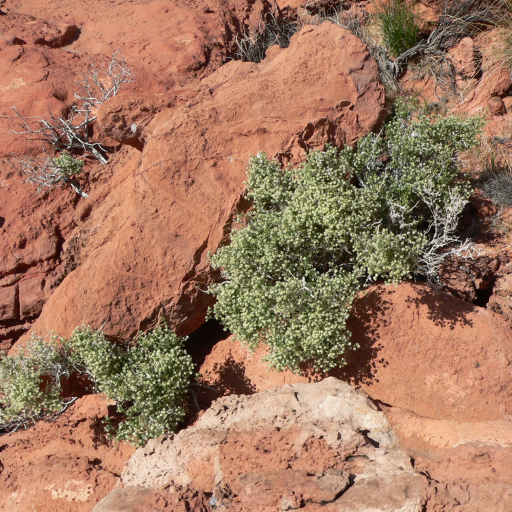
Plant Overview
Meet the Starry Bedstraw, a resilient desert dweller that brings a constellation of tiny blooms to the rocky slopes of the American Southwest. Unlike its lush, woodland cousins, this variety is a rugged survivor, forming shimmering, silver-green mounds in the heart of the Mojave and Sonoran deserts. Its name comes from the way its leaves and flowers radiate outward like miniature bursting stars.
🔍 How to Identify
- ✨ Starry Whorls: The narrow, pointed leaves grow in circular groups (whorls) of four along the stems, creating a distinct geometric pattern.
- ☁️ Cloud-like Blooms: During the spring, the plant is covered in tiny, four-petaled flowers that range from creamy white to pale yellow, giving the shrub a fuzzy, ethereal appearance from a distance.
- 🌵 Bristly Texture: The stems and leaves are coated in fine, stiff hairs. This gives the plant a "sticky" or rough texture, which helps it cling to rocky surfaces and deters hungry desert herbivores.
🏡 In Your Garden
- 🏜️ Desert Specialist: This plant is a "lithophyte" at heart, meaning it thrives in rocky crevices and gravelly soil. If you are planting it in a garden, it requires exceptional drainage; it will struggle in heavy, clay-based potting mixes.
- ☀️ Sun & Space: It thrives in intense, direct sunlight and is extremely drought-tolerant. It is a "set it and forget it" plant for xeriscaping, as it has evolved to survive on minimal rainfall by minimizing its leaf surface area to prevent water loss.
⚠️ Safety & Toxicity
- 🟢 Safe Status: Galium stellatum is generally considered non-toxic to humans, dogs, and cats. It does not contain the heavy alkaloids found in many other desert species.
- 🖐️ Skin Irritation: While not poisonous, the tiny hooked hairs on the stems can be abrasive. Handling the plant with bare skin might cause mild itching or a "velcro-like" scratchiness, so gardening gloves are recommended for pruning.
✨ Fun Fact
The name "Bedstraw" comes from an ancient tradition where species in the Galium genus were dried and used to stuff mattresses. The tiny hooked hairs on the stems caused the plant material to mat together, preventing the stuffing from shifting or lumping inside the bed!

Detailed Care Instructions
To grow Galium stellatum, also known as lanceleaf bedstraw, you can follow these steps:
- Choose a suitable location: Galium stellatum prefers full sun to partial shade, and well-draining soil. It can tolerate different soil types like sandy or rocky soils.
- Prepare the soil: Remove any weeds or grass from the area where you want to plant the Galium stellatum. Loosen the soil with a garden fork or tiller and incorporate organic matter like compost or well-rotted manure to improve soil structure and fertility.
- Sow seeds or transplant seedlings: You can either sow Galium stellatum seeds directly into the prepared soil or start with nursery-grown seedlings. If sowing seeds, scatter them evenly over the soil surface and lightly rake them in. If using seedlings, dig a hole slightly larger than the plant's rootball and gently place the seedling in the hole, then backfill with soil and pat it down gently.
- Watering: Water the newly planted seeds or seedlings thoroughly, ensuring the soil is moist but not waterlogged. Afterward, water the plants regularly, especially during dry periods. Avoid overwatering as Galium stellatum prefers slightly drier conditions.
- Mulching: Apply a layer of organic mulch around the plants to help retain moisture, suppress weeds, and provide some insulation for the roots. Pine straw, wood chips, or shredded bark are good options for mulch.
- Maintain the plants: Galium stellatum is relatively low-maintenance. Regularly check for weeds and remove them promptly to prevent competition. Water when necessary, and monitor the plants for any signs of pests or diseases. Prune back the plant in late winter or early spring to encourage healthy growth.
- Propagation: To propagate Galium stellatum, you can collect seeds from mature plants during the summer and sow them in the same way as described earlier. You can also divide established plants in early spring by carefully digging up the clump, dividing it into smaller sections, and replanting each section.
Remember that different regions and climates have specific requirements and conditions, so it's always beneficial to consult with local gardening experts or agricultural extension services for region-specific advice.

Galium stellatum is a plant that belongs to the Rubiaceae family, and it is commonly found in various regions. When it comes to watering this particular plant, here are some essential details:
1. Watering Frequency: It is important to water Galium stellatum plant regularly to keep the soil moist. However, it is equally important to ensure that the soil is not waterlogged. The frequency of watering may vary depending on factors such as climate, humidity, and soil type.
2. Soil Moisture: It is crucial to maintain consistent soil moisture for Galium stellatum. The soil should be evenly moist but not overly saturated. Feel the soil with your fingers to determine its moisture levels before watering.
3. Watering Technique: Water the Galium stellatum plant gently and slowly, allowing the water to penetrate deep into the root zone. Avoid harsh or forceful watering, as it may lead to water runoff or disturb the plant's delicate root system.
4. Watering Temperatures: Ensure that the water used for watering Galium stellatum is at a moderate temperature. Extreme hot or cold water can shock the plant or damage the root system, so it is best to use room temperature or slightly lukewarm water.
5. Watering Method: There are several methods you can use to water Galium stellatum. You can use a watering can with a small spout to control the water flow and prevent excess water from splashing onto the foliage. Alternatively, you can use a gentle spray bottle or a drip irrigation system to provide a steady and controlled water supply.
6. Observing Plant's Response: Regularly monitor the Galium stellatum plant for signs of over or under-watering. Drooping leaves or yellowing foliage may indicate overwatering, while wrinkled or dry leaves may signify under-watering. Adjust the watering frequency accordingly to help the plant thrive.
Remember, while watering is vital for the growth of Galium stellatum, it is equally important to consider other factors such as sunlight exposure, temperature, and soil conditions to ensure optimal care for the plant.
To provide proper fertilization for the Galium Stellatum plant, follow these instructions:
- Choose a balanced, slow-release fertilizer with an N-P-K ratio of around 10-10-10 or similar.
- Apply the fertilizer in early spring, just as new growth begins to emerge.
- Measure out the recommended amount of fertilizer according to the package instructions. Avoid over-fertilizing, as it can negatively affect the plant's health.
- Sprinkle the fertilizer evenly around the base of the plant, avoiding direct contact with the stems or leaves.
- Gently work the fertilizer into the top layer of soil using a hand cultivator or rake.
- Water the plant thoroughly after applying the fertilizer to help the nutrients penetrate into the soil.
- Repeat the fertilization process every spring or as recommended for the specific fertilizer brand, following the package instructions for application rates and timing.
- Regularly monitor the plant's growth and health, adjusting fertilization if necessary based on visual cues such as yellowing leaves or weak growth.
Remember to follow the instructions on the fertilizer packaging for best results, as different brands may have specific guidelines for their products.
Galium stellatum is a perennial plant that belongs to the Rubiaceae family. When selecting soil for this particular plant, it is important to consider its natural habitat and growing preferences. Galium stellatum is typically found in dry, open areas such as prairies, meadows, and rocky slopes. Understanding its native environment can help in determining the best soil for its cultivation.
This plant generally thrives in well-draining soils that are low in fertility. It prefers soil that is sandy or loamy, as these soil types offer good drainage and prevent waterlogging, which can be detrimental to the plant's health. Soils with high clay content should be avoided, as they tend to retain water and can lead to root rot.
Ideally, the pH level of the soil should be neutral to slightly acidic (pH 6.0-7.0), as Galium stellatum tends to prefer these conditions. Testing the soil's pH level and making necessary amendments can help create an optimal growing environment for the plant.
Adding organic matter to the soil is beneficial for Galium stellatum as well. This can be achieved by incorporating well-rotted compost or leaf mold before planting. The organic matter improves soil structure, promotes soil aeration, and increases the soil's ability to retain moisture without becoming waterlogged.
In terms of nutrient requirements, Galium stellatum does not require a highly fertile soil. Excessive soil fertility may encourage the growth of competing vegetation, which can negatively impact the plant's growth. Therefore, using a soil that is moderate in fertility is recommended.
To summarize, Galium stellatum thrives in well-draining, sandy or loamy soils with a slightly acidic to neutral pH level (pH 6.0-7.0). Incorporating organic matter into the soil can improve its structure and moisture retention capacity, while avoiding highly fertile soil can prevent competition from other plants.
Galium Stellatum is a perennial plant that belongs to the Rubiaceae family, native to various regions in North America. It commonly grows in dry, rocky areas, including prairies, woodlands, and foothills.
To propagate Galium Stellatum, you can follow these steps:
- Start by collecting seeds from mature plants. Look for dry, brown fruits on the plant that have split open. These fruits contain small, dark seeds.
- Once you have collected the seeds, place them in a paper bag and store them in a cool, dry place until you are ready to sow them.
- Prepare a seed tray or small pots with a well-draining potting mix. You can make your own mix by combining equal parts of sterile potting soil, perlite, and coarse sand.
- Moisten the potting mix before adding it to the seed tray or pots. Ensure the mix is evenly moist, but not waterlogged.
- Spread the Galium Stellatum seeds evenly over the surface of the potting mix. Gently press them into the soil, but do not bury them deep.
- Cover the seeds with a thin layer of the same potting mix or vermiculite.
- Place the seed tray or pots in a warm area with indirect sunlight. A temperature range between 70-75°F (21-24°C) is ideal for germination.
- Maintain moisture in the soil by lightly misting or watering from the bottom when the top inch of the soil feels dry.
- Germination usually takes around 2-4 weeks. Once the seedlings have grown a couple of inches tall and have developed a few leaves, they can be transplanted into individual pots.
- Prepare larger pots or containers with a well-draining potting mix similar to the one used for sowing the seeds.
- Gently remove the seedlings from the seed tray, taking care not to damage the delicate roots.
- Place each seedling into a new pot, ensuring it is planted at the same depth as before. Firm the soil gently around the base of the seedling.
- Water the newly transplanted seedlings thoroughly, and place them in a location with bright, indirect sunlight.
- Gradually acclimate the young plants to outdoor conditions, increasing their exposure to direct sunlight and outdoor temperatures over a week or two.
- After a few months, when the seedlings have established a strong root system, they can be planted into their permanent location in the garden or larger containers.
By following these steps, you can successfully propagate Galium Stellatum from seeds and grow new plants of this attractive perennial species.








