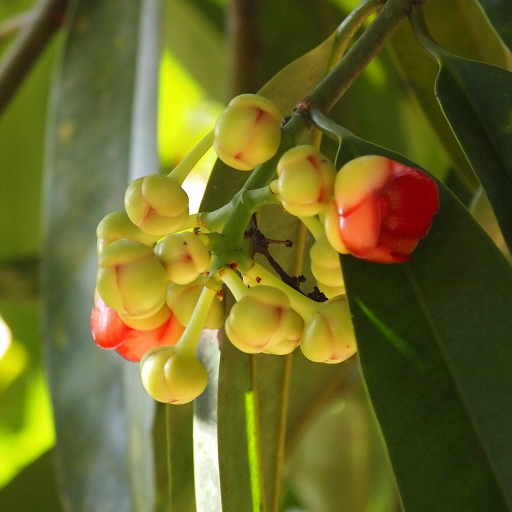
Plant Overview
Known across Southeast Asia as the "Asam Gelugur," Garcinia atroviridis is far more than just a shade tree; it is a culinary powerhouse. This majestic evergreen is famous for its striking, sun-colored fruits that resemble miniature, deeply-ribbed pumpkins. While it began its journey in the rainforests of Malaysia, it has achieved global fame as a secret ingredient in tangy curries and a star player in the world of natural wellness.
🔍 How to Identify
- 🍊 The Fruit: The most iconic feature is the large, globose fruit which is heavily fluted with distinct ribs. It transitions from a bright emerald green to a brilliant chrome yellow or orange when fully ripe.
- 🍃 Glossy Foliage: The leaves are long, leathery, and dark green with a high-gloss finish. They grow in opposite pairs and can reach over 10 inches in length, providing a lush, tropical look year-round.
- 🌸 Hidden Blooms: It produces small, dark red flowers that appear at the ends of the twigs, though they are often tucked away beneath the dense canopy of leaves.
🏡 In Your Garden
- 🌧️ Rainforest Roots: As a tropical native, this tree craves high humidity and consistent moisture. It is not frost-tolerant and will struggle significantly if temperatures drop below 50°F (10°C).
- 🌱 Patience is Key: This is a slow-growing species. Because it develops a deep, sensitive taproot, it hates being moved. If you are planting one, ensure you’ve picked a permanent spot with well-draining, slightly acidic soil where it can reach its full 60-foot height over several decades.
⚠️ Safety & Toxicity
- ✅ Status: Generally safe for humans and widely used in traditional cooking.
- 🥣 Culinary Use: The fruit is too acidic to eat raw; instead, it is usually sliced and sun-dried. These dried "asam keping" slices are used to add a sharp, clean sourness to dishes like Laksa.
- 🐾 Pet Caution: While the fruit is not considered "poisonous" to pets, the high concentration of Hydroxycitric Acid (HCA) can cause significant stomach upset, drooling, or diarrhea in cats and dogs if consumed in large amounts.
✨ Fun Fact
The Garcinia atroviridis is a biological relative of the Mangosteen, but instead of being the "Queen of Fruits," it is known as the "Natural Fat Burner." The HCA extracted from its rind is a primary ingredient in many modern weight-loss supplements!

Detailed Care Instructions
Here are some steps to help you grow Garcinia Atroviridis plant:
- Choose the right location: Garcinia Atroviridis prefers warm and humid climates. It thrives in temperatures between 70-90°F (21-32°C). Select a spot in your garden that receives full to partial sun.
- Prepare the soil: The soil should be well-draining and rich in organic matter. Add compost or well-rotted manure to improve the soil's fertility and drainage.
- Propagation: Garcinia Atroviridis can be grown from seeds or cuttings. If using seeds, soak them in water overnight before planting. If using cuttings, select healthy ones with 6-8 inches (15-20 cm) length and remove the lower leaves.
- Planting: Dig a hole slightly larger than the root ball of the plant. Place the plant in the hole and backfill with soil, gently firming it around the roots. Water thoroughly after planting.
- Watering: Garcinia Atroviridis requires regular watering to keep the soil moist but not waterlogged. Ensure the plant receives about 1-2 inches (2.5-5 cm) of water per week, especially during dry periods.
- Fertilizing: Apply a balanced fertilizer, such as a slow-release granular fertilizer, during the growing season. Follow the manufacturer's instructions for dosage and application.
- Pruning: Regular pruning helps maintain the shape and size of the plant. Trim back any dead or damaged branches. Pruning also encourages bushier growth.
- Pests and diseases: Keep an eye out for common pests like aphids, mites, and scale insects. Treat infestations with insecticidal soap or neem oil. Ensure good air circulation and avoid overwatering to prevent fungal diseases.
- Harvesting: Garcinia Atroviridis fruits are ready to harvest when they turn yellowish-green. They are generally picked when fully grown but still firm. Harvest carefully to avoid damaging the plant.
Remember to research specific information about your local climate and growing conditions to ensure the best possible growth for your Garcinia Atroviridis plant.

Place in a bright room that is sun drenched almost all day. Or directly in a south-facing window.

Garcinia Atroviridis plant requires regular watering to maintain its health and growth. It is important to water the plant deeply but infrequently to prevent the roots from becoming waterlogged. The frequency of watering depends on factors such as the temperature, humidity, and soil type. Generally, the plant should be watered once or twice a week, but this may vary depending on the conditions.
Before watering, check the soil moisture level by inserting your finger into the soil up to the first knuckle. If the soil feels dry, it is time to water the plant. Use a watering can or hose with a gentle stream to avoid damaging the plant. Water the plant until the soil is thoroughly moistened, but not soggy.
During hot weather, the plant may require more frequent watering to prevent wilting. In contrast, during cooler weather, the plant may require less frequent watering. It is important to avoid over-watering the plant as this can lead to root rot and other problems.
In addition to regular watering, Garcinia Atroviridis plant benefits from periodic fertilization to provide essential nutrients for growth and health. Use a balanced fertilizer according to the manufacturer's instructions to avoid over-fertilizing the plant. With proper watering and care, Garcinia Atroviridis plant can thrive and produce healthy fruit.
To fertilize the plant, use an all-purpose fertilizer with a balanced N-P-K ratio. Apply the fertilizer in a circle around the base of the plant, being careful not to let it touch the stem. Water the plant well after fertilizing. Repeat every 2-3 months during the growing season.
The ideal soil for Garcinia Atroviridis plant should be well-drained and loamy with a pH ranging from 5.0 to 6.5. The soil should be rich in organic matter and free from any toxins or pollutants. The plant thrives in a moderate to high humidity environment and needs regular watering to keep the soil moist but not waterlogged. It is recommended to use a high-quality potting mix that contains perlite or vermiculite for better drainage. The soil should also be supplemented with fertilizers that are high in potassium, magnesium, and nitrogen to support the plant's growth and development. Overall, the soil should provide a healthy and supportive environment for the plant to thrive and produce fruit.
There are several ways to propagate this plant. One common method is to collect seeds from mature fruit and plant them in well-draining soil. The seeds should be kept moist but not waterlogged until they germinate.
Another way to propagate the plant is through stem cuttings. Select a healthy stem and take a cutting that is about 10-15 cm long. Remove the lower leaves and dip the cutting in rooting hormone. Plant the cutting in a well-draining soil mix and keep it moist. It should root within a few weeks.
The plant can also be propagated through air layering. Select a healthy branch and wound it by removing a section of bark. Surround the wound with moist sphagnum moss and wrap it in plastic wrap to keep it moist. Within a few weeks, roots will appear and the new plant can be cut from the parent plant.
Propagation can also be achieved through grafting, where a cutting from the plant is attached to a rootstock of a different plant. This method is more complicated and requires some skill.
Regardless of the method used, the new plant should be given plenty of light, water, and nutrients to encourage healthy growth.








