Plant Overview
Known across its native Africa as the Imbe, Garcinia livingstonei is a hardy, architectural beauty named in honor of the legendary explorer David Livingstone. This evergreen tree is famous for its vibrant orange berries that pack a refreshing, tart punch, reminiscent of a cross between an apricot and a plum. Often used as an ornamental "living fence" or a structural specimen, it brings a rugged, geometric elegance to any landscape.
🔍 How to Identify
- 🌿 Branching Pattern: Look for its distinct "whorled" branching; the stiff branches typically grow in groups of three from the main stem, creating a unique, skeleton-like geometric frame.
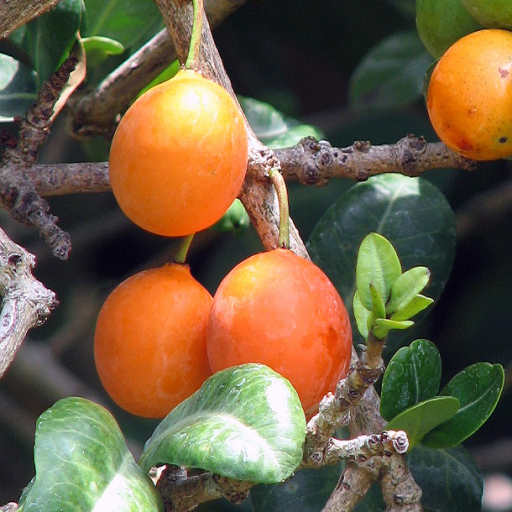
- 🍃 Leaf Texture: The leaves are incredibly thick, leathery, and oval-shaped, featuring a deep blue-green color with prominent, pale midribs.
- 🟠 The Fruit: During the warmer months, the tree produces small, round, bright orange fruits (roughly 1-2 inches) that have a thin skin and a succulent, orange pulp.
🏡 In Your Garden
- ☀️ Sun & Resilience: This tree is a sun-lover and is exceptionally drought-tolerant once established. It thrives in well-draining soil and can handle the intense heat of a summer afternoon without wilting.
- 👫 The Mating Game: Most Imbe trees are "dioecious," meaning individual trees are either male or female. If you are planting it for the fruit, you will typically need at least one of each to ensure pollination and a successful harvest.
- 🐌 Slow & Steady: Don't expect a forest overnight; the African Mangosteen is a notoriously slow grower, which actually makes it an excellent candidate for large containers or small urban gardens where space is limited.
⚠️ Safety & Toxicity
- ✅ Safe Consumption: The ripe fruit is entirely edible and is often eaten fresh or used to make jams and drinks. It is rich in Vitamin C.
- 💧 Latex Sap: Like many species in the Garcinia family, the bark and unripe fruit contain a sticky, yellowish latex. While not considered deadly, this sap can be a skin irritant for some people and may cause mild stomach upset if the bitter, unripe rind is ingested by curious pets.
✨ Fun Fact
In traditional African culture, the Imbe is much more than just a snack; the fruit is frequently fermented to create a potent, traditional wine, and the crushed roots are historically used in some regions as a natural treatment for various ailments.

Detailed Care Instructions
To grow Garcinia livingstonei, also known as the Livingstone's garcinia or African mangosteen, follow these steps:
- Climate and location: This plant is native to the coastal regions of Mozambique and Tanzania, where it thrives in warm and humid climates. It requires temperatures above 60°F (15°C) and prefers a position with partial shade.
- Soil: Garcinia livingstonei prefers well-draining soil that is rich in organic matter. A sandy or loamy soil mix, preferably slightly acidic (pH 5.5-6.5), is suitable for its growth.
- Planting method: Choose healthy seeds or seedlings from a reputable nursery or specialized seed supplier. Plant the seeds about 1 inch deep in pots or directly in the ground.
- Watering: Adequate moisture is important for the initial growth of Garcinia livingstonei. Keep the soil consistently moist but avoid overwatering or waterlogging, as it can lead to root rot.
- Pruning: As the plant grows, you may need to prune it to maintain its shape and promote branching. Prune away any dead or diseased branches and make sure to disinfect your pruning tools between cuts to avoid spreading infections.
- Fertilization: Fertilize the plant regularly, preferably with a slow-release fertilizer or one specific for fruit-bearing plants. Follow the instructions provided on the fertilizer packaging for the appropriate amount and frequency of application.
- Protecting from frost: If you live in an area where frost occurs, it's important to protect the plant during cold winter months. Cover it with a frost cloth or move it to a sheltered location, such as a greenhouse, until the temperatures rise.
- Harvesting: Garcinia livingstonei produces edible fruit similar to mangosteen. The fruit becomes yellow and the rind softens when it ripens. Harvest the fruit when it is fully ripe and consume it within a few days, as the shelf life is short.
Remember that growing Garcinia livingstonei requires patience, as it may take several years for the plant to reach maturity and produce fruit. Good care, suitable conditions, and regular maintenance will contribute to its healthy growth.

Place in a window with dappled sun or a spot in the middle of a room. Or directly in a window facing west or east.
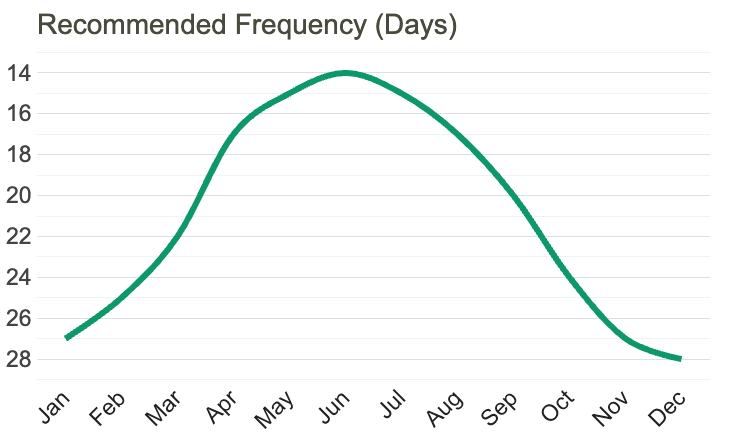
To properly water this plant, you should first check the soil to see if it has dried out. If the soil is dry, slowly water the plant until the water begins to drain from the bottom of the pot. Avoid watering too much or too frequently, as this can cause the roots to rot. It is also important to ensure that the plant has good drainage and is not sitting in standing water. Additionally, this plant may benefit from occasional misting to increase humidity.
To fertilize this plant, use a slow-release fertilizer with an NPK ratio of 10-10-10. Apply the fertilizer once a month during the growing season, which is spring and summer. Mix the fertilizer with water according to the instructions on the label and pour it gently onto the soil around the base of the plant. Avoid getting the fertilizer on the leaves or stem, as this can cause burning. Water the plant after fertilizing to help the nutrients soak into the soil. Do not fertilize during the dormant season, which is fall and winter.
Garcinia Livingstonei plant requires well-draining soil with a pH range of 5.5-7.5. The soil should be rich in organic matter and loamy, with good ventilation and water holding capacity. Avoid using heavy clay or sandy soil as they are not suitable for the plant. A mixture of sandy loam and organic compost in a 1:2 ratio is ideal for the soil. It is important to maintain the soil's moisture but not overwater it, as this can lead to root rot. Additionally, ensure the soil is not too compacted as this can affect the growth of the plant. Regular fertilization with balanced nutrients will also ensure optimal growth conditions for the Garcinia Livingstonei plant.
Propagation of this plant can be done through seed germination or stem cuttings. For seed propagation, it is best to soak the seeds in water for a few hours before planting them in a well-drained potting soil. Cover the seeds with a thin layer of soil and keep them moist but not too wet. Germination can take up to several weeks.
For stem cutting propagation, select a healthy stem from the parent plant and cut it just below a node. Remove the leaves from the bottom half of the stem and dip the cut end into rooting hormone powder. Plant the stem into a well-drained potting mix and keep it moist in a warm and humid environment. Roots should develop within a few weeks and the new plant can be transplanted once it has established itself.