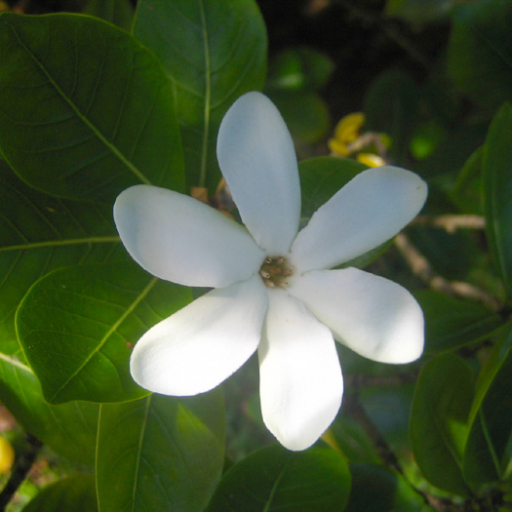
Plant Overview
Known as the "Jewel of the South Pacific," the Tahitian Gardenia is more than just a beautiful shrub—it is a cultural icon. Despite its name, it is not actually native to Tahiti but was brought there by early Polynesian voyagers. Its intensely sweet, creamy fragrance is legendary, forming the aromatic heart of the world-famous Monoi oil used in traditional beauty rituals.
🔍 How to Identify
- 🌼 The Pinwheel Bloom: The flowers are star-shaped or pinwheel-like, typically featuring 6 to 9 waxy, snow-white petals that radiate from a central tube.
- 🍃 Lustrous Foliage: The leaves are thick, leathery, and exceptionally glossy. They are a deep emerald green, providing a high-contrast backdrop for the white flowers.
- 📏 Growth Habit: It grows as an evergreen shrub or a small tree. While it can reach 10 feet in its native tropical habitat, it stays much smaller when kept in a container.
🏡 In Your Garden
- 🏝️ Tropical Requirements: This plant is a true sun-lover but demands high humidity. If you live in a dry climate, frequent misting or a humidity tray is essential to prevent the flower buds from dropping prematurely.
- 🧪 Soil Sensitivity: Like most gardenias, it is an "acid-loving" plant. If the leaves start to turn yellow while the veins stay green, it’s likely a sign of iron deficiency caused by soil that is too alkaline.
- 🌬️ Wind Protection: While it loves the sun, its large, glossy leaves can be easily damaged by salt spray or harsh, drying winds. Plant it in a sheltered spot to keep the foliage looking pristine.
⚠️ Safety & Toxicity
- 🐾 Pet Caution: While the Tahitian Gardenia is not considered highly toxic to humans, it contains saponins which can cause mild digestive upset (vomiting or diarrhea) in cats, dogs, and horses if ingested.
- 👶 Child Safe: The flowers are generally safe for curious toddlers, though the sap may cause very mild skin irritation in individuals with sensitive skin.
✨ Fun Fact
In Polynesian culture, the Tiare flower is used as a silent language of love. If you wear the flower behind your right ear, it signifies you are available; if worn behind the left ear, it means you are taken!

Detailed Care Instructions
To grow Gardenia Taitensis (also known as Tahitian Gardenia or Tiare Flower), you can follow these steps:
- Choose a suitable location: Gardenia Taitensis thrives in warm and tropical climates. It requires at least 6-8 hours of direct sunlight each day, so choose a spot where it can receive ample sunlight.
- Prepare the soil: Gardenia Taitensis prefers well-draining soil with a slightly acidic pH. Mix organic matter such as compost or peat moss into the soil to improve its drainage and fertility.
- Planting: Dig a hole slightly larger than the root ball of the plant. Place the plant in the hole, ensuring that it is planted at the same level it was in the pot. Backfill the hole with soil, gently firming the soil around the plant.
- Watering: Gardenia Taitensis prefers moist soil, so water the plant regularly to keep the soil consistently damp but not soggy. Avoid waterlogging the soil, as it can lead to root rot. Water deeply, allowing the water to penetrate the roots.
- Fertilization: Use a balanced fertilizer formulated for acid-loving plants, such as a slow-release granular fertilizer or a liquid fertilizer. Follow the instructions on the fertilizer packaging for application rates and frequency. Apply fertilizer during the growing season, usually from spring to fall, and reduce or stop fertilization during winter.
- Pruning: Prune Gardenia Taitensis after flowering to maintain its shape and size. Remove any dead, damaged, or diseased branches. Regular pruning will promote bushier growth and enhance flowering.
- Mulching: Apply a layer of organic mulch, such as bark chips or compost, around the base of the plant. Mulching helps conserve moisture, suppresses weed growth, and helps maintain a more stable soil temperature.
- Pest control: Keep an eye out for common garden pests such as aphids, scale insects, and whiteflies. Regularly inspect your plant for signs of infestation, and if necessary, use suitable insecticidal soap or horticultural oil to control pests. Check for any specific Gardenia Taitensis pest threats in your region.
- Winter care: If you live in a colder climate where winter temperatures drop below freezing, you may need to protect your Gardenia Taitensis during winter. Consider bringing it indoors or providing a frost cloth or protective covering to shield it from the cold.
Remember to research any specific climatic and environmental factors relevant to your location, as they can greatly impact the success of growing Gardenia Taitensis.

Place in a bright room that is sun drenched almost all day. Or directly in a south-facing window.

When watering this plant, it is important to ensure that the soil is consistently moist but not waterlogged. One way to do this is to water deeply and thoroughly, allowing the water to soak into the soil and reach the roots. It is also important to avoid getting water on the leaves, as this can lead to fungal diseases. To ensure proper drainage, this plant should be grown in well-draining soil and in a container with drainage holes. During periods of hot weather, it may be necessary to water this plant more frequently to prevent the soil from drying out. Additionally, this plant may benefit from a regular application of water-soluble fertilizer to promote healthy growth and blooming.
To fertilize this plant, you should first ensure that the soil is moist. Then, apply a balanced fertilizer with equal amounts of nitrogen, phosphorous, and potassium. Avoid getting fertilizer on the leaves or trunk, as this may cause burning. Fertilize the plant every four to six weeks during the growing season, which typically lasts from spring to fall. In the winter months, reduce fertilization to once every two to three months to allow the plant to rest. Overfertilization can be harmful, so always follow the instructions on your fertilizer package and avoid applying too much.
The best soil to use for the Gardenia Taitensis plant should be well-draining and acidic. It should have a pH of around 5.0 to 6.0. The soil should also be rich in organic matter. It's recommended to use a mixture of peat moss, perlite, and vermiculite to help improve drainage and aeration. Additionally, adding some pine bark or chipped pine needles to the soil can help increase acidity levels. It's important to avoid using heavy clay soils or soils with high levels of limestone, which can lead to root rot. Finally, the soil should be consistently moist but not waterlogged.
To propagate this plant, you will need to take a cutting from a mature plant. Choose a healthy stem that is a few inches long and has several leaves on it. Use a sharp, clean knife or pair of scissors to cut the stem at a 45-degree angle, just below a node. Remove the lower leaves from the stem, leaving only a few at the top. Dip the cut end of the stem in rooting hormone and plant it in a pot or container filled with a mix of sterile potting soil and perlite. Water the cutting thoroughly and cover it with a plastic bag or dome to create a humid environment. Place the container in a bright, warm area, but out of direct sunlight. Mist the cutting periodically to keep the soil moist. After a few weeks, check for root development by gently tugging on the stem. If you feel resistance, roots have formed and the cutting can be transplanted into a larger pot or directly into the ground.
Common pests of the tiara flower include Scale insect, spider mites, aphids. Make a habit of checking your tiara flower frequently for pests so that any infestations can be caught and managed early.








