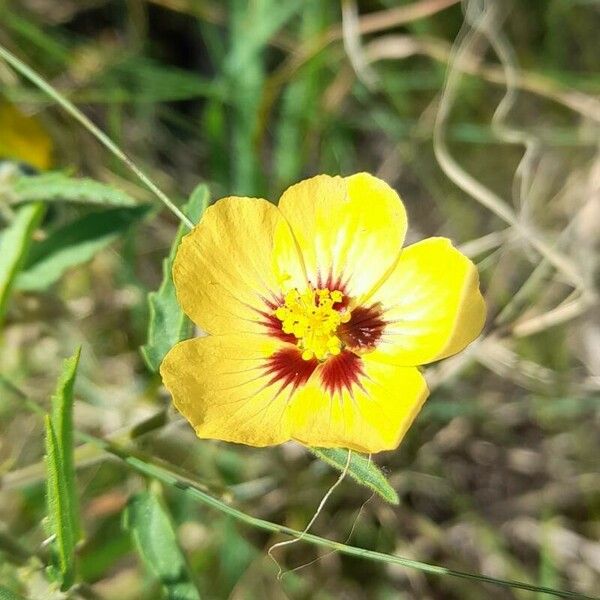
Plant Overview
Often called the "Gallant Soldier," this humble plant has a surprisingly high-society backstory, having famously escaped from London’s Royal Botanic Gardens in the 18th century. Native to the Andes Mountains, it has since become a worldwide traveler, frequently popping up in garden beds and allotments. While many gardeners view it as a persistent "Quickweed," it is a cherished culinary herb in South American tradition.
🔍 How to Identify
- 🌼 The "Gap-Toothed" Flower: Look for tiny, daisy-like flower heads with a bright yellow center and exactly five small white petals. These petals are often notched and spaced far apart, giving the flower a slightly "unfinished" look.
- 🍃 Velvety Foliage: The leaves are egg-shaped with pointed tips and distinctively "toothed" or serrated edges. If you look closely, the leaves and stems are covered in fine, soft hairs.
- 🌿 Branching Pattern: The plant grows in an upright, bushy shape. The stems consistently split into two branches (Y-shaped) as they grow upward, usually reaching about 1 to 2 feet in height.
🏡 In Your Garden
- 🚜 Soil Quality Indicator: This plant is a "nitro-phile," meaning it loves high-nitrogen, fertile soil. If you see it thriving in your vegetable patch, take it as a compliment—it means your soil is nutrient-rich and healthy!
- 🏃 The Great Sprinter: True to its nickname "Quickweed," this plant can go from a tiny seedling to a seed-producing adult in as little as 40 days. To keep it from taking over, it is best to pull it early before those tiny flowers turn into thousands of seeds.
⚠️ Safety & Toxicity
- 🥗 Safe & Edible: Unlike many common garden weeds, Galinsoga parviflora is non-toxic. In fact, it is a key ingredient (known as guasca) in the famous Colombian chicken soup, Ajiaco.
- 🐾 Pet Friendly: It is generally considered non-toxic to dogs, cats, and horses. However, as with any plant, grazing in large quantities might cause minor digestive upset for curious pets.
- 🚿 Foraging Caution: If you plan to eat it, ensure it has not been sprayed with herbicides or grown in soil contaminated by heavy city traffic.
✨ Fun Fact
The name "Gallant Soldier" is actually a linguistic accident! It is a "folk etymology"—a corruption of the Latin genus name Galinsoga. British citizens in the 1800s found the Latin name too difficult to pronounce, so they simply turned it into something that sounded similar!

Detailed Care Instructions








