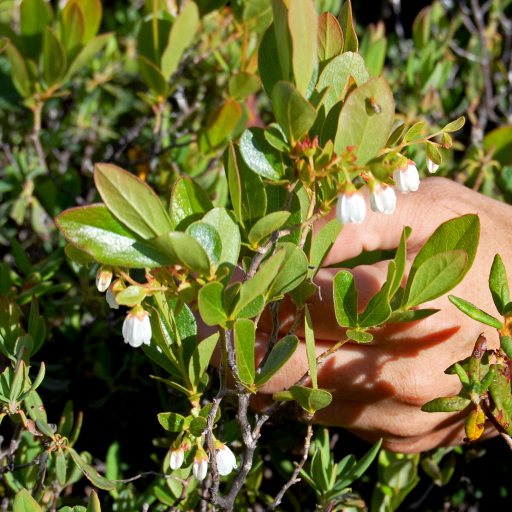
Plant Overview
Often called the Bog Huckleberry, this tiny, resilient shrub is a gem of the damp, acidic wetlands of the Atlantic coast. Unlike its taller cousins, it stays close to the mossy ground, hugging the earth in peat bogs and cedar swamps. It’s a close relative of the blueberry but carries a "crunchy" secret that makes it a favorite for hikers who enjoy a wild snack.
🔍 How to Identify
- 🍃 Low Stature: It is a true dwarf shrub, rarely reaching more than 15–20 inches in height, often forming dense, carpet-like mats across wet ground.
- ✨ Resinous Glands: If you look through a magnifying glass (or feel the leaves), you’ll find tiny, sticky orange-gold resin dots on both sides of the leaves—a classic "fingerprint" of the Huckleberry family.
- 🔔 Bell-Shaped Blooms: In late spring, it produces dainty, drooping flowers that are white to pale pink, shaped like tiny, upside-down urns.
- 🫐 The Fruit: The berries are glossy, deep black, and look nearly identical to blueberries, though they appear in smaller clusters.
🏡 In Your Garden
- 💧 The Bog Specialist: This plant is an "acid-lover" to the extreme. It thrives in sphagnum moss and peat; it will struggle in standard garden soil. If you want to grow it, you must mimic a bog environment with high moisture and a very low pH.
- 🍄 Fungal Friends: Like many plants in the Heath family, it relies on a symbiotic relationship with soil fungi to "eat." This means it hates being moved once established, as transplanting breaks these delicate underground connections.
⚠️ Safety & Toxicity
- 🫐 Edible: The berries are completely safe for human consumption and are quite sweet, though they contain ten small, hard seeds (nutlets) that give them a distinct "crunch."
- 🐾 Pet Safety: While the berries are non-toxic, the foliage of many wild Ericaceae shrubs can cause mild digestive upset in dogs or cats if eaten in large quantities.
- 🚫 Lookalike Warning: Always ensure you are not picking berries from the "Water Hemlock" or "Nightshade" which can sometimes grow in similar damp environments; the resinous dots on the Huckleberry leaves are your best way to confirm its identity.
✨ Fun Fact
The term "huckleberry" was used in the 19th century to describe something small, humble, or insignificant—which is exactly why Mark Twain chose the name for his famous character, Huckleberry Finn!

Detailed Care Instructions
Gaylussacia bigeloviana, commonly known as Bigelow's huckleberry, is a perennial shrub that is native to the eastern United States. Growing this plant can be rewarding, especially if you are interested in edible plants or native flora. Here are some steps to help you grow Gaylussacia bigeloviana successfully:
1. Choose the Right Location:
- Light: Bigelow's huckleberry prefers partial shade to full sun. However, in very hot climates, some afternoon shade can be beneficial.
- Soil: This plant thrives best in well-draining, acidic soil (pH 4.5 to 6.0). Sandy or loamy soils are ideal.
2. Planting:
- Timing: The best time to plant is in the spring or fall when the weather is cooler.
- Spacing: If planting multiple plants, space them about 2 to 3 feet apart to allow for adequate airflow.
- Plant Depth: Dig a hole about twice as wide and as deep as the root ball of the plant. Place the plant in the hole, ensuring that the top of the root ball is level with the soil surface. Fill in around the roots and water thoroughly.
3. Watering:
- Initial Watering: After planting, water the plant well to help establish the roots.
- Maintenance: Keep the soil consistently moist but not soggy. Once established, the plant can tolerate some drought, but regular watering will promote better growth and berry production.
4. Fertilizing:
- Use a balanced fertilizer or one specific for acid-loving plants. Apply it in early spring according to the package instructions, being careful not to over-fertilize.
5. Pruning:
- Prune your huckleberry bushes in late winter or early spring to remove any dead or damaged wood. This helps to promote better airflow and encourages new growth.
6. Pest and Disease Management:
- Keep an eye out for common pests like aphids or spider mites. If you notice any issues, treat them with organic insecticides or neem oil.
- Ensure good air circulation and avoid overcrowding to reduce the risk of fungal diseases.
7. Harvesting:
- If you planted the huckleberry for its fruit, expect to see berries in late summer to early fall. The berries are usually blue-black and can be eaten fresh or used in jams and desserts.
8. Winter Care:
- In colder climates, mulch around the base of the plant to protect the roots during winter. This can help insulate the plant against freezing temperatures.
By following these guidelines, you can successfully grow and enjoy Gaylussacia bigeloviana in your garden. Enjoy your gardening experience!

Place in a window with dappled sun or a spot in the middle of a room. Or directly in a window facing west or east.

Gaylussacia bigeloviana, a member of the Ericaceae family, requires specific watering techniques to thrive. Here are detailed guidelines for watering this plant:
1. Soil Type: Ensure the soil is well-draining and acidic. A mix of peat, pine bark, and sand can provide the right environment.
2. Moisture Level: Keep the soil consistently moist but not waterlogged. The top inch of soil should feel slightly damp, but avoid soggy conditions that can lead to root rot.
3. Watering Frequency: Frequency can depend on the climate and growing conditions. During active growth periods, such as spring and summer, you may need to water more frequently—possibly every 1-2 weeks. In cooler months, allow the soil to dry slightly between watering.
4. Water Quality: If possible, use distilled or rainwater, as this plant prefers low mineral levels. Tap water that is high in minerals can affect the pH and overall health of the plant in the long term.
5. Temperature Considerations: Water during the morning or late afternoon to reduce evaporation loss. Avoid watering during the heat of the day.
6. Mulching: Applying a layer of organic mulch can help retain soil moisture and regulate temperature. This also prevents weeds that compete for water.
7. Observe the Plant: Pay close attention to the foliage. Wilting, yellowing leaves, or a drop in new growth can indicate either under-watering or over-watering. Adjust your watering schedule based on these observations.
8. Containers vs. Ground: If grown in a container, ensure that there are adequate drainage holes. Containers may require more frequent watering due to faster evaporation rates compared to ground planting.
By following these guidelines, you can create optimal watering conditions for the health and vitality of your plant.
To fertilize Gaylussacia bigeloviana effectively, follow these guidelines:
- Timing: Fertilize in early spring as new growth begins, and consider a second application in mid-summer if necessary.
- Type of Fertilizer: Use a balanced, slow-release fertilizer with an N-P-K ratio such as 10-10-10 or similar. Alternatively, an organic fertilizer can be beneficial.
- Application Rate: Follow the manufacturer's instructions for application rates. Generally, a couple of tablespoons (about 1–2 ounces) per plant is sufficient for smaller specimens, while larger plants may require up to ½ cup.
- Method of Application:
- Evenly distribute the fertilizer around the base of the plant, avoiding direct contact with the stems.
- Incorporate it lightly into the top inch of soil to promote nutrient absorption.
- Water thoroughly after application to help dissolve the fertilizer and transport it to the roots.
- Evenly distribute the fertilizer around the base of the plant, avoiding direct contact with the stems.
- Frequency: If using liquid fertilizers, dilute as recommended and apply every 4–6 weeks during the growing season.
- Soil Test: Conduct a soil test to determine nutrient levels and pH, which can guide you in selecting the appropriate fertilizer type and quantity.
- Monitor Plant Health: Observe the plant for signs of nutrient deficiency, such as yellowing leaves or poor growth, and adjust your fertilization regimen accordingly.
By adhering to these instructions, you can promote healthy growth and development for Gaylussacia bigeloviana.
Gaylussacia bigeloviana thrives best in acidic, well-drained soils. A mixture that includes sandy or loamy soil is ideal, as it ensures good drainage while maintaining some moisture retention. The soil pH should ideally be between 4.5 and 5.5 to support the plant's nutrient absorption.
Incorporating organic matter, such as peat moss or compost, can help to improve soil structure and nutrient content, promoting healthy growth. Additionally, ensuring good drainage is crucial; consider mixing in perlite or coarse sand if the soil is too dense. Avoid soils that retain excessive moisture or are highly alkaline, as these conditions can hinder the plant's development.
Overall, a light, acidic, and organic-rich soil mix will provide the best environment for healthy growth and fruit production. Regularly testing soil pH and amendments based on results can further support optimal conditions for the plant.
Gaylussacia bigeloviana can be propagated through several methods, including seed propagation and vegetative methods such as cuttings. Here are detailed steps for both techniques:
Seed Propagation
- Seed Collection: Harvest ripe berries in late summer to early fall. Ensure the berries are fully mature for optimal viability.
- Seed Preparation: Clean the seeds by removing the pulp. You can do this by soaking the berries in water and then rubbing them to separate the seeds from the fruit.
- Stratification: The seeds benefit from a cold stratification process. Place the cleaned seeds in a damp medium (like moistened sand or peat) and store them in a refrigerator for about 30 to 90 days. This simulates winter conditions and helps improve germination rates.
- Sowing: After the stratification period, prepare a planting medium that is well-draining, such as a mixture of peat and perlite. Sow the seeds about 1/4 inch deep and lightly cover them with soil.
- Watering: Keep the medium consistently moist but not soggy. Use a spray bottle or gentle watering to avoid displacing the seeds.
- Germination: Place the pots in a location with indirect sunlight and maintain a temperature of about 65-75°F (18-24°C). Germination can take several weeks to a few months.
- Transplanting: Once seedlings have developed a few true leaves and are large enough to handle, they can be transplanted into larger pots or directly into the garden.
Vegetative Propagation
- Cuttings: During the late spring or early summer, take semi-hardwood cuttings about 4 to 6 inches long from healthy, vigorous plants. Ensure that each cutting has at least a couple of leaves.
- Preparation: Remove the leaves from the lower half of the cutting to reduce moisture loss. You may dip the cut end of each cutting in rooting hormone to encourage root development.
- Planting: Insert the cuttings into a well-draining medium, such as a mixture of perlite and peat. Ensure a portion of the cutting is buried in the medium to support it.
- Watering: Water the cuttings gently and cover them with a clear plastic bag or a humidity dome to maintain high humidity levels, which aids in rooting.
- Light and Environment: Place the cuttings in a warm area with bright, indirect sunlight. Avoid direct sunlight, which can scorch the cuttings and cause excessive heat buildup.
- Rooting Time: Monitor the moisture and humidity levels. Depending on conditions, roots should develop in a few weeks to a couple of months.
- Transplanting: Once roots are well-established, the cuttings can be transplanted to individual pots or directly into the garden, following the same guidelines as for seedlings.
Care After Propagation
Regardless of the propagation method, ensure proper care for the young plants:
- Watering: Keep the soil consistently moist, especially during dry periods.
- Fertilization: Use a balanced, slow-release fertilizer according to the specific needs of the plant.
- Sunlight: Provide adequate light once established, as these plants thrive in dappled sunlight to partial shade.
By following these steps, you can successfully propagate Gaylussacia bigeloviana and grow healthy plants.








