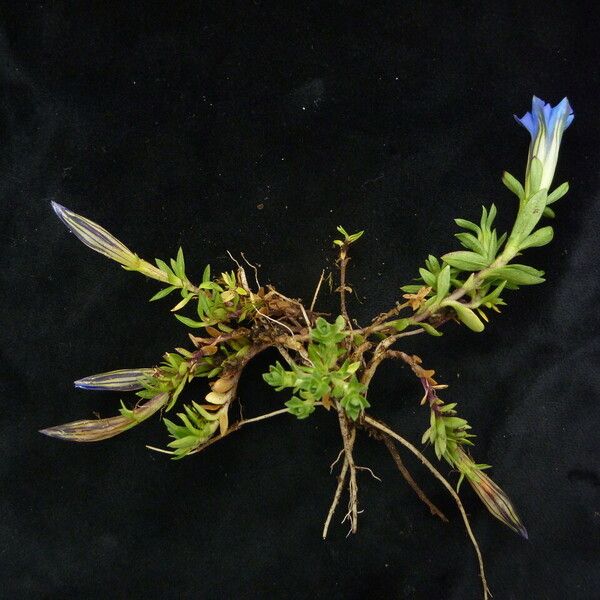
Plant Overview
Often called the "Blue Gem of the Mountains," the Gentiana obconica is prized for possessing one of the rarest colors in the natural world: a true, deep sapphire blue. Originating from high-altitude regions, this alpine beauty is wrapped in myths of endurance and purity, often appearing in folklore as a symbol of the unattainable. Its striking trumpet-shaped blooms look as though they have captured a piece of the summer sky.
🔍 How to Identify
- 💙 The Bloom: Large, upright trumpet or bell-shaped flowers that boast an intense, electric blue hue.
- 🎨 Interior Detail: If you peek inside the "throat" of the flower, you will often find delicate white or pale green speckles that act as nectar guides for pollinators.
- 🍃 The Foliage: Small, lance-shaped, glossy green leaves that typically form a low-growing, tidy mound or "rosette" close to the ground.
🏡 In Your Garden
- 🏔️ Alpine Roots: Because it originates from rocky slopes, this plant demands exceptional drainage. It thrives in rock gardens or troughs where its roots can stay cool while its "head" enjoys the sun.
- 💧 Water Quality: This species can be a bit of a "diva" regarding water; it prefers rainwater or filtered water over hard tap water, as it dislikes high lime content (calcium).
- 🌡️ Climate Preference: It struggles in sweltering humidity. It is happiest in regions with cool summer nights, mimicking the breezy, crisp air of the highlands.
⚠️ Safety & Toxicity
- ✅ Safe for All: Gentiana obconica is generally considered non-toxic to humans, cats, and dogs.
- 👅 The Bitter Defense: While not poisonous, the plant contains "gentiopicroside," one of the most bitter substances known to man. This usually prevents pets or curious children from taking more than one very tiny, unpleasant nibble.
✨ Fun Fact
Gentians are world-famous in the culinary and medicinal world for their roots. The "bitter" compounds found in the Gentian family are the primary flavoring in many traditional European aperitifs and digestifs, such as Aperol and Angostura bitters!

Detailed Care Instructions








