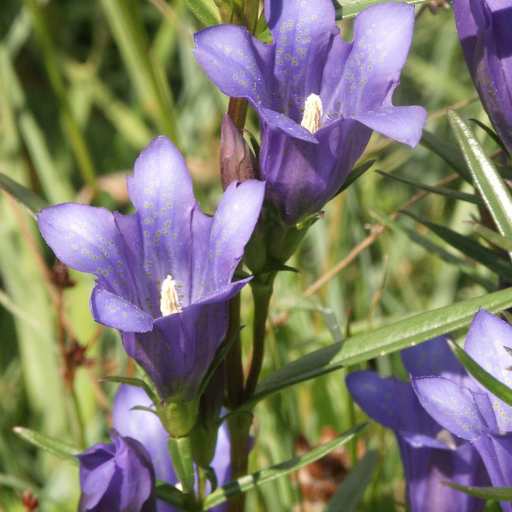
Plant Overview
The Marsh Gentian is a rare jewel of the wetlands, often referred to as the "Sapphire of the Moors." Its intense, deep-blue blossoms seem almost too vibrant for the muted browns and greens of the boggy landscapes it inhabits. Historically, gentians were associated with purity and healing, but this specific variety is now more famous for its rare beauty and its precarious, specialized role in the ecosystem.
🔍 How to Identify
- 🎨 Royal Blue Trumpets: The flowers are upright, funnel-shaped, and a striking "gentian blue." They typically bloom from July to September, appearing as bright spots of color in damp heathlands.
- ✨ Interior Freckles: If you peek inside the bloom, you’ll find five distinct green or white vertical streaks and spots. These act as "landing lights" for bumblebees searching for nectar.
- 🌿 Narrow Foliage: The leaves are long, slender, and grow in opposite pairs along the stem. They look almost like thick blades of grass until the plant begins to produce its flower spike.
🏡 In Your Garden
- 💧 The Bog Specialist: If you want to grow this at home, think "wet and wild." It requires permanently moist, acidic, peat-free soil. It is a perfect candidate for a specialized bog garden or the edge of a pond, provided it never dries out.
- 🍄 Hidden Partnerships: This plant is notoriously difficult to transplant because it relies on a "mycorrhizal" relationship—a secret partnership with specific soil fungi. Without these microscopic friends, the plant often fails to thrive, so it is best bought as a container-grown specimen rather than moved from the wild.
⚠️ Safety & Toxicity
- 🐾 Generally Safe: The Marsh Gentian is not considered highly toxic to humans, cats, or dogs.
- 👅 Bitter Defense: Like most members of the Gentian family, it contains gentiopicrin, one of the most bitter substances known to nature. While not dangerous, the extreme bitterness acts as a natural deterrent; most pets will take one sniff or nibble and quickly lose interest.
✨ Fun Fact
🦋 A Butterfly’s Cradle: The Marsh Gentian is the only plant in the world where the rare Alcon Blue butterfly will lay its eggs. Once the caterpillars hatch, they perform a magic trick: they smell so much like ant larvae that passing ants "rescue" them and take them into their underground nests, where the ants feed and protect them all winter!

Detailed Care Instructions
To grow Gentiana Pneumonanthe, also known as the marsh gentian, follow these steps:
- Choose the right location: Gentiana Pneumonanthe prefers a moist, acidic, and well-drained soil. It thrives in full sun to partial shade. Select a suitable site in your garden or consider growing it in a container.
- Prepare the soil: If your soil is heavy clay or sandy, improve it by incorporating organic matter such as compost or well-rotted manure. This will enhance the soil's fertility and water retention capacity.
- Planting: Dig a hole that is twice the size of the plant's root ball. Place the plant in the hole, ensuring that the crown is level with the soil surface. Backfill the hole with soil, gently firming it around the roots. Water thoroughly after planting.
- Watering: Keep the soil consistently moist but avoid waterlogging. Water the plant regularly during dry periods, especially in the first year of growth.
- Mulching: Apply a layer of organic mulch around the plant, which helps retain moisture, suppresses weeds, and protects the roots from temperature extremes.
- Fertilization: Gentiana Pneumonanthe doesn't require much fertilization. However, you can apply a slow-release, balanced fertilizer in spring to provide necessary nutrients.
- Pruning: This plant doesn't generally require pruning. However, you can remove spent flowers to tidy up the plant and encourage new growth.
- Winter protection: In colder regions, where temperatures drop significantly, provide some winter protection. Apply a layer of mulch around the plant's base to insulate the roots.
- Division: Gentiana Pneumonanthe can be divided every few years in early spring or fall. This helps rejuvenate the plant and increase its number. Dig up the clump carefully, separate it into smaller sections, and replant them.
- Pests and diseases: Monitor the plant for common pests like aphids, snails, or slugs. Treat any infestations promptly. Gentiana Pneumonanthe is generally resistant to common plant diseases.
With proper care and attention to its growing requirements, Gentiana Pneumonanthe should thrive and provide you with lovely blooms in late summer and early fall.

Place in a bright room that is sun drenched almost all day. Or directly in a south-facing window.

This plant needs to be watered consistently, but it is important not to over-water the plant. It requires a well-draining soil that can hold moisture but does not retain too much water, as this can cause root rot. The soil should be kept moist, but not soggy or waterlogged, throughout the growing season. To ensure the soil remains moist, water the plant deeply once a week or more frequently, depending on the weather. Avoid wetting the foliage when watering, as this can lead to fungal diseases. During the winter months, reduce waterings to allow the plant to enter its dormant phase.
To fertilize this plant, apply a slow-release fertilizer in early spring or late fall. Use a well-balanced fertilizer with equal parts of nitrogen, phosphorus, and potassium. Apply the fertilizer at the base of the plant, being careful not to get it on the leaves or stems. Water thoroughly after fertilizing. Repeat this process once a year for optimal growth and health.
Gentiana Pneumonanthe requires a well-drained acidic soil with a pH range of 4.5-6.5. It prefers a soil that is rich in organic matter such as leaf mold or well-rotted compost. The soil should be moist, not waterlogged, and have good airflow to prevent waterlogging and root rot. It is recommended to use a mix of peat moss, sand, and perlite or vermiculite to create an ideal soil mix for this plant. This will provide good drainage, while also being able to hold onto moisture and nutrients. It is important to avoid using heavy soils that retain too much moisture as this can lead to root rot. Additionally, the plant should be fertilized with a low-nitrogen fertilizer to avoid excessive foliage growth.
Gentiana Pneumonanthe is propagated through seeds or cuttings. To propagate through seeds, collect ripe pods in the fall, and separate the seeds from the chaff. Plant the seeds in a seed tray filled with moistened seed compost, and cover the tray with plastic wrap. Place the tray in a cool location with temperatures around 4-6°C to stratify the seeds for three months. After the stratification period, remove the plastic wrap and transfer the seedlings to individual pots filled with potting compost. Keep the pots in a cool location with filtered sunlight and water regularly.
To propagate through cuttings, take semi-hardwood cuttings from the healthy parent plant in the summer. Dip the cut ends in rooting hormone powder and insert them in a pot filled with potting compost. Cover the pot with clear plastic and place it in a bright, but shaded location. Mist the cuttings every few days to maintain the moisture and remove the plastic cover once the cuttings have rooted. Transplant the cuttings into individual pots once their root system has grown strong enough.








