Plant Overview
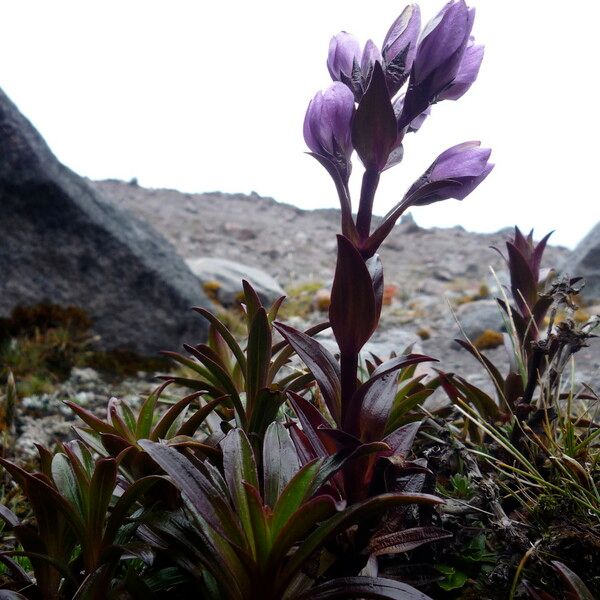
Perched high in the misty "páramo" grasslands of the Andes, Gentianella foliosa—often called the Leafy Gentian—is a high-altitude gem that looks like a cluster of fallen stars. These vibrant wildflowers are the endurance athletes of the plant world, thriving in the thin, cold air of Ecuador and Colombia. With their brilliant violet-blue hues, they serve as vital nectar stations for mountain-dwelling pollinators.
🔍 How to Identify
- 🔔 The Flowers: Large, upright, bell-shaped blooms that typically range from deep violet to a soft, electric blue, often appearing in clusters at the top of the stem.
- 🌿 The Foliage: True to its name (foliosa means "leafy"), the plant features small, lance-shaped leaves that densely hug the stem in opposite pairs, creating a lush, green backdrop for the flowers.
- 📏 Growth Habit: It maintains a low, clumping profile, rarely exceeding a foot in height, which helps it stay protected from the harsh, biting winds of the high mountains.
🏡 In Your Garden
- 🏔️ The Alpine Challenge: This isn't your typical garden plant; it is a specialist that craves "cool feet and a sunny head." It struggles in high humidity or sweltering summer heat, preferring the crisp, UV-rich light of high elevations.
- 💧 Drainage is Key: Because it originates in rocky, volcanic soils, it requires exceptional drainage. If its roots sit in stagnant water, it will quickly succumb to rot. It thrives best in rock gardens or alpine troughs where moisture mimics the mountain mist rather than a swamp.
⚠️ Safety & Toxicity
- 🟢 General Status: Gentianella foliosa is generally considered non-toxic to humans and common livestock.
- 🐾 Pets & Kids: While not known to be poisonous, the plant contains bitter compounds (gentiopicroside) that can cause mild stomach upset if ingested in large quantities. It’s always best to keep curious pets from nibbling on garden ornamentals.
✨ Fun Fact
In the high-altitude Andes, Gentianella foliosa has developed a natural "sunscreen." The intense UV radiation at 4,000 meters above sea level would fry most plants, but this Gentian produces specific pigments and thick leaf cuticles to protect its DNA from the sun’s harsh rays!

Detailed Care Instructions








