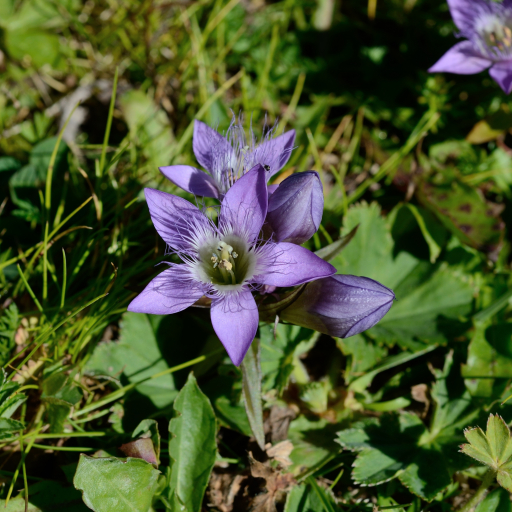
Plant Overview
Often called the Chiltern Gentian or the German Gentian, this stunning purple biennial is a jewel of the late summer and autumn. It acts as a tiny, trumpet-shaped beacon found in ancient chalk grasslands across Europe. Legend has it that gentians were named after King Gentius of Illyria, who supposedly discovered the medicinal properties of the family.
🔍 How to Identify
- 🌸 The Bloom: Features trumpet-shaped flowers that range from a delicate lilac to a deep, royal purple. Each flower typically has five pointed lobes (petals).
- 🧔 Fringed Throat: If you peek inside the flower, you will see a "beard" of fine hairs. These hairs act as a barrier to keep smaller, nectar-thieving insects out, ensuring only the strongest pollinators can enter.
- 🍃 The Foliage: The leaves are dark green and lance-shaped. They grow in opposite pairs along the stem, often forming a flat rosette close to the ground during their first year of growth.
🏡 In Your Garden
- 🦴 Chalk Lover: This plant is a "calcicole," meaning it craves calcium-rich, alkaline soil. It is rarely found in the wild—or successfully grown in gardens—unless the soil is significantly chalky or lime-heavy.
- ⏳ Patience is Key: Because it is a biennial, it follows a two-year life cycle. In the first year, it is just a small circle of leaves; only in its second year does it send up its majestic flowering stalk. Avoid "tidying up" the rosettes in year one, or you'll miss the show!
⚠️ Safety & Toxicity
- 🐾 Low Risk: This plant is not generally considered highly toxic to humans or pets. However, the Gentian family is famous for containing extremely bitter compounds that can cause stomach upset if ingested in large quantities.
- 🛡️ Protected Status: In many parts of Europe and the UK, the German Gentian is rare and legally protected. Never pick or transplant this flower from the wild; it relies on its seeds staying in its specific habitat to survive.
✨ Fun Fact
Gentians are among the most bitter substances known to man. While the German Gentian is too rare to be used commercially, its cousins provide the "kick" in many famous European aperitifs and bitters!

Detailed Care Instructions
| Humidity | Normal |
| Difficulty | Medium |
| Hibernation | Cold Period |
| Temperature | 21°C - 28°C |
| Hardiness Zones | 3 - 7 |

Place in a bright room that is sun drenched almost all day. Or directly in a south-facing window.

Some plants require more regular watering than others, which should be done every few days. It's critical to maintain the soil moist all of the time. The water requirements of the same plant placed in pots with varying sizes will differ. Because the water in the smaller pot evaporates faster than the water in the larger pot, it will require more watering. Regardless of pot size, the surface should constantly be maintained moist.
The relative humidity levels between 30 and 50 percent are ideal for these plants. They exhibit unpleasant symptoms when the moisture content in the environment is unfavorable. Avoid letting the air temperature rise too high or low and use a humidifier, whenever possible. Misting is also beneficial, although frequent watering is also necessary. The optimal relative humidity will promote plant growth.








