Plant Overview
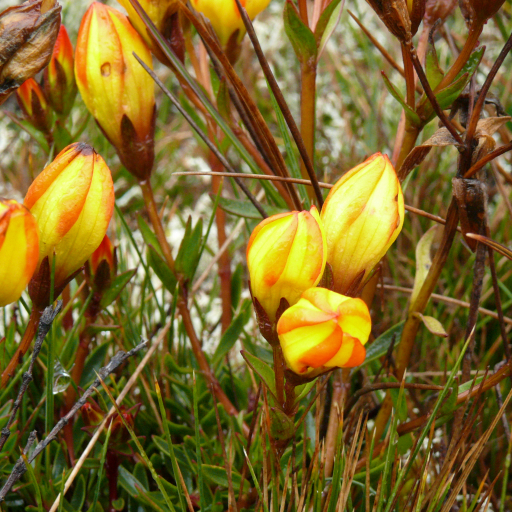
Often called the "Fried Egg Plant" for its uncanny resemblance to a sunny-side-up breakfast, this rare beauty hails from the windswept páramos of the Ecuadorian Andes. It is a resilient high-altitude survivor that hugs the ground to stay warm in the thin mountain air. Its cheerful, waxy blooms make it a legendary find for alpine plant enthusiasts and botanical photographers.
🔍 How to Identify
- 🍳 The "Yolk" Bloom: The most striking feature is the flower—a bright yellow, cup-shaped bloom with a deep orange or reddish-orange center that looks exactly like a fried egg.
- 🍃 Succulent Foliage: The leaves are small, thick, and slightly fleshy, usually deep green or tinted with purple, arranged in tight rosettes to conserve heat.
- 📏 Prostrate Habit: It grows as a low-lying cushion or mat, rarely rising more than a few inches off the ground to avoid the harsh Andean winds.
🏡 In Your Garden
- 🏔️ Alpine Aspirations: This plant is a "specialist." Because it originates from high elevations, it requires exceptionally sharp drainage. It will quickly rot in standard potting soil; a gritty, rocky, or volcanic substrate is essential.
- ❄️ Temperature Sensitivity: It thrives on high UV light but prefers "cool heads and wet feet." It struggles in humid, tropical heat and requires a significant drop in temperature at night to mimic its mountain home.
⚠️ Safety & Toxicity
- ✅ Low Risk: Gentianella hirculus is not known to be toxic to humans or common household pets.
- 🐾 General Caution: While it lacks dangerous alkaloids found in some other mountain plants, it is an ornamental species. Keep it out of reach of curious pets to prevent them from trampling or nibbling this rare specimen, which could cause mild digestive upset.
✨ Fun Fact
The specific epithet hirculus translates to "little goat" in Latin. This is likely a nod to the rugged, craggy terrain it inhabits—places where only the most sure-footed goats (and daring botanists) can reach!

Detailed Care Instructions
Gentianella hirculus, also known as Alpine Gentian, is a rare and delicate plant that is native to the mountains of Europe. It can be challenging to grow, but with the right conditions and care, it is possible to cultivate this plant in your garden. Here are some tips on how to grow Gentianella hirculus:
- Climate: Gentianella hirculus thrives in cool, temperate climates with moist, well-draining soil. It prefers to be grown in partial shade or in areas with filtered sunlight.
- Soil: Plant Gentianella hirculus in a well-draining soil that is rich in organic matter. It prefers slightly acidic soil, so you may need to amend your natural soil with peat moss or compost to achieve the right pH level.
- Watering: Keep the soil consistently moist but not waterlogged. Gentianella hirculus does not like to dry out completely, so be sure to water regularly, especially during dry periods.
- Fertilization: Avoid over-fertilizing Gentianella hirculus, as it is sensitive to excess nutrients. You can use a diluted, balanced liquid fertilizer once a month during the growing season to promote healthy growth.
- Propagation: Gentianella hirculus can be propagated by division in the spring or by sowing seeds in the fall. Division is the preferred method, as seeds can take a long time to germinate and grow into mature plants.
- Care: Gentianella hirculus is a low-maintenance plant, but it may benefit from a layer of mulch to retain moisture and suppress weeds. Cut back any dead or damaged foliage in the fall to help the plant prepare for winter dormancy.
By following these tips and providing the right growing conditions, you can successfully cultivate Gentianella hirculus in your garden and enjoy its beautiful blooms year after year.
First, identify the soil type and drainage of the planting area. Gentianella Hirculus typically prefers well-draining soil that is evenly moist but not waterlogged.
If the soil is dry, water the plant slowly, allowing the water to soak in rather than running off. Be careful not to overwater, as this can cause root rot and other issues.
In hot, dry weather, water the plant more frequently to keep the soil consistently moist.
Avoid getting water on the leaves, as this can promote the growth of fungal diseases. Instead, water the soil around the base of the plant.
To help retain moisture, a layer of mulch can be added around the plant. This will also help regulate soil temperature and prevent weeds from growing.
Overall, it is important to monitor the plant and adjust watering frequency as needed based on weather conditions and the health of the plant.
To fertilize Gentianella hirculus plants, it is recommended to use a balanced fertilizer with a ratio of 10-10-10. Apply the fertilizer in early spring before new growth begins. Use a granular or liquid fertilizer, following the instructions on the packaging for the correct dosage and application method. Water the plant well after fertilizing to help the nutrients penetrate the soil and promote healthy growth. Avoid over-fertilizing, as this can damage the plant. Repeat the fertilization process every 4-6 weeks during the growing season, but stop fertilizing in late summer to allow the plant to prepare for dormancy.
Gentianella hirculus requires a well-draining soil with a high organic content. A soil mix that contains equal parts of peat moss, perlite, and vermiculite can be used. The pH of the soil should be slightly acidic, with a range of 5.5-6.5. The plant requires moisture, but the soil should not be waterlogged as this can lead to root rot. Additionally, the plant prefers to grow in a slightly cool environment, so it is recommended to keep the soil temperature at around 50-65°F (10-18°C).
Gentianella Hirculus plants can be propagated through division or by collecting and planting seeds. To propagate through division, carefully dig up the plant and separate the roots into smaller sections, making sure each section has both roots and stems. Replant these divisions in well-draining soil and water them regularly to encourage new growth.
To propagate from seeds, allow the plant to mature and produce seed pods. Once the pods have dried and turned brown, carefully collect the seeds and sow them in a seed tray filled with moist, well-draining soil. Place the tray in a warm, sunny location and water regularly to keep the soil moist. Once the seedlings have grown large enough, they can be transplanted into individual pots or directly into the garden.
Propagation can be a rewarding way to expand your plant collection and ensure the continued growth and health of your Gentianella Hirculus plants.








