Plant Overview
Known affectionately as the Silver Carpet or Lace-leaf Cranesbill, Geranium incanum is a shimmering South African native that transforms harsh, dry ground into a delicate sea of silver and mauve. It is a favorite among "lazy gardeners" and eco-conscious landscapers because it provides maximum visual reward for minimal effort, acting as a living mulch that keeps the soil cool and suppressed weeds.
🔍 How to Identify
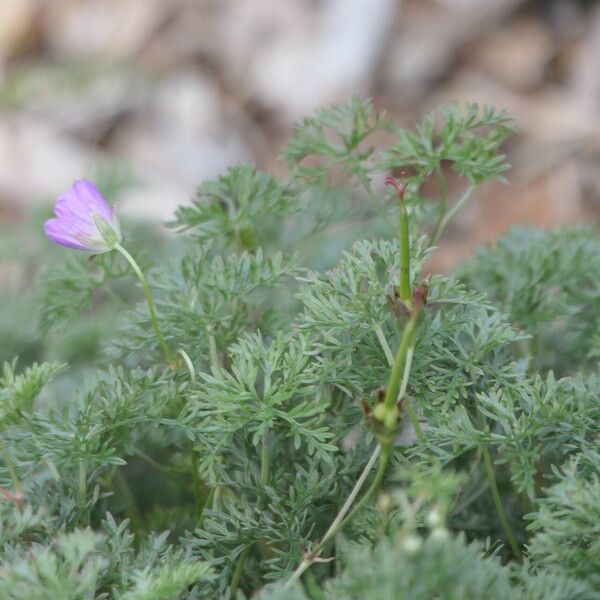
- 🌿 The Foliage: The leaves are incredibly fine and deeply divided, giving them a feathery, fern-like appearance. They are covered in tiny silver hairs that catch the light, creating a distinct metallic sheen.
- 🌸 The Bloom: Delicate, five-petaled flowers appear in shades of pale mauve, lavender, or pink. If you look closely, you’ll see darker magenta veins radiating from the center, acting as "nectar guides" for pollinators.
- 🌱 Growth Habit: This plant is a true groundcover. It doesn't grow tall; instead, it sends out trailing stems that weave together to form a dense, soft mat about 30cm high.
🏡 In Your Garden
- ☀️ Sun & Soil: While it is tough, the Silver Carpet performs best in full sun. In shaded areas, the stems may become "leggy" and lose that iconic silver luster. It thrives in well-draining soil and is exceptionally drought-tolerant once its root system is established.
- ✂️ Maintenance Nuance: Every few years, the center of the "carpet" might look a bit woody or sparse. Don't be afraid to give it a hard prune; it bounces back with fresh, vigorous silver growth very quickly. It is an excellent choice for rockeries or hanging over the edges of stone walls.
⚠️ Safety & Toxicity
- ✅ Status: Generally non-toxic and safe for home gardens.
- 🐾 Details: Unlike some of its relatives in the Pelargonium family, Geranium incanum is not known to be poisonous to cats or dogs. However, as with any ornamental plant, it is best to discourage pets from grazing on large amounts to avoid minor digestive upset.
✨ Fun Fact
The common name "Cranesbill" comes from the unique shape of its seed pods. Once the flower fades, the seed head elongates into a sharp, beak-like point. When dry, this "beak" acts like a spring, launching the seeds away from the parent plant to colonize new territory!

Detailed Care Instructions
To grow Geranium Incanum plant, you can follow the steps below:
- Choose a suitable location: Geranium Incanum prefers full sun or light shade. Select a spot in your garden that receives 6-8 hours of direct sunlight per day.
- Prepare the soil: The plant thrives in well-draining soil. Ensure the soil is loamy and rich in organic matter. You can add compost or aged manure to improve the soil texture and nutrient content.
- Planting: Dig a hole in the prepared soil that is slightly larger and deeper than the root ball of the plant. Place the Geranium Incanum in the hole, ensuring that the crown of the plant is level with the soil surface. Fill in the hole with soil and gently firm it around the base of the plant.
- Watering: Give the newly planted Geranium Incanum a thorough watering and make sure the soil remains consistently moist until the root system establishes itself. Once established, water the plant deeply once or twice a week, depending on the weather conditions and soil moisture levels.
- Fertilization: Apply a balanced, slow-release fertilizer once in early spring and again in mid-summer to provide the necessary nutrients to the plant. Follow the instructions on the fertilizer packaging for the correct dosage.
- Pruning: Geranium Incanum flowers on new growth, so regular pruning is essential to encourage continuous blooming. After each flowering cycle, trim back the spent blooms and any leggy or straggly stems to promote bushier growth.
- Mulching: Apply a layer of organic mulch, such as wood chips or bark, around the plant to help retain soil moisture, suppress weeds, and regulate soil temperature.
- Pests and diseases: While Geranium Incanum is relatively pest and disease-resistant, keep an eye out for common garden pests like aphids, snails, or slugs. Regularly inspect the plants and take appropriate measures if necessary, such as using environmentally friendly insecticidal sprays or physical barriers.
Remember to check the specific requirements of Geranium Incanum in your region, as some variations may exist in growing conditions.

Place in a bright room that is sun drenched almost all day. Or directly in a south-facing window.

To water the Geranium Incanum plant, focus on providing it with the right amount of moisture at suitable intervals. This particular type of geranium appreciates well-draining soil, so it is important not to overwater it.
1. Soil moisture check: Before watering, gently insert your finger about an inch into the soil to assess its moisture level. If it feels dry, it's an indication that the plant needs watering.
2. Watering frequency: Geranium Incanum prefers moderate watering. Typically, watering once a week is sufficient, but this may vary depending on environmental factors such as temperature, humidity, and the condition of the soil. Adjust the frequency based on the plant's needs.
3. Adequate drainage: Ensure that the pot or container you're using has drainage holes at the bottom. This allows excess water to escape, preventing the root system from becoming waterlogged.
4. Watering technique: When watering, it is best to avoid wetting the foliage and focus on the base of the plant. Direct the water towards the soil around the roots rather than spraying the leaves. This helps prevent the onset of diseases and protects the plant from water damage.
5. Water quantity: Slowly pour water onto the soil until it starts draining from the drainage holes. This indicates that the soil is adequately moistened, ensuring the water reaches the root zone. Avoid excessive watering that may lead to waterlogging.
6. Testing moisture retention: After watering, it's a good practice to check the soil's moisture retention. Monitor the plant and the soil to assess how long it takes for the soil to dry out adequately before the next watering. This will help you establish a watering schedule that works well for your Geranium Incanum plant.
Remember, each plant has unique needs, and factors such as temperature, humidity, and sunlight levels can affect watering requirements. So, it's always important to observe your plants closely and adjust the watering approach accordingly.
- Choose a well-draining pot or garden bed for your Geranium Incanum plant.
- Fill the container with a rich, organic potting mix or garden soil.
- Before planting, incorporate a slow-release fertilizer into the soil according to the package instructions. This will provide a steady release of nutrients over time.
- Place the Geranium Incanum plant in the soil at the same depth it was previously growing.
- Water the plant thoroughly after planting to help settle the soil and remove any air pockets.
- Once the plant is established, begin fertilizing every two weeks during the growing season.
- Use a balanced liquid fertilizer, such as a 10-10-10 or 20-20-20 formulation, diluted to half strength.
- Apply the diluted fertilizer evenly around the base of the plant, being careful not to allow the fertilizer to come in direct contact with the leaves or stems.
- Water the plant immediately after fertilizing to help release the nutrients into the soil.
- During the dormant period, typically in winter, reduce or stop fertilizing altogether as the plant's growth slows down.
- Monitor the plant's overall health and adjust the fertilization schedule as needed, taking into consideration factors like weather conditions, soil quality, and plant appearance.
For Geranium Incanum plant, it is recommended to use a well-draining soil mixture. The ideal soil type should have good moisture retention capabilities while allowing excess water to drain away. A suitable soil mix for this plant may include a combination of potting soil, perlite, and coarse sand.
Potting soil provides nutrients and organic matter necessary for healthy plant growth. Ensure that the potting soil used is of high quality and free from contaminants. Adding perlite to the mixture helps improve drainage and prevents waterlogged conditions, which can be detrimental to the plant's roots. Coarse sand is also added to enhance drainage and prevent the soil from compacting over time.
It is important to note that this plant prefers slightly acidic to neutral soil pH levels, typically within the range of 6.0 to 7.0. Therefore, it is advisable to test the pH of the soil and make any necessary adjustments to maintain the optimum pH range.
Remember to regularly monitor the moisture levels of the soil and water the plant accordingly. Overwatering should be avoided, as it can lead to root rot and other issues. Additionally, providing adequate sunlight and maintaining a proper watering schedule will contribute to the overall health and growth of the Geranium Incanum plant.
Geranium incanum is a perennial flowering plant that can be propagated through various methods such as seed, division, or stem cuttings. Here's a detailed guide on how to propagate Geranium incanum:
- Seed Propagation:
- Collect mature seeds from the plant once the seed pods have turned brown and start to split.
- Sow the seeds in a well-draining potting mix, lightly covering them with a thin layer of soil.
- Keep the soil consistently moist but not waterlogged.
- Place the pot in a warm location with indirect sunlight.
- Germination should occur within a few weeks, after which you can transplant the seedlings to individual pots or a prepared garden bed.
- Collect mature seeds from the plant once the seed pods have turned brown and start to split.
- Division:
- Choose a mature Geranium incanum plant with established clumps.
- Dig out the entire plant using a garden fork or shovel, being careful not to damage the roots.
- Gently separate the clumps into smaller sections, ensuring that each section has a good root system and a few healthy stems.
- Replant the divisions in a well-prepared garden bed or individual pots, ensuring they are at the same depth as they were previously.
- Water the divisions thoroughly and keep the soil consistently moist until they are established.
- Choose a mature Geranium incanum plant with established clumps.
- Stem Cuttings:
- Select a healthy stem from the Geranium incanum plant, preferably one without any flowers or buds.
- Using a sharp, clean pair of scissors or pruners, cut a 3-5 inch (7-12 cm) section of the stem just below a leaf node.
- Remove any lower leaves, leaving only a few at the top of the cutting.
- Dip the cut end in rooting hormone powder to promote root development (optional but beneficial).
- Fill a small pot with a well-draining rooting medium, such as a mix of perlite and peat moss.
- Insert the cutting into the potting mix, burying the lower portion of the stem in the soil.
- Water the cutting thoroughly and place it in a warm location with bright, indirect light.
- Cover the cutting with a plastic bag or propagator to create a humid environment, which will promote root growth.
- Mist the cutting regularly to maintain high humidity levels.
- After a few weeks, gently tug on the cutting to check for resistance, indicating root development.
- Once roots have formed, transplant the cutting into a larger pot or the garden bed.
Remember that Geranium incanum prefers well-draining soil, moderate watering, and bright but indirect sunlight. Regularly monitor and care for the propagated plants to ensure their healthy growth and establishment.
- Select a healthy stem from the Geranium incanum plant, preferably one without any flowers or buds.








