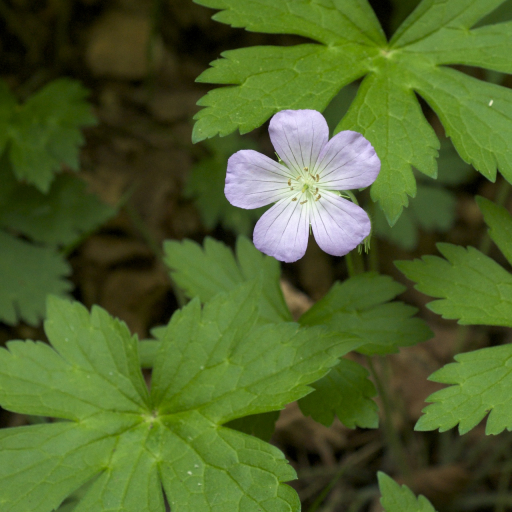
Plant Overview
Known as the "Cranesbill" or "Wild Geranium," this North American native is the refined, woodland cousin of the common garden geranium. In late spring, it transforms forest floors and shaded garden corners into a sea of soft lavender-pink. Its name comes from the unique shape of its seed pods, which early botanists thought looked exactly like the long, slender beak of a crane.
🔍 How to Identify
- 🌸 The Bloom: Large, five-petaled flowers ranging from soft rose-pink to deep lavender. If you look closely, you’ll see delicate dark veins that act as "landing strips" for pollinating bees.
- 🌿 The Foliage: Deeply lobed, palm-shaped leaves that can grow quite large. As the season progresses, the leaves often develop "maculated" (spotted) white or dark markings, giving the plant its Latin name.
- 🏗️ The Seed Pod: A distinctive, long, upright column that remains on the plant after the petals fall, looking strikingly like a bird's beak pointing toward the sky.
🏡 In Your Garden
- 🌳 Woodland Roots: This is a true forest-dweller. It thrives in dappled sunlight and organic, humus-rich soil, making it the perfect choice for "dry shade" spots under large trees where other plants often struggle.
- 🏡 Polite Spreader: While it expands through underground rhizomes, it isn't an aggressive invader. It forms neat, mounded clumps that provide a lush, textured groundcover without suffocating its neighbors.
⚠️ Safety & Toxicity
- ✅ Safe Profile: Geranium maculatum is generally considered non-toxic to humans, dogs, and cats. It is a much safer alternative for households with curious pets than many other spring-blooming perennials.
- 🩹 Traditional Use: High in tannins, the roots were historically used by Indigenous communities and early settlers as an astringent to treat sore throats and minor wounds. While safe to touch, it should not be ingested for medicinal purposes without expert guidance.
✨ Fun Fact
🚀 Botanical Ballistics: The Wild Geranium doesn't just drop its seeds; it launches them! When the seeds are ripe, the "cranesbill" pod acts like a spring-loaded catapult. It snaps upward with such force that it can hurl seeds several feet away to ensure the next generation has plenty of space to grow.

Detailed Care Instructions
To grow Geranium maculatum, also known as wild geranium or spotted geranium, follow these steps:
- Choose a suitable location: Geranium maculatum prefers partial sun to partial shade, so find a spot in your garden that receives 4-6 hours of sunlight each day. The soil should be well-draining and rich in organic matter.
- Prepare the soil: Before planting, loosen the soil with a garden fork or tiller. Remove any weeds or rocks and amend the soil with compost or well-rotted manure to improve fertility and drainage.
- Planting: Dig a hole slightly larger than the plant's root ball and place the geranium in the hole. Ensure that the crown (where the stems meet the roots) is level with the soil surface. Backfill the hole with soil and gently firm it around the roots.
- Watering: Immediately after planting, water the Geranium maculatum thoroughly. Keep the soil evenly moist but not waterlogged. Water deeply whenever the top inch of soil feels dry. Avoid excessive watering as it can lead to root rot.
- Mulching: Apply a layer of organic mulch, such as wood chips or shredded leaves, around the plant to conserve moisture, suppress weeds, and regulate soil temperature. Keep the mulch a few inches away from the plant's base to prevent crown rot.
- Pruning: After the plant has finished flowering, you can trim back the spent flowers and any damaged or overgrown stems. This will encourage new growth and maintain a tidy appearance. In late fall or early spring, cut the plant back to the ground to rejuvenate it.
- Fertilizing: Geranium maculatum generally doesn't require heavy fertilization. However, you can apply a balanced organic fertilizer, such as compost or well-rotted manure, in early spring to promote healthy growth.
- Maintenance: Regularly check for pests and diseases, such as aphids or powdery mildew. Treat any issues promptly using organic pest control methods or appropriate fungicides.
- Propagation: Geranium maculatum can be propagated through division or seeds. In early spring, dig up the plant and carefully divide it into smaller sections. Replant the divisions in well-prepared soil. Alternatively, collect seeds from dried seed pods and sow them in a seed-starting tray filled with a well-draining soil mix.
By following these steps, you can successfully grow Geranium maculatum in your garden and enjoy its beautiful flowers and foliage.

Place in a bright room that is sun drenched almost all day. Or directly in a south-facing window.

Geranium Maculatum prefers to be watered regularly and deeply, rather than frequently and shallowly. It is important to allow the soil to dry out slightly between watering to avoid overwatering. When watering this plant, it is recommended to water the soil at the base of the plant rather than the foliage, as the leaves can become damaged if they stay wet for too long. In addition, it is best to avoid getting water on the flowers as this can cause them to rot. It is also important to provide good drainage to prevent water from pooling around the roots.
- In early spring, apply an all-purpose fertilizer to the soil around the plant.
- Repeat this application every four to six weeks through the end of the growing season.
- Be sure to water the plant after each fertilization to ensure the nutrients are distributed evenly.
- Avoid over-fertilizing as this can burn the roots and damage the plant.
- In the fall, stop fertilizing as the plant prepares for dormancy.
The Geranium Maculatum plant prefers a soil that is well-draining and rich in organic matter. It thrives in moist, loamy soil with a slightly acidic pH of around 6.0 to 7.0. The soil should be fertile and able to hold moisture without becoming waterlogged. It is recommended to amend the soil with compost or organic materials to improve its overall structure and nutrient content. Additionally, the soil should be kept consistently moist but not overly saturated to prevent root rot. Avoid using heavy clay soils or soils that do not drain well as they can cause harm to the plant's roots.
Geranium Maculatum is a beautiful and easy-to-grow plant that is widely admired for its showy blooms and hardiness. If you're interested in propagating this plant, there are a few different methods you can try.
One of the easiest ways to propagate Geranium Maculatum is to take stem cuttings. To do this, simply cut a section of stem from a healthy, mature plant. Make sure your cutting is about 4-6 inches long and has at least two or three leaves. Remove the bottom leaves from your cutting and dip the cut end into rooting hormone. Plant your cutting in a well-draining potting mix and keep it moist and warm until roots start to form.
Another method for propagating Geranium Maculatum is through division. You can separate a mature plant into smaller sections, each with its own root system. To do this, carefully dig up the plant and use a sharp knife to separate the root ball into sections. Make sure each section has some of the plant's roots, leaves, and stems. Plant each section in its own pot or in the ground and keep it well watered until it establishes itself.
Finally, you can also propagate Geranium Maculatum through seed. Collect seeds from mature plants in the fall, and plant them in pots filled with well-draining soil. Cover the pots with plastic wrap and keep them in a warm, sunny location. Water the seeds regularly, and within a few weeks, they should start to sprout.
Whether you're propagating Geranium Maculatum by stem cuttings, division, or seed, it's important to provide the plant with plenty of sunlight, water, and nutrients. With a little care and attention, you can create a whole new garden full of these lovely plants.
Common pests of the wild geranium include Aphids, whiteflies. Make a habit of checking your wild geranium frequently for pests so that any infestations can be caught and managed early.








