Plant Overview
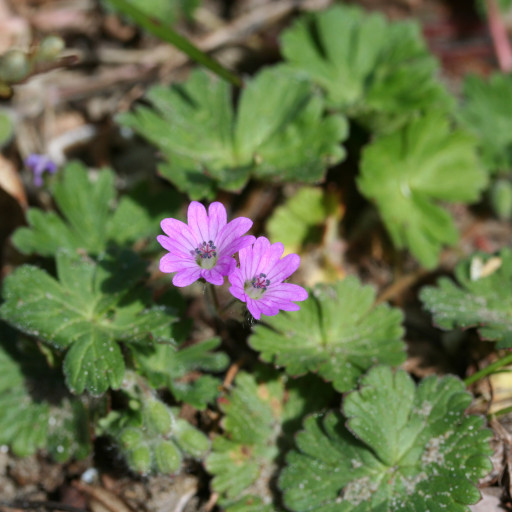
Known affectionately as the Dovesfoot Cranesbill, this charming little wildflower often hitches a ride into gardens on the wind. While some perfectionist gardeners might label it a "weed," its soft, velvety foliage and tiny, notched pink petals make it a favorite for those who appreciate the delicate details of a wild lawn. It is a cosmopolitan traveler, originally from Europe and North Africa, but now flourishing in sunny patches across the globe.
🔍 How to Identify
- 🌸 Heart-Shaped Petals: Each tiny flower has five pink-to-purple petals that are deeply notched at the tip, making each petal look like a miniature heart.
- 🍃 Velvety Foliage: The leaves are circular but deeply lobed into 5–7 segments. Most importantly, they are covered in a dense layer of fine, soft hairs that give the plant a "fuzzy" appearance and a soft touch.
- 🏗️ Low-Prostrate Habit: It typically grows in a rosette or spreads its hairy stems outward along the ground, rarely standing taller than a few inches unless competing with high grass.
🏡 In Your Garden
- 🌱 The Opportunist: This plant thrives in "disturbed" soil. If you see it appearing in your lawn or gravel paths, it is usually taking advantage of areas where the soil is well-drained and the grass is a bit thin.
- 🐝 Pollinator Magnet: Don't be too quick to pull it out! These tiny flowers are a vital early-season food source for hoverflies and small solitary bees, who find the shallow nectar easy to reach compared to more complex garden flowers.
⚠️ Safety & Toxicity
- ✅ Generally Safe: Geranium molle is considered non-toxic to humans, dogs, and cats. It does not possess the volatile oils found in some "scented" Pelargoniums that can cause upset stomachs.
- 👐 Mild Irritation: While not poisonous, the dense hairs on the stems and leaves can occasionally cause very mild skin redness in people with extremely sensitive skin if handled extensively.
✨ Fun Fact
- 🏗️ The Spring-Loaded Beak: The name "Cranesbill" refers to the long, beak-like seed pod that forms after the flower fades. When the seeds are ripe, the pod dries and twists with such tension that it eventually "snaps," catapulting the seeds several feet away from the parent plant!

Detailed Care Instructions
| Color | Violet, Purple |
| Soil Ph | 4.5-6.8 |
| Invasive | Weed |
| Toxicity | Non-Toxic |
| Soil Type | Moist, Rich, Acidic |
| Bloom Time | Early Spring To Late Summer |
| Plant Type | Perennial |
| Mature Size | 2.0–11.8 In. In Height |
| Native Area | Europe, North America |
| Sun Exposure | Part Sun To Full Shade |
| Hardiness Zones | 5-8 |
To grow Geranium molle, follow these steps:
- Choose the right location: Geranium molle prefers full sun to partial shade. It can tolerate a wide range of soil types but prefers well-draining soil.
- Prepare the soil: Before planting, prepare the soil by loosening it and removing any weeds or rocks. It is recommended to add organic matter, such as compost, to improve soil fertility.
- Planting: Dig a small hole slightly larger than the size of the root ball. Place the Geranium molle plant in the hole and backfill with soil, ensuring that the top of the root ball is level with the soil surface. Gently press down the soil to secure the plant.
- Watering: Water the plant thoroughly after planting, and then regularly thereafter. Avoid overwatering, as Geranium molle prefers slightly dry conditions. Water only when the top inch of soil feels dry to the touch. Water at the base of the plant rather than overhead to prevent disease.
- Fertilizer: Geranium molle is a low-maintenance plant and does not typically require fertilization. If desired, you can apply a balanced, slow-release fertilizer in spring or early summer.
- Pruning: Prune Geranium molle to maintain its shape and encourage bushier growth. Remove any dead or damaged stems. Prune back one-third of the plant after it finishes flowering to promote new growth.
- Mulching: Apply a layer of organic mulch, such as wood chips or shredded leaves, around the base of the plant to conserve moisture, suppress weeds, and regulate soil temperature.
- Pests and diseases: Geranium molle is generally resistant to pests and diseases, but it may occasionally be affected by aphids, spider mites, or fungal leaf spots. Treat any problems promptly using organic insecticides or fungicides, if necessary.
- Propagation: Geranium molle can be propagated by taking stem cuttings in spring or by dividing mature clumps. Root the stem cuttings in a potting mix, keeping them moist until they establish roots. Divide mature plants by carefully separating the clumps into individual plants and replanting them.
- Winter care: Geranium molle is a winter-hardy plant in USDA hardiness zones 9-11. In colder regions, protect the plant from frost by covering it with a frost cloth or bringing it indoors as a potted plant during the winter months.
By following these steps, you can successfully grow Geranium molle and enjoy its lovely foliage and delicate flowers.

Place in a bright room that is sun drenched almost all day. Or directly in a south-facing window.

The plant requires regular watering and should not be allowed to dry out completely. Water should be added slowly to allow the soil to absorb it without running off. The soil should be moist but not waterlogged. Overwatering can lead to root rot, so it is important to allow the soil to dry out slightly between watering. Watering should be adjusted according to the plant's needs, which may vary depending on temperature, humidity, and sunlight. It is also important to avoid getting water on the leaves, as this can encourage disease. In general, the plant should be watered deeply about once a week, or more frequently during hot, dry weather.
- Choose a balanced fertilizer with equal amounts of nitrogen, phosphorus, and potassium.
- Dilute the fertilizer according to the instructions on the packaging.
- Water the plant thoroughly before fertilizing to ensure the soil is moist.
- Apply the diluted fertilizer to the soil around the base of the plant.
- Avoid getting fertilizer on the leaves or flowers.
- Repeat fertilization once every 6-8 weeks during the growing season.
- Reduce fertilization during the dormant season or when the plant is not actively growing.
- Monitor the plant for any signs of over-fertilization, such as yellowing or wilting leaves, and adjust the fertilizer accordingly.
Geranium Molle is a type of plant that requires well-draining soil with a neutral to slightly alkaline pH level. It prefers a soil consisting of equal parts of loam, sand, and compost. The soil should also be enriched with organic matter in the form of compost or well-aged manure to provide vital nutrients for the plant's growth. It is recommended to avoid using heavy clay soil or soil that is consistently wet as it can lead to root rot and poor plant health. Additionally, the soil should be kept moist but not overly wet to prevent waterlogging.
To propagate this plant, first obtain a healthy mature plant and take stem cuttings from it during the growing season. Cut the stem at a 45-degree angle using a clean, sharp knife or scissors. The cutting should be approximately 4-6 inches in length and include at least 2-3 nodes. Remove any leaves from the bottom of the cutting.
Prepare a pot with a well-draining soil mixture and water it thoroughly. Dip the end of the cutting in rooting hormone powder and gently tap off any excess.
Make a hole in the soil with a clean pencil and insert the cutting, ensuring that at least one node is buried beneath the soil. Gently firm the soil around the cutting to provide support.
Cover the pot with a clear plastic bag or a transparent container to create a humid environment, as this will encourage root growth. Place the pot in a warm, bright area but avoid direct sunlight which can cause the plant to wilt.
Check the soil regularly and water as necessary to keep it moist but not waterlogged. After 4-6 weeks, gently tug on the cutting to see if it has rooted. Once roots have formed, gradually acclimate the plant to lower humidity and gradually move it to a brighter location.
Once the new plant has established roots and has grown to a significant size, it can be transplanted into a larger pot or outdoor garden bed.
Common pests of the dove's-foot crane's-bill include Aphids, whiteflies. Make a habit of checking your dove's-foot crane's-bill frequently for pests so that any infestations can be caught and managed early.








