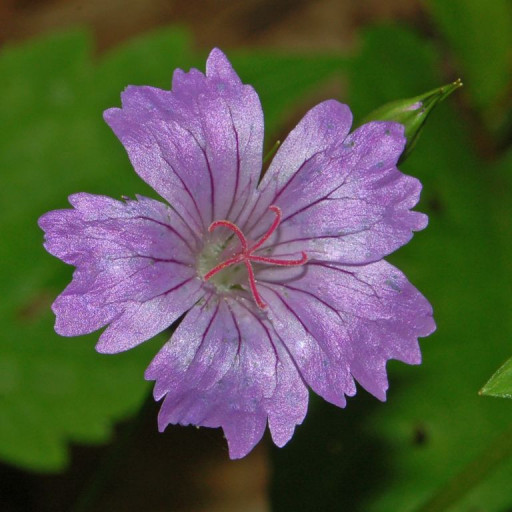
Plant Overview
Commonly known as the Knotted Cranesbill, this woodland wonder is the unsung hero of the shady garden. Unlike many of its sun-loving cousins, this hardy perennial thrives in the dim, dappled corners where other flowers often struggle. It earns its unique name from the distinctive "knots" or swollen joints found along its stems, adding a touch of structural intrigue to its delicate, airy aesthetic.
🔍 How to Identify
- 🍃 Glossy Foliage: The leaves are a vibrant, bright green and deeply lobed into three to five segments. They possess a notable "sheen" or waxy texture that helps reflect light in dark environments.
- 🌸 Veined Blooms: The flowers are a soft lilac, mauve, or magenta. Each petal features elegant, darker purple veins that act as "landing strips" for visiting insects.
- 🦴 Swollen Nodes: If you look closely at the stems, you’ll see prominent, "knotted" joints (nodes) where the leaves attach, which is the most reliable way to distinguish it from other wild geraniums.
🏡 In Your Garden
- 🌲 Dry Shade Specialist: This plant is a "problem solver." It is one of the few species that can tolerate dry shade, making it the perfect choice for planting underneath large deciduous trees or along north-facing walls.
- 🌱 Low-Maintenance Groundcover: It forms a lush, mounding carpet. While it can self-seed and spread via underground rhizomes, it is rarely invasive and is excellent for suppressing weeds in forgotten corners of the yard.
⚠️ Safety & Toxicity
- 🐾 Pet Safety: Good news for pet owners! Geranium nodosum is generally considered non-toxic to dogs, cats, and horses, making it a "worry-free" addition to a family garden.
- 👐 Skin Sensitivity: While not poisonous, the fine hairs on the stems may cause very mild skin irritation for people with highly sensitive skin. Wearing gloves during heavy pruning is always a good practice.
✨ Fun Fact
Despite living in the deep shadows of the forest floor, the Knotted Cranesbill is a favorite of the Hoverfly. These tiny, helicopter-like insects are attracted to the flower's reflective petals, providing vital pollination services in areas where bees might not venture!

Detailed Care Instructions
To grow Geranium nodosum, also known as cranesbill geranium, follow these steps:
- Choose the right location: Geranium nodosum prefers partial shade to full shade conditions. Select a spot in your garden that receives indirect sunlight or where there is dappled shade throughout the day.
- Prepare the soil: The plant thrives in well-draining soil with a slightly acidic to neutral pH. Amend heavy clay soil with compost or organic matter to improve drainage.
- Planting process:
- Dig a hole that is slightly larger than the root ball of the plant.
- Carefully remove the plant from its pot, being cautious not to damage the roots.
- Place the plant in the hole and backfill with soil, gently firming it around the base of the plant.
- Water thoroughly after planting to help settle the soil.
- Dig a hole that is slightly larger than the root ball of the plant.
- Watering: Geranium nodosum prefers consistently moist soil. Water the plant regularly, especially during dry spells or hot weather. However, avoid over-watering, as excessive moisture can lead to root rot.
- Mulching: Apply a layer of organic mulch, such as wood chips or shredded leaves, around the base of the plant to help retain moisture and suppress weed growth. Ensure the mulch does not touch the plant stems.
- Fertilizing: Geranium nodosum does not require heavy feeding. Apply a balanced, slow-release fertilizer in spring to provide necessary nutrients. Follow the instructions on the fertilizer packaging for the appropriate dosage.
- Pruning: Prune the plant in late winter or early spring to remove any dead or damaged foliage. You can also trim it back after flowering to encourage bushier growth and a second flush of blooms.
- Pests and diseases: Geranium nodosum is relatively pest and disease-resistant. However, keep an eye out for common garden pests like aphids or slugs and treat if necessary.
- Propagation: You can propagate Geranium nodosum by dividing established clumps in early spring or late summer. Dig up the clump, separate into smaller sections, and replant them in well-prepared soil.
By following these guidelines, you should be able to grow Geranium nodosum successfully and enjoy its beautiful blooms.

Place in a window with dappled sun or a spot in the middle of a room. Or directly in a window facing west or east.

Geranium Nodosum is a popular plant that requires proper watering for healthy growth. To water this plant, you should first check the soil moisture by putting your finger into the soil about an inch deep. If the soil feels dry at this depth, it's time to water the plant.
When watering Geranium Nodosum, you should avoid getting water on the leaves or stems, as this can cause fungal diseases. Instead, water at the base of the plant using a watering can or hose with a gentle flow. You should water the plant until the soil is evenly moist, but not waterlogged. Be careful not to overwater the plant, as this can lead to root rot.
It's also important to water Geranium Nodosum consistently, especially during hot and dry weather. This plant prefers to be watered deeply and infrequently, rather than receiving small amounts of water frequently. In addition, you should avoid watering in the evening, as this can also promote fungal growth. Instead, aim to water in the morning or early afternoon.
By following these watering tips, you can help to ensure that your Geranium Nodosum plants stay healthy and thrive.
To fertilize this plant, apply a balanced, water-soluble fertilizer once a month during the active growing season. Use a ratio of 10-10-10 or 15-15-15, following the manufacturer's instructions for dilution. Water the plant well before and after applying the fertilizer to avoid burning the roots. Avoid fertilizing during the dormant period or when the plant is stressed.
Geranium Nodosum is a plant that prefers fertile, well-drained soil with a pH level of 6.0 to 7.5. It grows best in soil that is rich in organic matter and has good drainage. A soil mix that includes equal parts of loam, sand, and peat moss is ideal for this plant. Avoid using heavy clay soils or soils that are prone to waterlogging as these can cause root rot and other problems. Additionally, ensure that the soil is not too dry or too moist as this can affect the overall health and growth of the plant. Regular fertilization with a balanced organic fertilizer can help to promote healthy growth and flowering.
To propagate this plant, you will need to select a healthy stem from an established plant. Using a clean and sharp pair of scissors, cut a 4-6 inch long stem just below a node (the point where the leaves attach to the stem). Remove the lower leaves from the stem, leaving only a few at the top. Dip the cut end of the stem in rooting hormone powder to stimulate root growth. Plant the stem in a well-draining potting mix, water thoroughly, and cover with plastic to create a humid environment. Keep the soil moist and place the pot in bright, indirect light. After a few weeks, you should see new growth and roots beginning to form. Once the plant has established itself, you can transplant it into a larger pot or into your garden.








