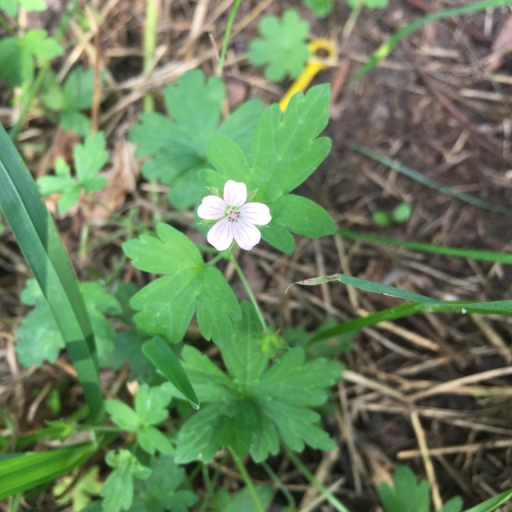
Plant Overview
Known as the Siberian Cranesbill, this resilient traveler has journeyed from the cold steppes of Northern Asia to meadows and gardens across the globe. Unlike its flashy ornamental cousins, it possesses a quiet, wild beauty that thrives where other plants might struggle. It earned its "Cranesbill" nickname because its unique seed pods look exactly like the long, pointed beak of a crane.
🔍 How to Identify
- 🌸 The Bloom: Small, five-petaled flowers that are usually pale white, soft pink, or lavender. If you look closely, you’ll see delicate purple "honey guides" (veins) leading toward the center.
- 🍃 Lacy Foliage: The leaves are deeply divided into three to five lobes, each with a toothy edge, giving the plant a textured, fern-like appearance.
- 📏 Sprawling Habit: It doesn't typically stand tall; instead, it prefers to creep and scramble over the ground or neighboring plants, creating a lush green carpet.
🏡 In Your Garden
- 🌱 Cold-Hardy Survival: As the name "Sibericum" suggests, this plant is an expert at surviving harsh winters. It is incredibly low-maintenance and can thrive in partial shade or full sun, provided the soil stays relatively moist.
- 🐝 Pollinator Friend: While the flowers are small, they are a vital source of nectar for local bees and hoverflies. It’s an excellent choice for "wild" corners of the garden where you want to support local biodiversity without much effort.
⚠️ Safety & Toxicity
- 🌿 Safe Status: Siberian Cranesbill is generally considered non-toxic to humans and is not listed as a major threat to pets.
- 🐾 Mild Caution: While safe, the plant contains tannins and essential oils that can cause mild stomach upset in curious cats or dogs if consumed in large quantities. It’s always best to discourage your furry friends from using it as a snack bar.
✨ Fun Fact
- 🚀 Nature's Catapult: The "Cranesbill" seed pod is a mechanical marvel. When the seeds are ripe and the pod dries, it acts like a spring-loaded catapult, snapping upward to fling seeds several feet away to ensure the next generation has plenty of space to grow!

Detailed Care Instructions
To grow Geranium Sibiricum (also known as Siberian cranesbill or Siberian geranium), follow these steps:
- Choose a suitable location: Geranium Sibiricum thrives in full sun to partial shade. Select a spot in your garden that receives at least 6 hours of direct sunlight daily.
- Prepare the soil: Geranium Sibiricum prefers well-draining soil with a pH level of 6.0 to 8.0. If your soil is heavy or clay-like, amend it with organic matter such as compost or well-rotted manure to improve drainage.
- Planting: You can grow Geranium Sibiricum from seeds or purchase young plants from a nursery. If starting from seeds, sow them in early spring or late summer in trays or pots. Cover the seeds lightly with soil and keep them moist until they germinate. Transplant the seedlings into the garden when they are about 3-4 inches tall. If using young plants, dig a hole slightly larger than the root ball and place the plant in it, ensuring the top of the root ball is level with the soil surface. Fill the hole with soil, firming it gently around the plant.
- Watering: Keep the newly planted Geranium Sibiricum well-watered until it establishes roots. After that, water the plant deeply once a week, allowing the soil to dry slightly between waterings. Avoid overwatering to prevent rotting.
- Mulching: Apply a layer of organic mulch around the base of the plant to conserve moisture, suppress weeds, and regulate soil temperature.
- Fertilization: Geranium Sibiricum is not heavy feeder, but you can fertilize it once in spring with a balanced, slow-release fertilizer to promote healthy growth. Follow the instructions on the fertilizer label for proper application rates.
- Pruning: Prune Geranium Sibiricum in early spring before new growth begins. Cut back any dead or damaged stems, and trim the plant to maintain its shape. This will also encourage bushier growth and more prolific flowering.
- Pest control: Geranium Sibiricum is generally resistant to pests and diseases. However, keep an eye out for common garden pests such as aphids or snails. If necessary, use organic pest control methods or insecticidal soap to manage infestations.
By following these guidelines, you can successfully grow Geranium Sibiricum and enjoy its beautiful blooms in your garden.

Place in a bright room that is sun drenched almost all day. Or directly in a south-facing window.

To provide adequate watering for this particular plant, it is important to understand its specific watering needs. The best way to water it is to ensure that the soil is kept consistently moist but not waterlogged. It is essential to avoid letting the soil dry out completely as this can be detrimental to the plant's health.
Begin by checking the soil moisture level regularly. This can be done by inserting your finger into the soil up to the second knuckle. If the soil feels dry, it is time to water the plant. The frequency of watering will depend on factors such as the climate, season, and pot size.
When watering, it is important to do so slowly and gently, to allow the soil to absorb the water without causing run-off. Avoid watering the leaves to prevent the development of fungal diseases.
Another essential aspect of watering this plant is to ensure that excess water is drained away. This can be achieved by providing adequate drainage holes in the pot and using well-draining potting soil.
Overall, consistent and careful watering is crucial to keep this plant healthy and beautiful.
To fertilize the plant, use a balanced water-soluble fertilizer or a slow-release granular fertilizer at half the recommended strength every two weeks during the growing season. Avoid over-fertilizing and apply fertilizer only to moist soil.
The ideal soil for Geranium Sibiricum plant should be well-draining and slightly acidic, with a pH level between 5.5 and 6.5. A soil mix that is composed of equal parts of peat moss, sand, and perlite will help provide adequate drainage, moisture, and air circulation to the plant's roots. It is also essential to ensure that the soil is rich in organic matter, such as compost or well-rotted manure, which helps improve the soil structure, fertility, and moisture-holding capacity. When planting Geranium Sibiricum, it is essential to ensure that the soil is well-compacted around the roots and to water the plant regularly to keep the soil moist but not waterlogged.
Propagation of this plant can be done through stem cuttings and division of the root ball. For stem cuttings, select a healthy stem and make a cut just below the node. Remove the lower leaves and dip the cut end into rooting hormone. Place the cutting in a soilless mixture and keep it evenly moist. After a few weeks, roots should begin to form. For division, carefully separate the roots and plant each section in its own container. Keep the soil moist and provide partial shade until new growth appears.








