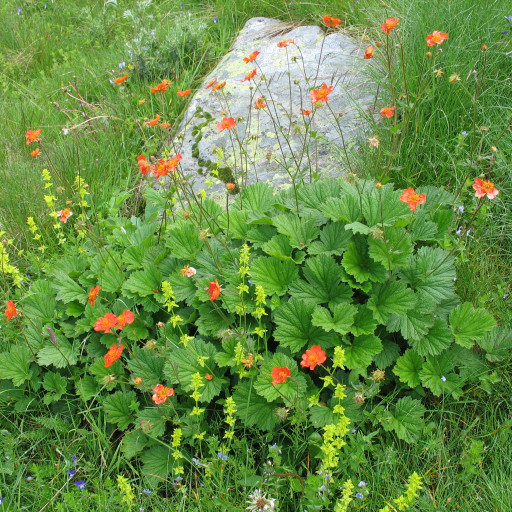
Plant Overview
Often called "Scarlet Avens" or the "Dwarf Orange Geum," this herbaceous perennial is the firecracker of the early summer garden. Originating from the lush mountain meadows of the Balkans and Turkey, it is prized for its glowing, almost electric orange blooms that seem to float weightlessly above its soft, green foliage. It’s a favorite for those looking to add a "wildflower" feel to a structured border.
🔍 How to Identify
- 🌸 The Blooms: Features brilliant, five-petaled, cup-shaped flowers that range from fiery orange to brick red. Each bloom is anchored by a fuzzy center of bright yellow stamens that act as a beacon for pollinators.
- 🍃 The Foliage: The leaves form a dense, scalloped mound at the base of the plant. They are "pinnate" (divided) and covered in fine, soft hairs, giving them a slightly velvety texture and a rich, forest-green color.
- 🌱 Growth Habit: It is a clump-forming plant. While the leafy rosettes stay low to the ground, the wiry, slender flower stems rise gracefully to about 12–18 inches, swaying easily in the breeze.
🏡 In Your Garden
- 💧 The "Cool Feet" Rule: This plant thrives in moist, well-drained soil. It particularly hates "wet feet" during the winter, which can cause the crown to rot, but it also dislikes drying out completely during a scorching summer.
- ✂️ Deadheading Context: To keep the fiery display going all season, you must be diligent about cutting back faded flower stalks. Removing the old stems tells the plant to stop producing seeds and put its energy back into a second flush of blooms.
- ☀️ Sun Strategy: In cooler climates, it loves full sun. However, in very hot regions, it appreciates "dappled shade" in the afternoon to prevent its delicate petals from scorching.
⚠️ Safety & Toxicity
- 🐾 Status: Generally Safe.
- 👶 Details: Geum coccineum is considered non-toxic to humans, dogs, and cats. It is a very safe choice for family gardens. Some people with extremely sensitive skin may experience very mild irritation from the tiny hairs on the leaves, so gloves are recommended for heavy pruning.
✨ Fun Fact
- 🏰 A Royal Relative: Despite its wildflower appearance, the Scarlet Avens is a member of the Rosaceae (Rose) family. If you look closely at the shape of the petals and the center of the flower, you can see its resemblance to a simple, single-petal wild rose!

Detailed Care Instructions
| Lighting | Full Sun |
| Hardiness Zones | Max 7B |
To grow Geum coccineum, also known as avens or bloody cranesbill, follow these steps:
- Choose a suitable location: Geum coccineum prefers full sun to light shade and well-draining soil. Ensure the chosen spot has good air circulation.
- Prepare the soil: Dig the planting area to loosen the soil and remove any weeds or debris. If the soil is heavy or clay-like, amend it with organic matter such as compost or well-rotted manure to improve drainage.
- Planting: Dig a hole slightly larger than the root ball of the Geum coccineum plant. Place the plant in the hole, ensuring the crown (where the stem meets the roots) is level with or slightly above the soil surface. Backfill the hole with soil and gently firm it around the plant.
- Watering: Water the newly planted Geum coccineum thoroughly immediately after planting and regularly thereafter to keep the soil consistently moist but not waterlogged. Avoid allowing the soil to dry out completely between waterings.
- Mulching: Apply a layer of organic mulch around the plant to help retain moisture, suppress weeds, and maintain a consistent soil temperature. Ensure the mulch does not touch the plant's stem to prevent rotting.
- Fertilizing: Geum coccineum generally does not require heavy fertilization. However, you can apply a balanced, slow-release fertilizer in early spring to promote healthy growth.
- Pruning: Deadhead the spent flowers regularly to encourage repeat blooming throughout the growing season. Cut the flower stalks back to the base of the plant after the final flush of flowers. Additionally, remove any damaged or diseased foliage as needed.
- Dividing: Over time, Geum coccineum can form clumps that become overcrowded. To rejuvenate the plant and prevent decline, divide it every 2-3 years in early spring or fall. Dig up the plant and carefully separate the clumps into smaller, self-contained plants before replanting.
- Pests and diseases: Geum coccineum is generally resistant to pests and diseases. However, keep an eye out for aphids, slugs, and snails, which may occasionally feed on the foliage. Use organic pest control methods if necessary.
- Winter care: Geum coccineum is a hardy perennial plant. In regions with harsh winters, mulch the plant with a layer of straw or leaves to help insulate the roots during colder months.
By following these tips, you should be able to successfully grow Geum coccineum and enjoy its beautiful blooms in your garden.

Place in a window with dappled sun or a spot in the middle of a room. Or directly in a window facing west or east.

Geum Coccineum plants should be watered regularly during the growing season. It is important to keep the soil moist, but not waterlogged, as this can lead to root rot.
One way to determine if the plant needs water is to feel the soil with your fingers. If it feels dry to the touch, it is time to water. When watering, aim to wet the soil to a depth of at least a few inches.
It is best to water the plant in the morning or evening when the temperatures are cooler, as watering during the heat of the day can cause the water to evaporate too quickly.
If the plant is in a container, make sure there are drainage holes to allow excess water to drain away.
During the winter months, the plant may not require as much watering as it goes into a dormant state. However, it is important to check the soil moisture regularly and water as needed.
To fertilize this plant, apply a balanced fertilizer with an N-P-K ratio of 10-10-10 in the early spring or late fall. Apply the fertilizer at a rate of 2 tablespoons per square foot of soil around the base of the plant. Water the fertilizer in thoroughly after application. Avoid over-fertilizing as it can lead to excessive growth and reduced flowering.
Geum Coccineum plant prefers a well-draining soil that is slightly acidic to neutral with a pH level of 5.5 to 7.0. It grows best in loamy soil that is rich in organic matter and has good moisture retention capacity. The soil should be fertile, containing essential macronutrients like nitrogen, phosphorus, and potassium. The soil should also be aerated and well-draining to prevent waterlogging and root rot. Adding compost or other organic matter to the soil can improve the soil structure, increase moisture retention capacity, and provide nutrients for the plant. Overall, a well-draining, nutrient-rich, and slightly acidic to neutral soil is ideal for growing Geum Coccineum plant.
Geum Coccineum can be propagated through seeds or division. For seed propagation, collect the seeds in the fall and sow them in pots with soil in the spring. Cover the seeds lightly with soil and keep them in a sunny location. Water the seeds regularly but avoid overwatering.
For division, choose a mature plant in the spring or fall and carefully dig it up. Gently separate the plant into smaller sections, making sure each section has several healthy roots. Replant each section in a new location and water regularly to encourage growth.
Propagation of this plant can be successful if proper care is taken. It is important to avoid overwatering or allowing the soil to become too dry. Regular fertilization can also help ensure healthy growth and successful propagation.
Common pests of the scarlet avens include Spider mites, aphids, larvae. Make a habit of checking your scarlet avens frequently for pests so that any infestations can be caught and managed early.








