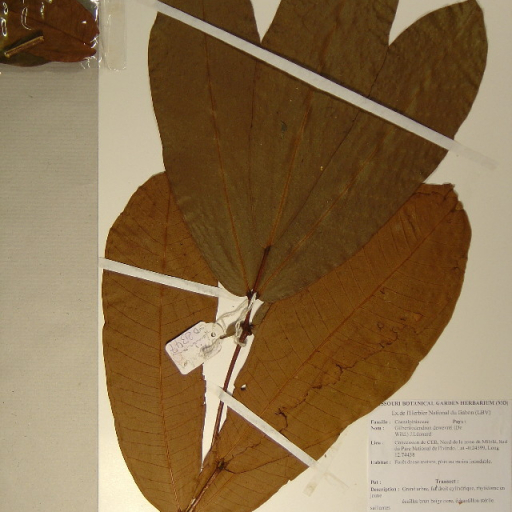
Plant Overview
Deep in the heart of the Congo Basin, Gilbertiodendron dewevrei, known commonly as the Limbali, reigns supreme. Unlike most tropical trees that share space with hundreds of other species, this giant is famous for creating "monodominant" forests where it can cover up to 90% of the canopy. It is the architect of its own secret kingdom, creating a cool, shaded world beneath its massive, interlocking branches.
🔍 How to Identify
- 🌳 The Canopy: It forms a dense, evergreen roof. The leaves are so thick that very little sunlight reaches the forest floor, creating a distinctively dim and open understory.
- 🍃 Leathery Leaves: The leaves are large, glossy, and "paripinnate" (meaning they grow in pairs). They feel like thick parchment and are designed to shed heavy tropical rain quickly.
- 🪵 Buttressed Trunk: To support its massive height, the tree often develops impressive buttress roots that flare out at the base, looking like organic kickstands.
- 🥜 Woody Pods: It produces large, heavy, flat seed pods. When they dry out, they explode with a loud "crack" to fling their seeds away from the mother tree.
🏡 In Your Garden
- 🌍 Tropical Nature: The Limbali is a true child of the rainforest. It is rarely seen in home gardens because it requires immense space, high humidity, and a frost-free climate to survive.
- 🌑 The Patient Seedling: Unlike many trees that need sun to grow, Limbali seedlings are masters of the shade. They can sit on the dark forest floor for years, barely growing, just waiting for an old tree to fall and create a "light gap" so they can race to the sky.
- 💧 Ecosystem Engineer: In its native habitat, it helps regulate the local climate by recycling water through its leaves, contributing to the very rainfall it needs to survive.
⚠️ Safety & Toxicity
- 🛡️ Safe Status: This tree is considered non-toxic. It is not known to have poisonous sap, leaves, or fruit.
- 🐾 Pet & Child Safety: There are no documented risks of poisoning for curious pets or children. However, the fallen seed pods are very hard and woody, which could pose a tripping hazard or a choking risk for large dogs who like to chew on wood.
✨ Fun Fact
- Limbali forests are often referred to as "climax forests." Because the tree is so good at growing in its own shade, it essentially "locks" other species out, ensuring that when a Limbali tree dies, it is almost always replaced by another Limbali.

Detailed Care Instructions








