Plant Overview
The Gladiolus hirsutus, affectionately known as the "Little Pink Afrikaner," is a delicate gem hailing from the winter-rainfall regions of South Africa. Unlike the towering, stiff hybrids often found in florist shops, this wild species offers a more graceful, airy presence with soft, funnel-shaped blooms. Its name "hirsutus" hints at its most unique feature—a fine coating of hairs that gives the plant a soft, velvety texture.
🔍 How to Identify
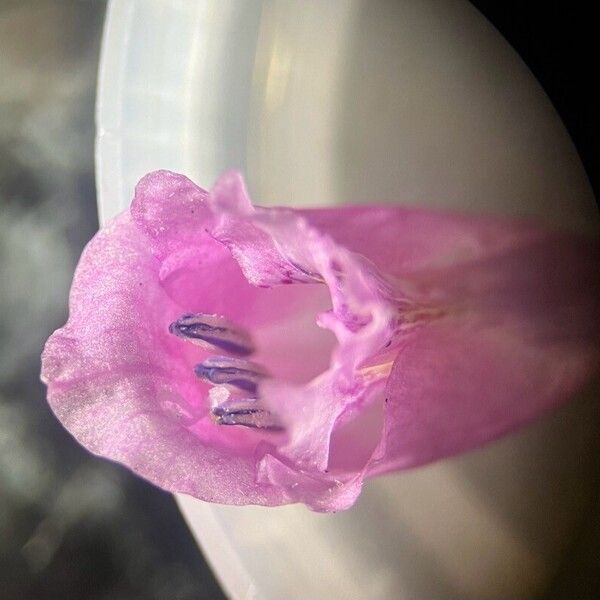
- 🌸 The Blooms: Features elegant, trumpet-like flowers that range from pale pink to deep mauve, often decorated with darker "nectar guides" on the lower petals to attract pollinators.
- 🌿 Hairy Foliage: Unlike most smooth-leaved lilies, the narrow, sword-shaped leaves of this species are covered in fine, soft hairs (pubescence), which help the plant trap moisture.
- 📏 Growth Habit: It is a relatively small and slender plant, typically reaching about 30–60 cm in height, making it much more "wild" in appearance than garden-center varieties.
🏡 In Your Garden
- ❄️ Winter Specialist: This plant follows a Mediterranean growth cycle; it wakes up in the cool, wet winter and goes completely dormant in the hot, dry summer. If you keep the soil wet while it’s sleeping, the corm (bulb) will likely rot.
- ⏳ Patience with Roots: Because it grows from a corm, it hates being disturbed once it has started its growth cycle. If you need to move it, wait until the foliage has completely died back and the plant is dormant.
- ☀️ Sun Seeker: It thrives in bright, direct sunlight which mimics its native rocky slopes, but it requires gritty, fast-draining soil to prevent "wet feet."
⚠️ Safety & Toxicity
- 🐾 Mildly Toxic: Like most members of the Iridaceae family, the Gladiolus hirsutus contains compounds that can be toxic if ingested.
- 🐶 Pet Warning: The corms (the underground bulb-like structures) are the most concentrated source of toxins. If eaten by dogs or cats, it can cause lethargy, drooling, and digestive upset.
- 🖐️ Skin Sensitivity: Some gardeners find that the sap or the fine hairs on the leaves can cause mild skin irritation or "Gladiolus itch" if handled frequently without gloves.
✨ Fun Fact
The name Gladiolus comes from the Latin word "gladius," meaning sword, referring to the leaf shape. When you combine that with hirsutus (hairy), the plant's literal scientific name is the "Hairy Little Sword."

Detailed Care Instructions

Place in a bright room that is sun drenched almost all day. Or directly in a south-facing window.

Some plants require more regular watering than others, which should be done every few days. It's critical to maintain the soil moist all of the time. The water requirements of the same plant placed in pots with varying sizes will differ. Because the water in the smaller pot evaporates faster than the water in the larger pot, it will require more watering. Regardless of pot size, the surface should constantly be maintained moist.







