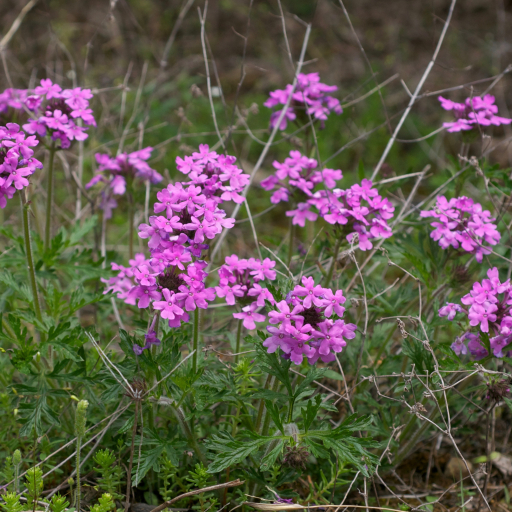
Plant Overview
Known affectionately as the Dwarf Mock Vervain, Glandularia nana is a petite powerhouse from the sun-drenched plains of South America. This resilient groundcover acts like a living tapestry, painting the earth with clusters of violet and lilac when many other plants are wilting under the summer heat. It is a favorite for those looking to add a wild, "meadow" feel to even the smallest urban spaces.
🔍 How to Identify
- 🌿 Foliage: The leaves are deeply lobed and fern-like, often appearing slightly "hairy" or fuzzy to the touch, which helps the plant retain moisture.
- 🌸 Bloom Structure: Tiny, five-petaled flowers are gathered in tight, rounded clusters (umbels) that resemble miniature bouquets sitting atop the foliage.
- 🌱 Growth Habit: This is a true "prostrate" plant, meaning it grows horizontally along the ground rather than upward, rarely exceeding 4–6 inches in height.
🏡 In Your Garden
- 🪨 The Rock Garden Specialist: Because it originates from rocky, open habitats, it has a sensitive root system that hates "wet feet." It thrives in grit, gravel, or sandy soils where water drains away instantly.
- 🦋 Pollinator Magnet: Despite its tiny size, it is a high-energy "fuel station" for bees and butterflies. Its low profile makes it the perfect landing pad for smaller beneficial insects.
⚠️ Safety & Toxicity
- 🐾 Pet Friendly: Glandularia nana is generally considered non-toxic to dogs, cats, and horses, making it an excellent choice for edges of walkways where pets might sniff or brush past.
- 👶 Kid-Safe: There are no known major toxins associated with this species, though the fine hairs on the stems can occasionally cause very mild skin redness in children with highly sensitive skin.
✨ Fun Fact
Unlike many modern hybrid Verbenas, Glandularia nana is exceptionally tough; in its native Chilean and Argentinian habitats, it can survive in soils so poor and dry that almost nothing else will grow there!

Detailed Care Instructions
To grow Glandularia Nana plant, also known as Moss Verbena, follow these steps:
- Choose the right location: Glandularia Nana plants thrive in full sun to part shade, so select a spot that receives at least 6 hours of direct sunlight each day. Ensure the soil is well-draining.
- Prepare the soil: Before planting, prepare the soil by removing any weeds, rocks, or debris. Glandularia Nana prefers soil that is slightly acidic to neutral. Add organic matter like compost or peat moss to improve the soil's fertility and drainage.
- Planting: Dig small holes, spaced about 6-8 inches apart, and gently place the Glandularia Nana plants in them. Ensure the crown of the plant is level with the soil surface. Backfill the hole and lightly firm the soil around the plant.
- Watering: After planting, water thoroughly to help the roots establish. Glandularia Nana plants prefer consistently moist but not waterlogged soil. Water deeply whenever the top inch of soil feels dry.
- Mulching: Apply a layer of organic mulch around the plants to suppress weeds, conserve moisture, and insulate the roots. Keep the mulch a few inches away from the stem to prevent rot.
- Fertilizing: Regularly feed the Glandularia Nana plant during the growing season with a balanced, slow-release fertilizer. Follow the package instructions for the appropriate application rate.
- Pruning: Glandularia Nana benefits from occasional pruning to promote bushier growth. Trim back any leggy or faded stems to encourage new blooms. Prune lightly throughout the growing season as needed.
- Pests and diseases: Glandularia Nana is generally resistant to pests and diseases. However, keep an eye out for aphids, spider mites, or powdery mildew. Treat any problems promptly using organic pest control methods if necessary.
- Propagation: Glandularia Nana can be propagated through stem cuttings. Take 3-4 inch long cuttings from healthy plants, remove the lower leaves, and dip the cut end in rooting hormone. Plant the cuttings in a well-draining soil mix and keep them moist until roots develop after a few weeks.
By following these steps and providing proper care, your Glandularia Nana plant should thrive and produce beautiful blooms.
Glandularia Nana plant should be watered regularly, but be careful not to overwater as this can lead to root rot. Before watering, check the soil moisture level by touching the top inch of soil. If it feels dry, it's time to water. Provide enough water to moisten the entire rootball, then allow the soil to drain completely. Avoid getting water on the foliage as this can lead to disease issues. Watering in the early morning or late evening is ideal to prevent evaporation and help the plant retain moisture. During periods of heavy rainfall or high humidity, adjust your watering schedule accordingly to avoid waterlogged soil.
To fertilize the Glandularia Nana plant, it is recommended to use a balanced and water-soluble fertilizer every 4-6 weeks during the growing season. Apply the fertilizer according to the instructions on the label, ensuring not to over-fertilize as this can harm the plant. It is also beneficial to mix in some organic matter, such as compost, into the soil once a year to improve soil fertility and health. Water the plant thoroughly after fertilizing to aid in nutrient absorption.
When growing the Glandularia Nana plant, it is important to use soil that is rich in nutrients and has good drainage. The soil should be a well-balanced mix of sand, loam, and organic matter. The pH of the soil should be between 6.0 and 7.0. The best soil for this plant is a sandy loam soil with good drainage, as the plant will not tolerate soil that is too wet or heavy. Adding compost or other organic matter to the soil at the time of planting or during the growing season can improve soil structure and fertility. Additionally, it is important to avoid using soil that has been previously contaminated with chemicals or other pollutants, as this may negatively affect the health of the plant.
To propagate this plant, take stem cuttings from a healthy mature plant. Choose a stem that has at least two sets of leaves and is about 4-6 inches long. Cut the stem just below a set of leaves with a sharp, clean pair of scissors or pruning shears.
Remove the lower set of leaves from the stem, leaving only the top set of leaves intact. Dip the bottom of the stem in a rooting hormone powder, which will help encourage root growth.
Plant the cutting in a pot filled with a well-draining potting mix. Water the soil so it is moist but not soggy and place the pot in a warm, bright area where it will receive indirect sunlight. Mist the cutting daily to keep it moist.
Within a few weeks, the cutting should start to develop roots and new growth. Once the plant has grown enough to fill the pot, it can be transplanted into a larger container or into the garden.








