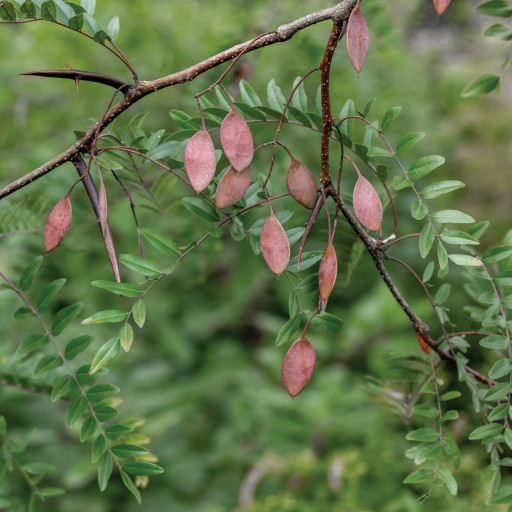
Plant Overview
Often called the Water Locust or Swamp Locust, this resilient tree is the rugged, moisture-loving cousin of the common Honey Locust. Native to the deep swamps and river floodplains of the Southeastern United States, it is a master of survival in soggy environments where most trees would drown. With its delicate, fern-like foliage and formidable defensive thorns, it brings a prehistoric, untamed beauty to wetland landscapes.
🔍 How to Identify
- 🌿 The Foliage: Features graceful, pinnately compound leaves that look like green feathers. In autumn, these leaves transform into a soft, glowing yellow before dropping.
- 🥜 The Seed Pods: Unlike the long, twisted pods of the Honey Locust, the Water Locust produces small, flat, oval-shaped pods that usually contain only one to three seeds.
- ⚔️ The Thorns: The trunk and lower branches are often armed with thick, branching thorns that can grow several inches long. These were historically evolved to protect the tree from large, extinct megafauna.
🏡 In Your Garden
- 💧 Wetland Specialist: This tree is an "obligate wetland" plant, meaning it thrives in heavy clay, boggy soil, or areas that experience seasonal flooding. It is the perfect choice for stabilizing pond banks or low spots in a yard.
- 🌳 Deep Taproot: Because it develops a deep taproot early in life to anchor itself against floodwaters, it is notoriously difficult to transplant. It is best to choose a "forever home" for it right from the start.
- ☀️ Sun Seeker: While it loves water, it demands full sun to develop its canopy. It won't grow well in the deep shade of larger, more dominant forest giants.
⚠️ Safety & Toxicity
- 🌵 Physical Hazard: The most significant danger comes from the thorns. They are incredibly sharp and sturdy enough to puncture thick leather or even tractor tires. They should be planted well away from walkways or play areas.
- 🐾 Pet & Child Safety: While not considered highly toxic, the seed pods and bark contain tannins and compounds that can cause stomach upset if ingested by curious pets or children.
- 🧤 Maintenance Note: Always wear heavy-duty gardening gloves and eye protection when pruning or handling branches to avoid painful punctures.
✨ Fun Fact
The wood of the Water Locust is exceptionally dense and rot-resistant. Because it spent thousands of years evolving in swamps, its timber is so heavy that it will actually sink in water rather than float!

Detailed Care Instructions
To grow a Gleditsia Aquatica plant, also known as the water locust or swamp locust, you can follow these steps:
- Climate: Gleditsia Aquatica is native to swampy or wet areas, so it requires a moist environment. Ensure that you live in a region with a temperate climate, preferably USDA hardiness zones 4-9.
- Soil: Choose a well-draining soil that retains moisture. Gleditsia Aquatica prefers slightly acidic to neutral soil with a pH level between 6.0 and 7.5. Amend the soil with organic matter like compost or well-rotted manure before planting.
- Sunlight: Provide the plant with full sun to partial shade. While it can tolerate both sun and shade, it tends to grow better in full sun.
- Planting: Dig a hole that is slightly wider and deeper than the root ball of the plant. Place the plant in the hole, ensuring that the top of the root ball is level with the ground. Backfill the hole with soil, gently firming it around the roots.
- Watering: After planting, water the Gleditsia Aquatica thoroughly. During the growing season, keep the soil evenly moist, but not waterlogged. Increase watering during dry spells or if the plant shows signs of stress.
- Fertilizing: Apply a slow-release balanced fertilizer in the spring before new growth appears. Follow the manufacturer's instructions for application rates. Avoid over-fertilization, as it can cause excessive leaf growth at the expense of overall plant health.
- Pruning: Prune the plant to maintain its shape or remove damaged or crossing branches. It is best to prune Gleditsia Aquatica during late winter or early spring before new growth begins.
- Mulching: Apply a layer of organic mulch, such as wood chips or bark, around the base of the plant. Mulch helps retain moisture, suppress weed growth, and regulate soil temperature.
- Pests and diseases: Gleditsia Aquatica is generally resistant to pests and diseases. However, it can occasionally be susceptible to cankers, leaf spot, or gall. Regularly inspect the plant for any signs of damage or disease and take appropriate measures if needed.
By following these steps and providing the appropriate care, you can successfully grow a beautiful Gleditsia Aquatica plant.

Place in a bright room that is sun drenched almost all day. Or directly in a south-facing window.

The best way to water this plant is to make sure the soil is moist but not waterlogged. Allow the top inch of soil to dry out before watering again. It is important to avoid overwatering, as this can lead to root rot and other plant health issues. When watering, pour water slowly and evenly onto the soil, avoiding the foliage and stems. Use a watering can or a gentle hose spray to water the plant. It is also important to use well-draining soil to prevent water from stagnating around the roots. Regularly checking the soil moisture levels and adjusting the watering schedule accordingly will help keep this plant healthy and thriving.
To fertilize this plant, use a balanced, water-soluble fertilizer that is high in nitrogen during the growing season. Apply the fertilizer every two weeks, following the manufacturer's instructions for dilution and quantity. Be careful not to over-fertilize, as this can harm the plant. Stop fertilizing in the fall and winter when the plant is dormant.
Gleditsia Aquatica is a plant that thrives in well-draining soil that is moist and slightly acidic. The ideal soil would be a mix of sand, loam, and peat moss. The sand will help with drainage, while the loam provides nutrients, and the peat moss retains moisture. It is important to avoid soil that is heavy in clay, as this type of soil retains too much water, resulting in roots that are too wet and can lead to root rot. Additionally, adding organic matter such as compost or leaf litter can help improve the quality of the soil and provide extra nutrients for the plant. Ultimately, the goal is to create a soil that is fertile, well-draining, and provides the right amount of moisture for Gleditsia Aquatica to thrive.
To propagate this plant, select healthy stem cuttings that are about six inches long and have at least three leaves. Remove all but the top leaves from the stem and dip the cut end into rooting hormone powder. Plant the cutting into a pot with well-draining soil and keep the soil consistently moist. It is best to keep the pot in a warm, humid environment, such as a greenhouse or indoors near a humidifier. The cutting should root within a few weeks, and once it has established a strong root system, it can be transplanted to its permanent location.








