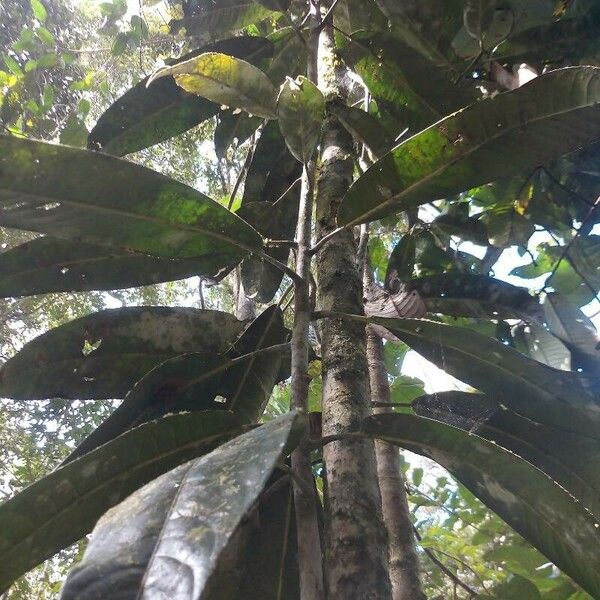
Plant Overview
Known in Southeast Asia as the Rengas tree, Gluta aptera is a silent guardian of the tropical rainforest. While it is prized by master woodworkers for its stunning, blood-red timber, it is equally feared by those who wander the jungle unprepared. Often called the "Lumberjack’s Nightmare," this tree hides a potent chemical defense beneath its bark that can leave a lasting impression on the skin of the unwary.
🔍 How to Identify
- 🍃 Leathery Foliage: The leaves are thick, glossy, and elliptic, often clustering at the ends of branches to create a dense, dark green canopy.
- 🌑 The "Inky" Bleed: If the bark is nicked, it secretes a clear sap that rapidly oxidizes and turns a stark, jet-black color—a primary warning sign of the genus Gluta.
- 🌰 Wingless Seeds: Unlike many of its cousins that have "winged" fruits designed to catch the wind, the species name aptera (meaning "wingless") refers to its heavy, nut-like seeds that drop straight to the forest floor.
🏡 In Your Garden & Landscape
- 🌳 Space Requirements: This is a massive canopy tree, not a specimen for a small backyard. It requires deep, acidic soil and thrives in lowland tropical environments or peat swamp edges.
- 💧 Hydration Needs: In its natural habitat, it enjoys high humidity and heavy rainfall. It is not drought-tolerant and relies on a consistent moisture profile to maintain its leathery leaves.
⚠️ Safety & Toxicity
- 🚫 Hazard Status: EXTREMELY TOXIC. This tree is a member of the Anacardiaceae family, making it a heavy-duty relative of Poison Ivy and Mango.
- 🧪 The Sap: The black sap contains urushiol-like compounds that cause "Rengas itch"—a severe form of contact dermatitis that leads to painful blistering, swelling, and deep skin ulcers.
- 💨 Smoke Danger: Never burn the wood of Gluta aptera. The smoke carries the toxins and can cause life-threatening internal inflammation of the lungs and throat.
✨ Fun Fact
The heartwood of this tree is so beautiful that it was historically used for high-end furniture and sword sheaths. However, legend says that some "Rengas" furniture can remain "active" for years; if the protective finish wears off, the antique wood can still give its owner a rash decades after the tree was cut down!

Detailed Care Instructions








