Plant Overview
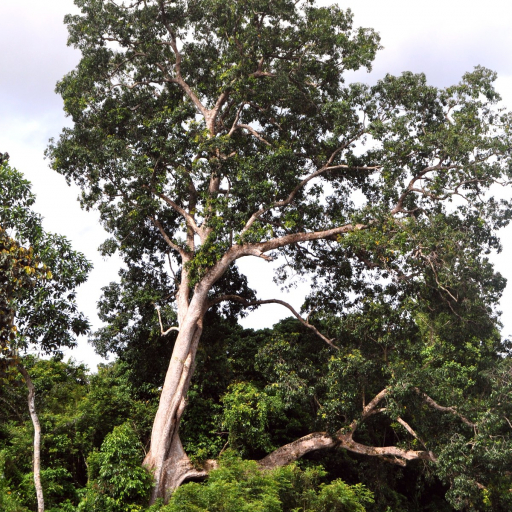
Known across Southeast Asia as the "Black Varnish Tree," the Gluta renghas is a towering tropical giant with a dark and dramatic reputation. While it is admired for its beautiful, high-contrast timber, it is equally feared by forest trekkers and woodworkers alike. Its nickname comes from its sap, which starts clear but oxidizes into a permanent, jet-black "varnish" that is as beautiful as it is biologically aggressive.
🔍 How to Identify
- 🍃 The Foliage: The leaves are large, leathery, and shaped like long ovals (obovate). They often cluster at the ends of branches, creating a dense, dark green canopy.
- 🖤 The "Ink" Stains: Look for the trunk or broken twigs; any injury to the tree will bleed a sap that rapidly turns from a creamy color to a distinct, indelible black stain on the bark.
- 🍎 The Fruit: It produces rounded, slightly scurfy brown fruits that hang in clusters, often appearing like small, weathered russet apples.
🏡 In Your Garden & Landscape
- 🌊 A Lover of Water: In its natural habitat, this tree thrives along riverbanks and in peat swamp forests. It is highly adapted to "wet feet" and can survive in waterlogged soils where other trees would suffocate.
- 🌳 Space Requirements: This is not a plant for a standard backyard. It is a massive forest species that can reach heights of nearly 50 meters. In a landscape setting, it is usually reserved for large botanical collections or stabilizing tropical riverbanks.
⚠️ Safety & Toxicity
- 🚫 HIGHLY TOXIC: The sap contains urushiol, the same chemical found in poison ivy, but often in much higher concentrations.
- 🤒 Severe Irritation: Contact with any part of the tree—leaves, bark, or sap—can cause "Renghas poisoning," resulting in painful blistering, severe swelling, and itchy dermatitis. Even the smoke from burning the wood can cause internal respiratory damage, and the dried timber can remain "active" and toxic for many years.
✨ Fun Fact
Despite its toxicity, Gluta renghas was historically used to create fine furniture for royalty. Craftsmen would have to wait years for the wood to "season" or use special traditional neutralizing techniques to handle the timber without succumbing to the tree's blistering defense mechanisms!

Detailed Care Instructions








