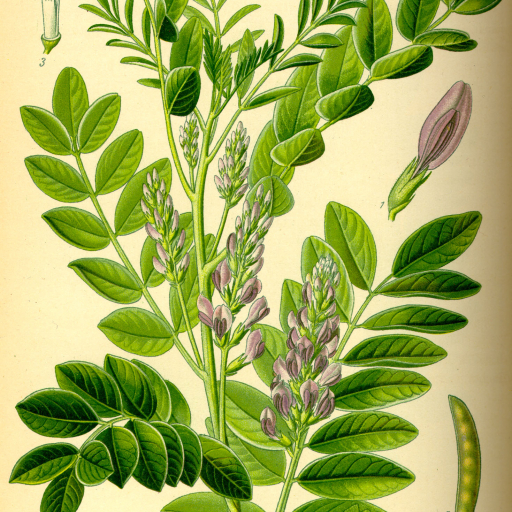
Plant Overview
Known as the "Sweet Root," Glycyrrhiza glabra is much more than a candy flavor. This ancient perennial has been prized for millennia, found in the tombs of Egyptian pharaohs and used as a staple in traditional medicine across Asia and Europe. While we associate its name with black chewy treats, the plant itself is a graceful, pea-like legume that adds a touch of history and architectural beauty to any temperate garden.
🔍 How to Identify
- 🌿 Leaf Structure: Features elegant, bright green "pinnate" leaves, meaning they grow in pairs of 9 to 17 leaflets along a central stem, giving the plant a feathery, fern-like appearance.
- 🌸 Floral Spikes: In late summer, it produces upright spikes (racemes) of small, papery flowers that range in color from pale lavender to a delicate, dusty blue.
- 🪵 Hidden Treasure: The most famous part is underground. It develops a massive, woody taproot system and horizontal runners (rhizomes) that are fibrous, yellowish on the inside, and intensely sweet.
🏡 In Your Garden
- ☀️ Sun Seeker: This plant is a sun-worshipper. It needs full light to develop the sugars in its roots, and while it is hardy, it thrives best in regions with long, warm summers.
- 🏗️ Commitment Issues: Because of its incredibly deep and vigorous taproot, Licorice absolutely hates being moved. Choose its permanent home carefully, as the plant can take three to four years to reach a harvestable size.
- 💧 Soil Depth: It requires deep, well-drained, sandy, or loamy soil. If the soil is too rocky or compacted, the roots—the part you want—will become stunted and twisted.
⚠️ Safety & Toxicity
- ✅ General Status: The plant is non-toxic to touch and safe to grow in family gardens.
- 🚫 Consumption Warning: While the root is edible, it contains glycyrrhizin, a compound that can cause high blood pressure and potassium loss if eaten in large quantities over time.
- 🐾 Pets & Kids: It is generally considered non-toxic to cats and dogs, but frequent chewing on the woody roots should be discouraged to avoid digestive upset or hormonal interference.
✨ Fun Fact
- 🍬 The Great Imposter: Most "black licorice" candy sold in stores today doesn't actually contain any Glycyrrhiza glabra! It is usually flavored with Anise oil, which has a similar scent and taste but is much easier to mass-produce.

Detailed Care Instructions
To grow Glycyrrhiza Glabra, also known as Licorice plant, you can follow these steps:
- Obtain Licorice plant seeds or seedlings: You can purchase Licorice plant seeds or seedlings from a local nursery or online. Make sure the seeds or seedlings are fresh and healthy.
- Choose a suitable location: Licorice plants prefer full sun to partial shade. Choose a location in your garden that receives at least 4-6 hours of direct sunlight per day. Ensure the soil is well-draining, loose, and rich in organic matter.
- Prepare the soil: Licorice plants prefer slightly acidic to neutral soil with a pH range of 6.0-7.5. Before planting, prepare the soil by removing any weeds, rocks, and debris. Loosen the soil to a depth of 12-14 inches, incorporating compost or well-rotted manure to improve fertility.
- Sow the seeds or plant the seedlings: If starting from seeds, sow them 1/4 inch deep in the prepared soil, spacing them about 12-18 inches apart. If using seedlings, dig a hole that is slightly larger than the root ball of the seedling and gently place it in the hole. Backfill with soil and firm it gently around the base.
- Water regularly: Licorice plants require regular watering, especially during dry spells. Water deeply, ensuring the soil is consistently moist but not waterlogged. Avoid overwatering to prevent root rot.
- Mulch the soil: Apply a layer of organic mulch around the base of the plants to retain soil moisture, suppress weed growth, and maintain a consistent soil temperature.
- Provide support: Licorice plants have a spreading habit and can benefit from support. Install stakes or a trellis nearby to provide support for the plant as it grows.
- Prune as needed: Licorice plants can become invasive if left unchecked. Prune the plant annually in late winter or early spring to control its size and shape. Remove any dead, damaged, or wayward branches.
- Harvest carefully: Licorice root, the plant's main prized part, can be harvested after about three years of growth. Dig out the roots carefully, being mindful not to damage the primary taproot. Harvesting should be done in fall or early spring when the plant is dormant.
- Maintain plant health: Keep an eye out for any pests or diseases that may afflict the plant. Regularly inspect the leaves, stems, and roots for any signs of damage or infestation. Treat any issues promptly to maintain plant health.
Licorice plants are perennial and can be grown for several years if provided with proper care and maintenance.

Place in a bright room that is sun drenched almost all day. Or directly in a south-facing window.

To water this plant, make sure you thoroughly saturate the soil until water runs out of the drainage holes in the bottom of the pot. Wait until the top inch of soil dries out before watering again. Avoid letting the soil completely dry out or keeping it waterlogged for too long. Overwatering can cause root rot, while under-watering can lead to stress and damage to the plant. Place the plant in a location with bright, indirect sunlight and moderate humidity for optimal growth.
To fertilize the plant, you will need to prepare a balanced fertilizer mix with equal parts of nitrogen, phosphorus, and potassium. Avoid using high nitrogen fertilizers as they can encourage leafy growth at the expense of root development. Instead, use a slow-release fertilizer to provide a steady supply of nutrients over time. Apply the fertilizer in early spring before new growth begins, and then again in mid to late summer to encourage strong root growth. Be sure to follow the manufacturer's instructions for application rates and methods.
The ideal soil for Glycyrrhiza Glabra plant should have a pH level between 6.0 to 8.0. It should be rich in organic matter, well-draining and loamy. The soil should have good water-holding capacity as the plant requires regular watering. A soil test should be performed prior to planting to ensure the soil has the appropriate nutrient levels. It is recommended to add compost or aged manure to the soil to improve its fertility. The use of a balanced fertilizer can also be beneficial to the plant. Avoid using soil that is compacted, has poor drainage, or is excessively sandy or clayey.
To propagate a particular species of plant, a gardener can follow some basic steps. The first step is to identify the specific plant, taking note of its unique characteristics. Once identified, the gardener can collect suitable plant material for propagation. In the case of Glycyrrhiza Glabra, this may include stem cuttings, division of roots, or seedlings.
To propagate from stem cuttings, select healthy stems of the desired length and remove the lower leaves. Dip the cuttings in rooting hormone and plant in sterile soil or sand. Keep the soil moist and the cutting in a warm, humid location until it has formed roots and can be transplanted.
Division of roots involves carefully digging up the plant and separating the root system into smaller sections. Each section should include a portion of the crown and a healthy set of roots. These sections can then be planted in new locations.
Seedlings can be started indoors or sown directly in the soil depending on the climate and desired growth habits. Once seedlings have established true leaves, they can be transplanted into individual containers or into the ground.
Regardless of the method chosen, it is important to care for the newly propagated Glycyrrhiza Glabra plants with proper watering, fertilizing, and protection from pests and diseases. With proper care, these plants can thrive and provide a valuable addition to any garden.
Common pests of the licorice include Spider mites, aphids, thrips, whiteflies. Make a habit of checking your licorice frequently for pests so that any infestations can be caught and managed early.








