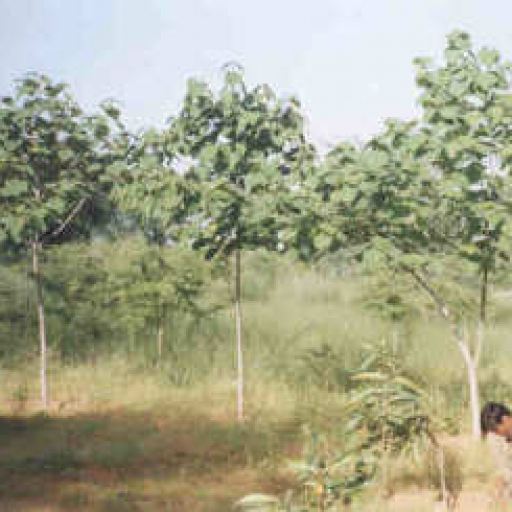
Plant Overview
Often referred to as Gamhar or the White Teak, Gmelina arborea is a fast-growing deciduous marvel native to the tropical forests of Southeast Asia. In many cultures, it is hailed as a "noble tree" because of its multi-purpose nature, providing everything from shade and medicine to high-quality timber for musical instruments. In the spring, it transforms into a stunning display as its trumpet-shaped, golden flowers carpet the ground beneath its broad canopy.
🔍 How to Identify
- 🍃 The Foliage: Look for large, heart-shaped leaves (ovate) that are arranged oppositely. The top of the leaf is a vibrant green, while the underside often has a soft, velvety texture with a slightly grayish hue.
- 🎺 The Flowers: The tree produces beautiful, drooping clusters of trumpet-shaped flowers. They are typically bright yellow or orange-brown with a fuzzy, bell-like throat that attracts a variety of pollinators.
- 🏐 The Fruit: It bears fleshy, egg-shaped fruits that turn a brilliant yellow when ripe. These fruits have a sweetish-sour smell that is highly attractive to local wildlife, particularly deer and birds.
🏡 In Your Garden
- 🌳 Space Requirements: This is not a "pot plant" for long; it is a rapid grower that can reach towering heights. If you are planting one, ensure it has plenty of room away from foundations, as its root system is vigorous and expansive.
- 💧 Resilience & Soil: While it loves fertile, moist soil to get started, the Gamhar is surprisingly drought-tolerant once its taproot is established. It is an excellent choice for "re-wilding" a large property or creating a fast-growing privacy screen.
- ✂️ Maintenance Nuance: Because it grows so quickly, it may require structural pruning in its youth to ensure it develops a strong central leader and doesn't become too "leggy" or brittle in high winds.
⚠️ Safety & Toxicity
- ✅ Safe Status: Gmelina arborea is generally considered non-toxic to humans and is widely used in traditional Ayurvedic medicine.
- 🐾 Pets & Livestock: While the leaves are often used as high-protein fodder for cattle and goats, the large seeds inside the fallen fruit could pose a choking hazard for smaller dogs.
- ✋ Skin Sensitivity: Most people handle the tree without issue, though the fallen, fermenting fruit can occasionally cause mild skin irritation for those with very sensitive skin.
✨ Fun Fact
- 🎸 The Sound of Music: Gamhar wood is a favorite among craftsmen for making the "Sitar" and "Veena" (traditional Indian string instruments) because the wood is incredibly lightweight yet stable, allowing for perfect acoustic resonance.

Detailed Care Instructions
To successfully grow Gmelina arborea, also known as a Gmelina tree or Melina tree, follow these steps:
- Climate and location: Gmelina arborea prefers a warm tropical to subtropical climate with temperatures ranging from 18-30°C (64-86°F). It grows well in areas with well-distributed rainfall and is sensitive to frost. Choose a location that receives full sunlight.
- Soil requirements: Gmelina arborea thrives in fertile, well-drained soils. It can adapt to a wide range of soil types, including sandy loam, clay loam, and lateritic soil. Ensure that the soil is rich in organic matter.
- Seed selection and preparation: Obtain high-quality Gmelina arborea seeds from a reputable source. Soak the seeds in water for 24 hours to increase their germination rate.
- Seed sowing and germination: Plant the soaked seeds in a nursery or directly in the ground. If using a nursery, sow them in seedling trays filled with well-draining soil. Cover the seeds with a thin layer of soil. Keep the soil moist but avoid overwatering. Germination usually occurs within 10-15 days.
- Seedling care: Once the seeds have germinated, provide adequate water and sunlight. Thin out the weaker seedlings to allow the stronger ones to grow without competition. Protect the young seedlings from strong winds and extreme temperatures.
- Transplantation: After 5-6 weeks, when the seedlings have developed 4-6 leaves, they can be transplanted to their permanent location. Choose a spot with good soil fertility and a sunny position. Ensure that the seedlings are adequately watered during transplantation and the following weeks.
- Irrigation and watering: Gmelina arborea requires regular watering, especially during dry periods. The soil should be kept consistently moist but not waterlogged. Irrigate deeply, allowing the water to penetrate the root zone.
- Fertilization: Provide regular fertilization to support the growth of Gmelina arborea. Apply well-decomposed organic manure, compost, or balanced fertilizer during the growing season.
- Pruning and shaping: Prune Gmelina arborea during the dormant season to remove weak, damaged, or diseased branches. Shaping the tree during its early years helps develop a strong and desirable form.
- Pest and disease management: Gmelina arborea is generally not highly susceptible to pests or diseases. However, it may occasionally suffer from leaf-eating caterpillars or fungal infections. Monitor the tree regularly and take appropriate measures if any issues arise.
Remember that Gmelina arborea can take several years to reach maturity, so patience is required during the growth process. Regular care and maintenance will help ensure a healthy and vigorous plant.

Place in a bright room that is sun drenched almost all day. Or directly in a south-facing window.

To water this plant, you should first check the soil moisture level by inserting your finger about one inch into the soil. If the soil feels dry, it is time to water the plant. Use a watering can or hose and water the soil around the base of the plant until the water starts to seep out from the drainage holes in the container. Avoid watering the leaves or stem of the plant as this can promote fungal growth and damage the plant. Water the plant when the soil feels dry, but be careful not to overwater as this can lead to root rot and other problems. It is recommended to water this plant once or twice a week depending on the weather conditions and soil type.
To fertilize this plant, use a balanced fertilizer with equal amounts of nitrogen, phosphorous, and potassium. Apply the fertilizer to the soil around the base of the plant, avoiding contact with the leaves. Water the plant well after fertilizing. Repeat every month in the growing season (spring and summer) and reduce frequency in the dormant season (fall and winter). Be careful not to over-fertilize as it can harm the plant.
Gmelina Arborea plant requires well-draining, nutrient-rich soil. The ideal soil pH level for this plant is approximately 6-7.5. A mix of loam, sand, and organic matter such as compost or aged manure is recommended for growing this plant. The soil should have good water-retention capacity and be free of salt content. It is best to avoid heavy clay soils or soils with poor drainage as they can cause waterlogging, leading to root rot and other plant diseases. It is also important to ensure proper irrigation and drainage to maintain a healthy root system and prevent waterlogging. Regular soil testing and fertilization can help maintain optimal soil conditions for healthy growth of Gmelina Arborea.
To propagate this plant, take cuttings from mature plants that are approximately 6-8 inches long and have a few leaves. Remove the lower half of leaves and dip the cut ends in rooting hormone powder. Plant the cuttings in a pot with well-draining soil and keep them moist, but not waterlogged. Place the pot in a bright, warm environment, but not in direct sunlight. Rooting should occur in 2-3 weeks. Once roots have formed, the cuttings can be transplanted into their permanent location.








