Plant Overview
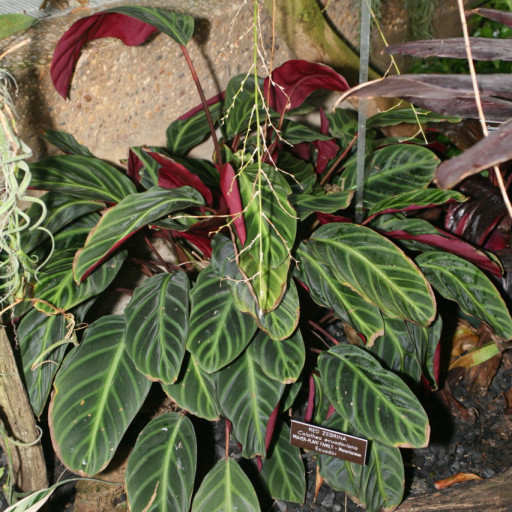
Hailing from the lush, misty understory of the Ecuadorian rainforest, Goeppertia ecuadoriana is a crown jewel of the Marantaceae family. Often still referred to by its former name, Calathea, this botanical masterpiece is prized for its velvet-like foliage and dramatic color transitions. It is a plant that truly "lives" with you, shifting its leaves rhythmically from dawn until dusk in a display of biological motion.
🔍 How to Identify
- 🍃 Velvety Foliage: The leaves are large, elongated ovals with a distinct matte, suede-like texture rather than a glossy finish.
- 🎨 Intricate Patterns: The top side features a deep forest-green base decorated with striking, feather-shaped silvery-green bands that radiate from the center vein.
- 💜 Burgundy Undersides: When the plant "prays" at night, it reveals a stunning, deep purple or rich burgundy underside, creating a bold two-tone effect.
🏡 In Your Garden
- ☁️ Humidity is Essential: Because it originates from high-moisture cloud forests, this plant struggles in dry indoor air; brown, crispy leaf edges are usually a plea for a humidifier rather than more soil water.
- 🚰 Distilled Desires: This species is notoriously sensitive to the minerals and chemicals in tap water; using rainwater or distilled water prevents the foliage from developing chemical burns or spots.
- 🕯️ Shadow Dancer: It thrives in dappled, indirect light, mimicking the forest floor. Direct afternoon sun will quickly bleach the vibrant patterns and scorch the delicate leaf tissue.
⚠️ Safety & Toxicity
- 🐾 Pet Friendly: This plant is non-toxic to cats and dogs, making it a perfect choice for pet owners who want high-drama foliage without the risk.
- 👶 Safe for Households: It is generally considered non-irritating to humans, though the delicate leaves should be handled gently to avoid bruising the plant.
✨ Fun Fact
This plant practices "nyctinasty," a circadian rhythm where it folds its leaves upward at night like hands in prayer. Scientists believe this movement helps the plant track moisture or prevents water from sitting on the leaves for too long, which reduces the risk of fungal growth in the damp jungle!

Detailed Care Instructions
To grow Goeppertia Ecuadoriana, also known as the Prayer Plant, follow these steps:
- Lighting: Place the plant in bright, indirect light. Avoid direct sunlight as it can scorch the leaves. A north or east-facing window is usually ideal.
- Temperature: Maintain a temperature range between 65-80°F (18-27°C). Avoid cold drafts and temperature extremes.
- Humidity: The Prayer Plant prefers high humidity. Increase humidity by misting the leaves regularly or placing a tray filled with water and pebbles near the plant. You can also use a humidifier.
- Watering: Keep the soil consistently moist, but not waterlogged. Water thoroughly when the top inch of soil feels dry. Avoid letting the soil dry out completely or overwatering, as both can lead to leaf problems.
- Soil: Use well-draining, rich soil with a peat-based mix. Aim for slightly acidic soil with a pH of about 6.0-6.5.
- Fertilizer: Feed the plant with a balanced, water-soluble fertilizer diluted to half strength during the growing season (spring and summer) every 2-4 weeks. Avoid fertilizing during the winter months or when the plant is dormant.
- Potting and Repotting: Repot the Prayer Plant annually or when it becomes root-bound. Choose a pot that is slightly larger than the current one and contains drainage holes. Gently remove the plant from its current pot, loosen the roots, and place it in the new pot with fresh soil.
- Pruning: Regularly trim back any yellowing or damaged leaves. Pinch or trim the growing tips to encourage bushiness.
- Propagation: Goeppertia Ecuadoriana can be propagated through division. Divide the plant when repotting, ensuring each division has a good amount of roots and leaves. Plant the divisions in separate pots with fresh soil.
- Pests and Diseases: Monitor the plant for common houseplant pests like spider mites, mealybugs, and aphids. If detected, treat with appropriate organic or chemical insecticides. Ensure good air circulation to prevent fungal diseases.
By following these care steps, you can successfully grow and enjoy Goeppertia Ecuadoriana in your home or garden.

Place in a window with dappled sun or a spot in the middle of a room. Or directly in a window facing west or east.

To water this plant, you should first determine how much water it needs. This will depend on a variety of factors such as humidity, temperature, and light levels. Keep in mind that over-watering can be just as harmful as under-watering.
When watering, make sure to use room temperature water and avoid pouring directly onto the leaves. Allow the soil to fully dry out between watering, but also make sure it does not become bone dry. You can test the soil moisture levels by sticking your finger about 1 inch into the soil. If it feels dry, it's time to water.
Water the soil around the plant slowly, being careful not to oversaturate it. You can use a watering can or a spray bottle with a narrow nozzle to make sure the water is applied directly to the soil. Once the water has fully drained out of the bottom of the pot, empty any excess from the tray or saucer.
If you notice the leaves starting to wilt or turn yellow, it may be a sign that you're not watering enough. On the other hand, if you notice the soil is constantly damp or the leaves are starting to rot, you may be over-watering. Adjust your watering schedule accordingly to find the right balance for your plant.
To fertilize Goeppertia Ecuadoriana, follow these instructions:
- Choose a balanced, water-soluble fertilizer specifically formulated for indoor plants.
- Dilute the fertilizer according to the package instructions, usually at half strength.
- Water the plant thoroughly before applying the fertilizer to avoid root burn.
- Apply the diluted fertilizer to the soil around the base of the plant.
- Ensure that the fertilizer is evenly distributed without pooling or dripping.
- Use caution not to oversaturate the soil by applying excessive amounts of fertilizer.
- Generally, fertilize every two to four weeks during the growing season (spring and summer).
- Reduce or completely halt fertilization during the dormant period (fall and winter).
- Monitor the plant's response to the fertilizer, and adjust the frequency or concentration if necessary.
- Avoid applying fertilizer to dry soil; always water the plant first to prevent root damage.
Remember to always read and follow the instructions on the fertilizer packaging for the best results.
The Goeppertia Ecuadoriana plant prefers well-draining soil that is rich in organic matter. The soil should be slightly acidic, with a pH level between 5.5 and 6.5. A mixture of peat moss, perlite, and coarse sand is an ideal soil mixture for this plant. It is important to ensure that the soil is moist but not waterlogged, as the Goeppertia Ecuadoriana plant is sensitive to overwatering. Additionally, the plant prefers indirect sunlight and high humidity levels. Regular fertilization with a balanced, water-soluble fertilizer can help promote healthy growth.
To propagate Goeppertia Ecuadoriana, you can follow the steps below:
- Select a healthy and mature plant: Choose a well-established Goeppertia Ecuadoriana plant that is free from any diseases or pests. A mature plant is more likely to have a higher success rate in propagation.
- Prepare the materials: Gather the necessary materials such as sharp and clean pruning shears, a clean and sterilized knife, a suitable rooting medium (like perlite or vermiculite), small pots or containers, and a misting bottle.
- Choose a suitable stem cutting: Identify a healthy stem on the parent plant that has at least two or three nodes. Cut the stem approximately 4-6 inches long, making a clean cut just below a node. Ensure that the cutting is taken from a non-flowering part of the plant.
- Remove lower leaves: Remove the lower set of leaves from the stem, leaving only the top few leaves intact. This helps to minimize moisture loss and allows the cutting to focus on root development.
- Prepare the rooting medium: Fill a small pot or container with a well-draining rooting medium. It is recommended to use a mix of perlite or vermiculite to provide good aeration and moisture retention.
- Plant the cutting: Create a small hole in the rooting medium using a pencil or similar tool. Place the cutting in the hole, ensuring that at least one node is covered with the rooting medium. Gently press the medium around the cutting to hold it in place.
- Provide proper care: Place the potted cutting in a warm and brightly lit area, away from direct sunlight. Maintain a consistently moist but not waterlogged environment by misting the cutting and the surrounding medium regularly. Avoid overwatering, as it may cause root rot.
- Encourage root development: Goeppertia Ecuadoriana typically develops roots within a few weeks to a couple of months. Monitor the cutting for signs of new growth and root development. Once you observe new roots emerging, it indicates successful propagation.
- Transplanting: Once the cutting has developed a sufficient root system, usually after a few months, transplant it into a larger pot or garden bed filled with well-draining potting soil. Provide similar care to a mature Goeppertia Ecuadoriana plant.
Remember to be patient, as propagation can take time and success may vary. With proper care and attention, you can successfully propagate Goeppertia Ecuadoriana and expand your collection of these beautiful plants.
Common pests of the goeppertia ecuadoriana include Mealybugs, spider mites, thrips. Make a habit of checking your goeppertia ecuadoriana frequently for pests so that any infestations can be caught and managed early.







