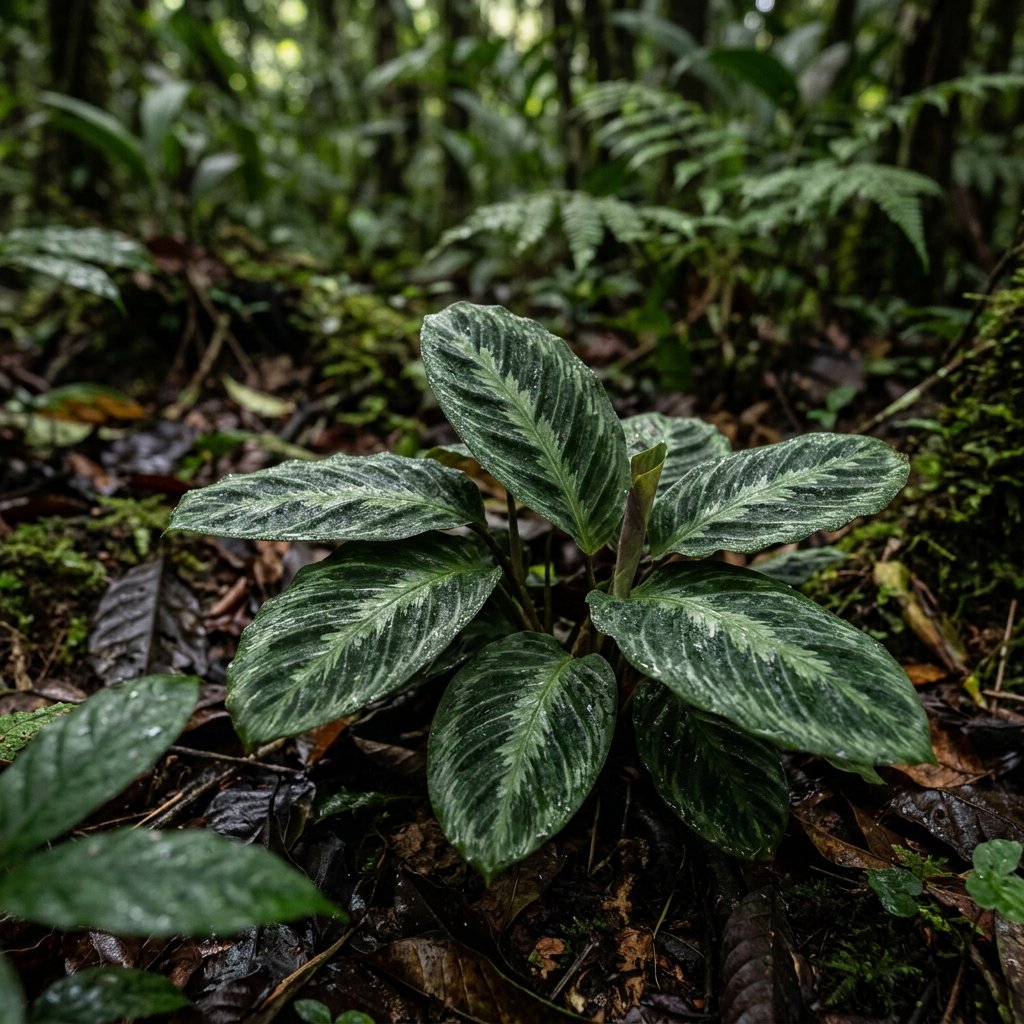
Plant Overview
Often referred to by its most popular cultivar name, 'Vittata', Goeppertia elliptica is the sophisticated artist of the tropical world. Native to the shaded understory of South American rainforests, this plant is famous for its "painted" foliage that looks almost too perfect to be real. Like its cousins in the Marantaceae family, it is a "Prayer Plant," meaning it performs a slow, rhythmic dance by folding its leaves upward every night as if in prayer.
🔍 How to Identify
- 🎨 The Stripes: Features elegant, thin, creamy-white or light green parallel lines that run from the central vein to the leaf margin, looking like delicate brushstrokes on a dark green canvas.
- 🍃 Leaf Shape: As the name elliptica suggests, the leaves are perfectly elliptical or egg-shaped, tapering slightly at the tips with a smooth, matte texture.
- 📏 Growth Habit: It maintains a compact, clumping form, rarely exceeding two feet in height, making it an ideal choice for decorative pedestals or shelves.
🏡 In Your Garden
- ☁️ Humidity is Non-Negotiable: Because this plant originated on the humid forest floor, it breathes through its large leaves. If the air is too dry, the edges will turn crisp and brown overnight; it thrives best in bathrooms or near a humidifier.
- 💧 The "Distilled" Diva: This species is notoriously sensitive to the fluoride and chlorine found in tap water. It prefers "soft" water, such as rainwater or distilled water, to prevent salt buildup that can burn its sensitive roots.
- ☀️ Shadow Seeker: Direct sunlight is the enemy of the Vittata. Intense rays will bleach the beautiful pinstripes and eventually scorch the foliage. It prefers the dappled, soft light of an east-facing window.
⚠️ Safety & Toxicity
- 🐾 Pet Friendly: Great news for animal lovers! This plant is non-toxic to cats and dogs, so you don't have to worry if your curious pet decides to take a nibble.
- 👶 Safe for Kids: It is generally considered safe for households with small children, as it lacks thorns, irritants, or poisonous saps.
✨ Fun Fact
The movement of its leaves—called nyctinasty—isn't just for show! Scientists believe "Prayer Plants" move their leaves to follow the sun’s path more efficiently during the day and to allow moisture (like dew) to fall directly to the roots at night.

Detailed Care Instructions
To grow a Goeppertia Elliptica plant, also known as the Calathea elliptica, follow the steps below:
- Choose the right location: Goeppertia Elliptica prefers bright, indirect light. Avoid direct sunlight, as it can scorch the leaves. Place the plant near a window with filtered light or in a shaded area indoor.
- Temperature and humidity: This plant thrives in warm temperatures ranging from 65-85°F (18-29°C). Maintain a moderate to high humidity level by placing the plant on a tray of pebbles filled with water or using a humidifier.
- Watering: Keep the soil moist but not soggy. Water thoroughly when the top inch of the soil feels dry. Ensure good drainage by using a pot with drainage holes and avoid waterlogging.
- Soil: Use a well-draining potting mix that retains moisture without becoming too compacted. A mixture of peat moss, perlite, and orchid bark works well.
- Fertilization: Feed the plant with a balanced liquid fertilizer formulated for houseplants once a month during the growing season (spring and summer). Follow the instructions on the fertilizer package for appropriate dilution.
- Repotting: Goeppertia elliptica may outgrow its pot over time. Repot the plant every 1-2 years or when its roots become overcrowded. Select a slightly larger pot and fresh potting mix.
- Pruning: Remove yellowed or damaged leaves to keep the plant looking neat. You can also trim the plant to control its size and shape.
- Pests and diseases: Monitor the plant regularly for pests such as spider mites and mealybugs. Treat infestations by wiping the leaves with a cloth soaked in soapy water or using an organic pest control spray.
Remember to research and cater to the specific needs of your Goeppertia Elliptica to ensure optimal growth.

Place in a window with dappled sun or a spot in the middle of a room. Or directly in a window facing west or east.

To water this plant, moisten the soil evenly around the base of the stem until the water begins to drain out from the bottom drainage holes. Allow the soil to dry slightly but not completely before watering again, as overwatering can lead to root rot. Use room temperature water and avoid getting the leaves wet to prevent fungal infections. The frequency of watering will depend on environmental factors such as temperature, humidity, and light, but generally, watering once a week is suitable for most conditions. It is essential to observe the plant closely and adjust watering accordingly to prevent underwatering or overwatering.
To fertilize this plant, use a well-balanced fertilizer with equal amounts of nitrogen, phosphorus, and potassium. During the growing season, feed the plant once a month by diluting the fertilizer in water and applying it to the soil. Be sure to water the plant thoroughly before and after fertilizing to avoid burning the roots. Avoid fertilizing during the plant's dormant season.
When choosing soil for this plant, it is important to consider its natural habitat and growing conditions. It typically thrives in well-draining, nutrient-rich soil that is slightly acidic. Therefore, a soil mix that is composed of organic matter such as peat, sphagnum moss, and perlite or vermiculite would be ideal. Avoid using heavy clay soils or those with a high level of sand content as they may lead to waterlogging or nutrient deficiency respectively. Also, the soil should not be allowed to dry out completely between watering, as the plant prefers to stay consistently moist. An appropriate fertilizer can also be added to the soil mix to enhance the growth and health of the plant.
To propagate this plant, take a stem cutting that has at least three leaves. Cut the stem just below a node, which is where a leaf is attached. Remove the bottom leaf or two to expose the node. Dip the cut end in rooting hormone powder and then plant the cutting in a pot filled with moist soil. Keep the soil moist but not waterlogged and the cutting in bright, indirect light. After a few weeks, the cutting should root and new growth will appear. You can then transplant the new plant into a larger pot or into the ground.
Common pests of the prismacolor birkin include Mealybugs, spider mites, thrips. Make a habit of checking your prismacolor birkin frequently for pests so that any infestations can be caught and managed early.








