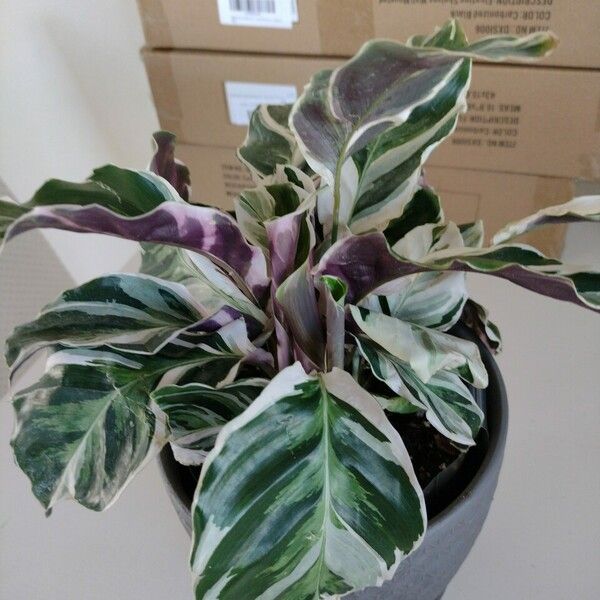
Plant Overview
Commonly known as the Lietze's Prayer Plant, Goeppertia lietzei is a tropical masterpiece originally hailing from the dense, humid rainforests of Brazil. Formerly classified under the Calathea genus, this plant is a "living dancer," folding its leaves upward at night as if in prayer—a phenomenon known as nyctinasty. Its elegant, feathered patterns make it look as though a Victorian painter spent hours detailing every leaf.
🔍 How to Identify
- 🌿 Leaf Pattern: Features striking, lance-shaped leaves decorated with alternating "feathers" of emerald and silver-green that radiate from the center vein.
- 🎨 The Underside: Flip a leaf over to find a stunning contrast; the bottom is a deep, matte burgundy or royal purple, typical of many forest-floor dwellers.
- 📏 Growth Habit: It typically grows in a lush, clumping fashion, reaching about 2 feet in height, making it a perfect mid-sized accent for indoor spaces.
🏡 In Your Garden
- 💧 The "Goldilocks" Humidity: Because it originates from the jungle floor, this plant craves high humidity. If the air is too dry, the edges of its beautiful leaves will quickly turn brown and crispy.
- ☁️ Filtered Light Only: Imagine the sunlight dappled through a thick canopy of trees; that is what this plant loves. Direct afternoon sun will scorch the delicate patterns right off the foliage.
- 🚰 Mineral Sensitivity: Like many in its family, it is sensitive to the chlorine and fluoride found in tap water. Using distilled water or rainwater will prevent "tip burn."
⚠️ Safety & Toxicity
- 🛡️ Pet Friendly: Great news for furry friends! Goeppertia lietzei is considered non-toxic to both cats and dogs.
- 👶 Child Safe: It is also safe for households with curious toddlers, as it contains no known irritants or poisons.
✨ Fun Fact
The massive reclassification from Calathea to Goeppertia occurred after DNA sequencing revealed they were distinct from their cousins; however, many nurseries still use the old name because "Calathea" sounds much more melodic to the ear!

Detailed Care Instructions
To help grow a Goeppertia Lietzei plant, also known as a Calathea White Fusion, you can follow these steps:
- Lighting: Place the plant in a location with bright, indirect sunlight. Avoid direct sunlight as it can scorch the leaves. Good options are near a north or east-facing window where it will receive bright but filtered light.
- Temperature and Humidity: Goeppertia Lietzei plants favor warm temperatures between 65-80°F (18-27°C). They also appreciate high humidity levels, ideally around 50-60%. You can increase humidity by using a humidifier, placing a tray of water near the plant, or misting the leaves occasionally.
- Watering: Keep the soil consistently moist but not waterlogged. Water the plant when the top inch of soil feels dry. Ensure good drainage, as these plants don't like to sit in standing water. In winter, reduce watering frequency slightly.
- Soil: Use well-draining soil that retains moisture. A mix with peat moss, perlite, and a small amount of compost or other organic matter can be suitable.
- Fertilizer: Feed the plant with a balanced liquid houseplant fertilizer diluted to half-strength every 2-4 weeks during the growing season (spring to summer). Avoid fertilizing in winter when the plant growth slows down.
- Pruning: Trim off any brown or yellow leaves to keep the plant looking tidy. Remove any damaged or diseased parts of the plant promptly.
- Propagation: Goeppertia Lietzei plants can be propagated through division. When the plant has outgrown its pot, divide it into separate clumps, each with healthy roots and new growth.
- Pest Control: Keep an eye out for common houseplant pests like spider mites, aphids, and mealybugs. Treat any infestations promptly with natural or chemical remedies.
By following these guidelines, you can provide suitable conditions for your Goeppertia Lietzei plant to thrive and grow.

Place in a window with dappled sun or a spot in the middle of a room. Or directly in a window facing west or east.

To water the Goeppertia Lietzei plant, you should first check the soil moisture level by inserting your finger about an inch deep into the soil. If the soil feels dry, it is time to water the plant. Slowly pour water into the soil until it starts to come out of the drainage holes at the bottom of the pot. Be sure to allow all of the excess water to drain away before placing the plant back in its usual spot. It is important to not let the plant sit in standing water, as this can cause root rot. Water the plant on a regular schedule, but adjust the frequency based on the plant's needs and the level of humidity in the room.
To fertilize Goeppertia Lietzei plant, you can follow these instructions:
- Choose a balanced, water-soluble fertilizer suitable for indoor plants. Ensure that the fertilizer is suitable for foliage plants.
- Dilute the fertilizer according to the instructions provided by the manufacturer. It is typically recommended to dilute it to half or quarter strength from what is mentioned for outdoor plants.
- Water the plant thoroughly before applying the fertilizer to prevent any potential root burn.
- Apply the diluted fertilizer to the soil around the plant. Avoid getting any fertilizer on the foliage as it can lead to burning or damage.
- Ensure that the soil absorbs the applied fertilizer and excess liquid drains away. Empty any excess water from the plant's saucer or tray after 15-20 minutes to prevent waterlogging.
- Fertilize once every two weeks during the plant's active growing season, typically spring and summer.
- Reduce the frequency of fertilization during the winter months to once a month or according to the plant's specific light and temperature requirements.
- Monitor the plant for any signs of nutrient deficiencies or excesses. Adjust the fertilization regimen accordingly if necessary.
- Regularly flush the soil with plain water to prevent the buildup of salts from fertilizers, which can harm the plant over time.
- Remember to read and follow the specific instructions provided by the fertilizer manufacturer for best results.
When growing the Goeppertia Lietzei plant, it is recommended to use a well-draining soil mix. The soil should be rich in organic matter and have a slightly acidic pH level between 5.5 and 6.5. A good soil mix can be comprised of peat moss, vermiculite, and perlite. It is important to avoid using heavy potting soils or those that contain a lot of clay as they can retain excess moisture and potentially damage the roots. Additionally, incorporating a slow-release fertilizer into the soil mix can help provide essential nutrients to the plant over time.
To propagate Goeppertia lietzei plant, also known by its scientific name, there are a few techniques you can use. Here are the details:
- Division: One of the most common methods to propagate Goeppertia lietzei is by division. Start by carefully removing the plant from its container or ground. Gently separate the root mass into smaller sections, making sure each section has healthy roots and foliage. Plant each divided section into a separate pot or desired location, ensuring proper watering and care.
- Stem cuttings: Take stem cuttings that are around 4-6 inches long, ensuring they have at least 2-3 nodes. Remove the lower leaves from the cutting. Dip the cut end in a rooting hormone powder to enhance root development. Plant the cutting in a well-draining potting mix, burying at least one node under the soil. Place the cutting in a warm and humid environment, keeping it moist. After a few weeks, roots will begin to develop, indicating successful propagation.
- Leaf cuttings: Select healthy and mature leaves from the Goeppertia lietzei plant. Cut the leaves into separate sections, ensuring each section has a visible vein. Plant the leaf sections in a well-draining rooting medium, burying the vein into the soil. Place the cuttings in a warm, humid environment, misting them occasionally to maintain moisture. With time, new plantlets will emerge from the veins, indicating successful propagation.
- Air layering: This method involves creating a new plant while it is still connected to the parent plant. Select a healthy stem and make a small incision, about halfway through the stem. Dust the incision with a rooting hormone. Wrap the wounded area with damp sphagnum moss, securing it with plastic wrap. Keep the moss moist and in place until roots start to form. Once the roots are well-developed, cut below the roots and pot the new plant.
Remember to provide adequate lighting, watering, and temperature conditions for best results. Patience and care are crucial in propagating Goeppertia lietzei successfully.
Common pests of the calathea white fusion include Mealybugs, spider mites, thrips. Make a habit of checking your calathea white fusion frequently for pests so that any infestations can be caught and managed early.








