Plant Overview
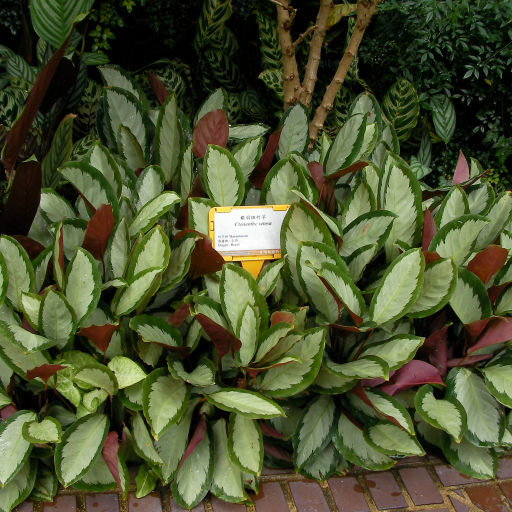
Known as the Painted Calathea or Silver Plate, Goeppertia picturata looks as though an artist carefully brushed metallic silver onto the center of every leaf. Native to the lush rainforests of Brazil, this tropical beauty belongs to the "Prayer Plant" family, famous for its rhythmic daily movements. It is a top choice for indoor collectors who want high-drama foliage that stays compact enough for a bookshelf or side table.
🔍 How to Identify
- 🎨 Leaf Patterns: Large, oval leaves featuring a striking contrast between deep, velvety forest-green edges and a shimmering, silver-white center.
- 🟣 Vibrant Undersides: When the leaves tilt, they reveal a stunning deep burgundy or wine-red underside, a classic trait of the Goeppertia genus.
- 🌿 Growth Habit: This plant grows in a dense, clump-forming habit, typically staying under two feet tall, which gives it a lush, bushy appearance.
🏡 In Your Garden
- ☁️ The Humidity Factor: Coming from the tropics, this plant craves high humidity. If the air in your home is too dry, the "Painted" edges of the leaves will quickly turn crispy and brown, so it loves a nearby humidifier or a steamy bathroom.
- 🧪 Water Sensitivity: It can be quite a "diva" regarding water quality. It is highly sensitive to fluoride and minerals found in tap water; using filtered water or rainwater is the secret to preventing leaf spotting.
- 🌥️ Light Nuance: Because it evolved on the dim rainforest floor, direct sunlight will actually bleach the beautiful metallic colors right out of the leaves. It thrives in "bright-indirect" light—think of the glow in a room with a sheer curtain.
⚠️ Safety & Toxicity
- 🐾 Pet Friendly: This is a fantastic choice for pet owners! It is entirely non-toxic to cats and dogs, so you don't have to worry if your furry friend takes a curious nibble.
- 👶 Safe for Kids: The plant contains no known toxins or irritants, making it a safe addition to any room in a family home.
✨ Fun Fact
Like its cousins, this plant performs a ritual called "nyctinasty." Every night, it uses a tiny "joint" at the base of the leaf to fold its foliage upward toward the sky like hands in prayer, then lowers them again in the morning to catch the sun.

Detailed Care Instructions
To grow a Goeppertia picturata plant, also known as Calathea ornata or the pin-stripe plant, you can follow these steps:
- Lighting: Place your plant in a location with bright, indirect sunlight. Avoid direct sunlight, as it can burn the leaves. Goeppertia picturata prefers shady and filtered light.
- Watering: Keep the soil consistently moist but not waterlogged. Water the plant when the top inch of soil feels dry to the touch. Ensure proper drainage by using a pot with drainage holes.
- Humidity: Goeppertia picturata loves high humidity. To increase humidity, mist the leaves regularly or place a tray filled with water near the plant to allow for evaporation. You can also use a humidifier.
- Temperature: Maintain a temperature range between 60-80°F (15-27°C). Avoid placing the plant in areas with cold drafts or hot, dry air.
- Soil: Use a well-draining potting mix that retains some moisture but doesn't become waterlogged. An ideal mix consists of peat moss, perlite, and compost.
- Fertilizer: Feed the plant with a balanced, water-soluble fertilizer once a month during the growing season (spring and summer). Follow the package instructions for proper dosage.
- Pruning: Regularly inspect your plant for any yellow or brown leaves and prune them off using clean scissors or pruning shears. This helps to maintain the plant's health and appearance.
- Repotting: Repot your Goeppertia picturata when the roots become crowded and start to grow out of the drainage holes. Choose a slightly larger pot and fresh potting mix that provides good drainage.
- Propagation: You can propagate Goeppertia picturata through division. Gently remove the plant from its pot and separate the rhizomes into smaller sections, ensuring each section has roots. Plant the divisions in separate pots and follow regular care instructions.
- Keep an eye out for pests: Monitor your plant for common pests like spider mites or mealybugs. If detected, treat with a suitable insecticidal soap or neem oil according to instructions.
Remember to provide regular care and attention, as Goeppertia picturata can be sensitive to environmental changes. With proper care, your plant should thrive and grow beautifully.

Place in a window with dappled sun or a spot in the middle of a room. Or directly in a window facing west or east.

Goeppertia Picturata plant prefers to be kept consistently moist, but not soggy. When watering, pour water slowly and evenly over the soil until it begins to drip out of the bottom of the pot. Allow the top inch of soil to dry out before watering again. Avoid letting the soil completely dry out, as this can stress the plant and cause leaves to wilt and yellow. In addition, make sure to avoid getting water on the leaves, as this can cause damage and encourage fungal growth. Watering should be done on a regular schedule, with the frequency depending on the temperature, humidity, and light conditions in the growing environment.
- Choose a quality fertilizer with a balanced N-P-K ratio, such as a 10-10-10 blend.
- Apply the fertilizer to damp soil around the plant, being careful not to let it touch the leaves.
- Water the plant generously after fertilizing to ensure the nutrients are distributed evenly.
- Repeat the fertilization process every 2-3 months during the plant's growing season (spring to fall).
- If the plant shows signs of nutrient deficiency (such as yellowing leaves or stunted growth), increase the frequency of fertilization or adjust the dosage according to the product's instructions.
The optimal soil for Goeppertia Picturata plant is one that is well-draining and aerated, with a slightly acidic pH level. Sandy loam soil with added perlite or vermiculite is ideal, as it allows for adequate water drainage while also retaining some moisture for the plant's roots. It is important to avoid using heavy, clay-rich soil that may become waterlogged and suffocate the plant's roots. Additionally, adding organic matter to the soil, such as compost or peat moss, can help increase moisture retention and nutrient levels. Overall, the soil should provide a stable and supportive foundation for the plant's growth and health.
There are several methods for propagating this plant. One method is through division, where you separate the plant into multiple sections by carefully cutting through the root system with a sharp, sterile knife. Another method is through stem cuttings, where you take a healthy stem cutting and remove any leaves from the bottom two-thirds of the stem.
Next, dip the cut end of the stem in rooting hormone and plant it in a well-draining soil mix. Keep the soil moist but not waterlogged, and place the cutting in bright, indirect light.
Another method is through leaf cuttings, where you take a healthy leaf and cut it into several sections, making sure each section has a vein running through it. Dip the cut ends in rooting hormone and plant them in well-draining soil. Keep the soil moist and place the cuttings in bright, indirect light.
Whatever method you choose, be sure to provide the new plant with the right conditions for growth, including adequate light, water, and nutrients. With patience and care, you can successfully propagate this plant.
Common pests of the calathea include Mealybugs, spider mites, thrips. Make a habit of checking your calathea frequently for pests so that any infestations can be caught and managed early.








