Plant Overview
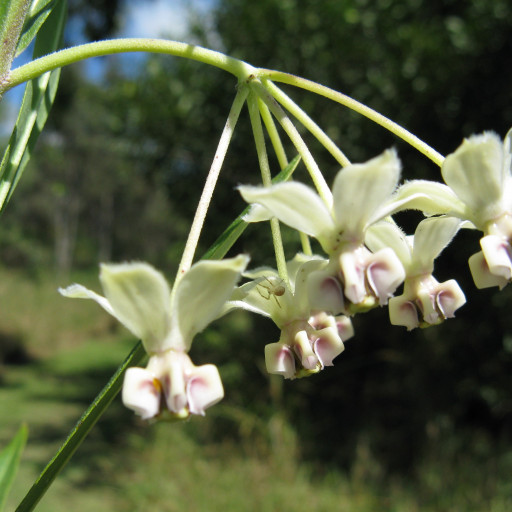
Known by whimsical nicknames like "Balloon Plant," "Swan Plant," or the cheekier "Hairy Balls," this South African native is a botanical conversation starter. While it belongs to the milkweed family, it is prized less for its subtle flowers and more for its translucent, inflated seed pods. It serves as a vital nursery for Monarch butterflies, making it a favorite for those looking to support local pollinators.
🔍 How to Identify
- 🎈 The Pods: Soft, lime-green spheres covered in thin, flexible bristles. These hollow, air-filled balloons are the plant's most striking feature.
- 🦢 The Flowers: Small, drooping clusters of creamy white, waxy blooms. When viewed from the side, the intricate inner structures resemble tiny white swans in flight.
- 🌿 The Foliage: Slender, lance-shaped leaves that grow in pairs along upright, light-green stems which can reach up to six feet in height.
🏡 In Your Garden
- 🦋 The Monarch Magnet: This plant is a primary "host plant," meaning Monarch caterpillars eat the leaves exclusively. Do not be alarmed if your plant is stripped bare; it is a sign of a successful butterfly garden!
- ☀️ Sun & Growth: It thrives in full sun and well-draining soil. Because it grows rapidly and can become quite top-heavy when loaded with "balloons," it may require staking in windier gardens.
- 🌬️ Seed Dispersal: When the pods eventually dry and crack open, they release seeds attached to silky white hairs that carry them away on the breeze.
⚠️ Safety & Toxicity
- 🚫 Toxic Status: Highly toxic if ingested.
- 💧 The Milky Sap: Like all milkweeds, the stems contain a white, latex-like sap rich in cardiac glycosides. This sap can cause significant skin irritation and is dangerous if it gets into the eyes.
- 🐾 Pets & Kids: It is considered poisonous to cats, dogs, and horses. Ensure it is planted in an area where curious pets or toddlers won't accidentally nibble on the leaves or pods.
✨ Fun Fact
Monarch caterpillars that feed on this plant actually store the plant's toxins inside their own bodies. This makes the caterpillars (and the eventual butterflies) taste incredibly bitter and toxic to birds, providing them with a "chemical shield" against being eaten!

Detailed Care Instructions
| Humidity | Normal |
| Lighting | Full Sun |
| Difficulty | Medium |
| Hibernation | Cold Period |
| Temperature | 20°C - 28°C |
| Hardiness Zones | 7A - 10B |
To grow Gomphocarpus Physocarpus, also known as the balloon plant or hairy balls, follow these steps:
- Choose a suitable location: Select a sunny spot in your garden where the plant will receive at least 6 hours of direct sunlight each day. The soil should be well-draining and fertile.
- Planting: Sow the seeds directly in the ground after the last frost date in your area. Clear the area of weeds and loosen the soil. Make small holes in the soil, spaced around 6 inches apart, and place 2-3 seeds in each hole. Cover the seeds with a thin layer of soil.
- Watering: Keep the soil consistently moist but not waterlogged. Water the plants regularly, especially during hot and dry periods. Avoid overwatering, as it may lead to root rot.
- Thin out seedlings: Once the seedlings reach a few inches tall, thin them out by removing the weaker ones to allow the strongest seedling in each hole to thrive.
- Provide support: As the plants grow taller, they might require support. Stake plants, or use a trellis or bamboo poles to prevent them from bending or falling.
- Fertilization: Gomphocarpus Physocarpus plants do not require heavy fertilization. However, you can apply a balanced, slow-release fertilizer to the soil at the beginning of the growing season to provide nutrients.
- Mulching: Apply a layer of organic mulch, such as straw or wood chips, around the plants to help retain moisture, suppress weeds, and regulate soil temperature.
- Pruning: Prune the plants if they become leggy or to shape them. Cutting back the stems by a third can promote bushier growth.
- Pest control: Monitor the plants regularly for common pests like aphids or milkweed bugs. If necessary, use organic insecticidal soap or natural predators to control the infestation.
- Harvesting: Balloon plants produce unique fruits with inflated, spiky husks. Allow the fruits to ripen on the plants until they turn brown and start to crack open. Harvest the pods before they fully open and collect the seeds for future planting.
Remember that Gomphocarpus Physocarpus is toxic if ingested, so exercise caution if you have pets or small children around.

Place in a bright room that is sun drenched almost all day. Or directly in a south-facing window.

To water this plant, it is important to first check the soil moisture level. Stick your finger about an inch into the soil and if it feels dry, it is time to water. Use a watering can or hose with a gentle flow to avoid disturbing the roots. Water around the base of the plant, making sure the water reaches the root zone. Avoid getting water on the leaves or flowers, as this can lead to disease or damage. Water deeply enough to saturate the root zone, but avoid overwatering as it can cause root rot. During hot, dry periods, this plant may require more frequent watering.
To fertilize this plant, you can use a balanced fertilizer with equal amounts of nitrogen, phosphorus, and potassium. Apply the fertilizer in the early spring before the plant starts to grow, and again in the mid-summer. Be careful not to over-fertilize and follow the instructions on the fertilizer package. Additionally, adding organic matter such as compost or well-rotted manure to the soil around the plant can provide extra nutrients. Water the plant well after fertilizing to allow the nutrients to be absorbed by the roots.
When planting the Gomphocarpus Physocarpus, it is best to use a well-draining soil that is rich in organic matter. The soil should have a slightly acidic pH level ranging from 5.5 to 6.5. It is also important to choose a soil that is not too high in nitrogen as this can cause the plant to produce too much foliage and not enough flowers. A good choice would be a soil that contains a mix of high-quality potting mix, perlite, and vermiculite. This type of soil will provide adequate drainage while retaining enough moisture for the plant's roots to thrive. Additionally, it is important to ensure that the soil is free of any pests or diseases before planting the Gomphocarpus Physocarpus. Regular fertilizer applications can also be beneficial for the plant's growth and overall health.
To propagate this plant, you will first need to acquire mature seedpods from a healthy and established plant. These seedpods should be allowed to fully ripen and turn brown before being harvested.
Once you have the seedpods, gently remove the seeds and plant them in a well-draining soil mixture. The seeds should be planted at a depth of about one-quarter inch and kept moist but not soaked.
The seeds will typically germinate within a few days to a few weeks, depending on the growing conditions. Once the seedlings have emerged, they should be kept in a warm, well-lit area with plenty of indirect sunlight.
As the seedlings grow, you will need to thin them out to ensure proper spacing and nutrient uptake. This can be done by removing weaker or smaller seedlings.
After several weeks or months, the seedlings will be ready to be transplanted into larger pots or directly into a garden bed. Ensure that the soil is well-draining and rich in nutrients to promote healthy growth. With proper care and attention, your propagated plants should mature into healthy and thriving specimens.
Common pests of the balloon cotton bush include Scale insect, mealybugs, spider mites, aphids. Make a habit of checking your balloon cotton bush frequently for pests so that any infestations can be caught and managed early.








