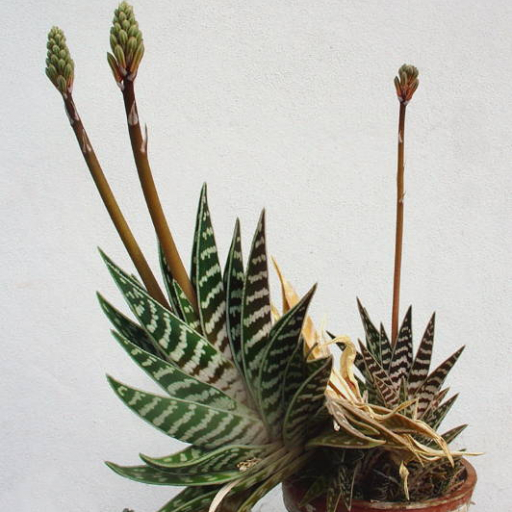
Plant Overview
Commonly called the Partridge Breast Aloe or Tiger Aloe, this stunning South African native is a master of geometric camouflage. In its natural habitat, its mottled patterns help it blend into the dappled shadows of rocky outcrops. It has been a prized indoor plant for over 300 years, loved for its architectural "V" shape and its ability to thrive even when slightly neglected.
🔍 How to Identify
- 🍃 The V-Shape: The thick, succulent leaves are arranged in three distinct ranks, giving the plant a triangular, structural appearance as it grows.
- 🦓 Tiger Stripes: Each dark green leaf is decorated with horizontal bands of white, irregular spots that resemble the markings on a partridge's breast.
- 🚫 Smooth Margins: Unlike many of its prickly Aloe cousins, the edges of these leaves are relatively smooth, featuring only tiny, harmless white serrations.
- 🌸 Salmon Blooms: In late winter or early spring, it sends up a sturdy flower spike bearing clusters of pendulous, tubular flowers in shades of salmon-pink or dull red.
🏡 In Your Garden
- 🏜️ Drainage is Key: This plant has thick, fleshy roots that are highly susceptible to rot if kept in soggy soil. It thrives in a gritty, cactus-leaning mix and prefers its "feet" to stay dry between deep waterings.
- ☀️ Light Nuance: While it craves bright light to maintain its compact shape, intense midday sun can sometimes "bronze" or bleach the leaves. A spot with bright, indirect morning sun is its "sweet spot."
- 🪴 Slow & Steady: It is a slow grower and rarely needs repotting. In fact, it often flowers more reliably when its roots are slightly snug in their container.
⚠️ Safety & Toxicity
- 🐾 Toxic to Pets: Gonialoe variegata contains saponins and anthraquinones. If ingested by cats or dogs, it can cause vomiting, lethargy, and digestive upset.
- 👶 Child Safety: While not life-threatening, the sap can cause a mild stomach ache if eaten by curious toddlers, and the leaf tips can be quite sharp.
- 🖐️ Skin Sensitivity: Most people handle this plant without issue, but the sap may cause minor skin irritation for individuals with specific latex allergies.
✨ Fun Fact
This was one of the very first succulents ever exported from South Africa to Europe. It was officially documented in the diary of Simon van der Stel, the first governor of the Cape Colony, during an expedition way back in 1685!

Detailed Care Instructions
To help grow a Gonialoe Variegata plant, also commonly known as the tiger's jaw plant, here are some steps you can follow:
- Choose the right pot: Select a well-draining pot with drainage holes to prevent waterlogging.
- Potting mix: Use a succulent or cactus mix that has good drainage. Avoid using regular potting soil as it can retain too much moisture.
- Planting: Gently place the plant in the pot, making sure the roots are covered with soil. Leave some space at the top to allow for watering.
- Location: Place the plant in a spot that receives bright, indirect sunlight. Avoid direct sunlight as it can scorch the leaves.
- Watering: Water the plant deeply but infrequently. Allow the soil to dry out completely before watering again to avoid over-watering, which can lead to root rot. Check the soil moisture level by inserting your finger about an inch into the soil.
- Temperature and humidity: Gonialoe Variegata prefers average room temperatures between 60-80°F (15-27°C). These plants are tolerant of dry conditions and do not require high humidity.
- Fertilization: Feed the plant sparingly during the growing season (spring and summer) with a diluted succulent fertilizer, following the instructions on the package. Avoid fertilizing during the winter months when the plant is dormant.
- Pruning: If necessary, you can trim off any dead or damaged leaves to keep the plant tidy.
- Propagation: Gonialoe Variegata can be propagated through offsets or leaf cuttings. Allow the offset or leaf cutting to dry out for a day or two before planting it in well-draining soil.
- Pests and diseases: Watch out for common succulent pests such as mealybugs or scale insects. Treat any infestations with an appropriate insecticide or consider using organic solutions like neem oil.
Remember that each plant might have specific care requirements, so keep an eye on your Gonialoe Variegata's growth, adjust care as needed, and enjoy watching it flourish.

Place in a window with dappled sun or a spot in the middle of a room. Or directly in a window facing west or east.

To water the Gonialoe Variegata plant, you should follow these guidelines. Start by examining the soil moisture level to determine if watering is required. Gently insert your finger about an inch into the soil, near the base of the plant, to check for dryness. If the soil feels dry at this depth, it is an indication that the plant needs watering.
When watering, use a watering can or a hose with a gentle spray nozzle attachment to avoid damaging the delicate leaves of the plant. Ensure that the water is at room temperature or slightly lukewarm for best results.
Water the plant until you see water coming out from the drainage holes at the bottom of the pot to ensure thorough watering. However, avoid overwatering and allowing the plant to sit in standing water, as it can lead to root rot and other problems.
Maintain an appropriate watering schedule by providing water only when the top inch of the soil feels dry. This can vary depending on factors such as temperature, humidity, and the size of the pot. Generally, smaller pots may require more frequent watering compared to larger ones.
During the winter months or when the plant is in dormancy, reduce the frequency of watering as it will require less moisture. This is because the growth rate slows down during this period.
It is essential to note that the watering needs of the Gonialoe Variegata plant may vary depending on its specific environment, so it is crucial to monitor the soil moisture and adjust the watering routine accordingly.
To fertilize the Gonialoe Variegata plant, follow these instructions:
- Choose a balanced fertilizer specifically formulated for succulent plants, preferably one with an NPK ratio of 10-10-10 or similar.
- Dilute the fertilizer according to the package instructions. The recommended concentration is typically 1/4 to 1/2 strength.
- Water the plant thoroughly a day before fertilizing. This helps prevent fertilizer burn and ensures the soil is hydrated.
- Apply the diluted fertilizer to the soil around the base of the plant, avoiding direct contact with the leaves or stems.
- Use a watering can or sprayer to evenly distribute the fertilizer. Take care not to over-fertilize, as this can lead to nutrient toxicity.
- After fertilizing, water the plant lightly to allow the nutrients to penetrate the soil. Avoid overwatering, as excessively soggy soil can cause root rot.
- Fertilize the Gonialoe Variegata plant once every 2-4 weeks during the growing season, which typically spans spring and summer.
- During the dormant season (fall and winter), reduce or cease fertilization to allow the plant to rest.
Remember to always read and follow the instructions provided with your specific fertilizer product, as different brands may have slightly different guidelines.
When it comes to selecting the appropriate soil for your Gonialoe variegata plant, it is important to consider its specific needs. This plant thrives best in well-draining soil that can prevent waterlogging and allow excess moisture to drain away. The ideal soil for this plant should possess good drainage properties to prevent the roots from sitting in water, which could lead to root rot and other issues.
Additionally, a suitable soil mix for your Gonialoe variegata should be nutrient-rich, providing a fertile environment for the plant to grow and develop. It is beneficial to choose a soil mix that is enriched with organic matter, such as compost or well-rotted manure, as this will provide essential nutrients and enhance the overall soil structure.
Moreover, the soil pH is an essential factor to consider. Gonialoe variegata plants generally prefer slightly acidic to neutral soil conditions. A pH range between 6.0 and 7.0 is usually recommended. To determine the pH level of the soil, you can use a simple soil testing kit or consult your local garden center for assistance.
In summary, when choosing soil for your Gonialoe variegata plant, opt for a well-draining mixture enriched with organic matter and maintain a slightly acidic to neutral pH level. Combining these factors will create an optimal growing environment for your plant, supporting its health and overall development.
Propagation of Gonialoe Variegata can be achieved through various methods. Here are the steps to propagate this plant:
- Select a healthy and mature Gonialoe Variegata plant with strong and sturdy stems. Ensure that the plant you choose does not have any signs of disease or pest infestation.
- Prepare a well-draining potting mix that consists of equal parts of perlite, vermiculite, and peat moss. This mix provides good moisture retention without becoming waterlogged.
- Gently remove the plant from its current pot, being careful not to damage the roots. Shake off excess soil and inspect the root system for any root rot or damage. Trim any damaged roots using sterilized pruning shears.
- Examine the plant for any offsets or pups. These small plantlets typically grow at the base of the mother plant and can be used for propagation. Alternatively, you can also propagate using stem cuttings.
- For offset propagation, gently separate the offset from the mother plant using sterilized pruning shears or your hands. Ensure that the offset has some roots attached to it.
- If using stem cuttings, select a healthy stem and cut it just below a node, making a clean and slanted cut. The cutting should be around 4-6 inches long.
- Allow the offset or stem cutting to dry and callus over for a day or two. This helps prevent rotting when placed in the growing medium.
- Once callused, prepare small individual pots filled with the prepared potting mix. Make a small hole in the center with your fingers or a pencil.
- Plant the offset or cutting into the prepared hole, ensuring that the roots are covered with the potting mix and the plant is securely anchored.
- Water the newly potted offset or cutting thoroughly, ensuring that the soil is evenly moist but not waterlogged. Place the pot in a location with bright, indirect sunlight.
- Maintain a consistently warm temperature of around 70-80°F (21-27°C) to promote root development. Avoid exposing the plants to extreme temperature fluctuations or drafts.
- Keep the soil slightly moist throughout the propagation process. Avoid overwatering, as it can lead to root rot. Water the plant when the top inch of soil feels dry to the touch.
- After a few weeks, the roots should start developing and the plant will establish itself in the pot. At this point, reduce watering slightly to avoid excessive moisture.
- After a few months, the propagated Gonialoe Variegata should be well-established and can be treated as a mature plant, requiring the same care as the mother plant.
It's important to note that while these instructions provide a general guide to propagating Gonialoe Variegata, individual experiences may vary. Adjust the techniques based on the plant's response and specific environmental conditions.








