Plant Overview
The Velvet Jewel Orchid, scientifically known as Goodyera velutina, is a miniature treasure of the forest floor. Unlike most orchids that flaunt massive, colorful blooms, this "Jewel Orchid" is prized primarily for its mesmerizing foliage that looks as though it was crafted from royal dark silk. Native to the damp, shaded woodlands of East Asia, it has become a cult favorite among terrarium enthusiasts and indoor gardeners who prefer "goth" or moody botanical aesthetics.
🔍 How to Identify
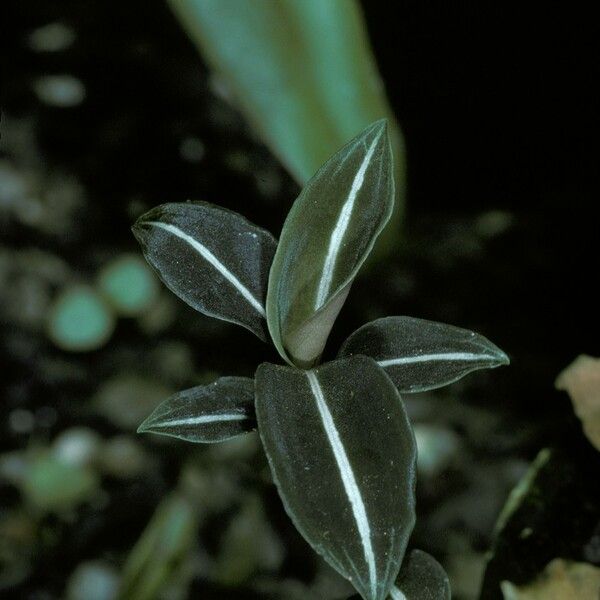
- 🍃 The Foliage: The leaves are the main attraction—small, oval, and covered in a dense, velvety nap. They range in color from deep forest green to a smoky, near-black purple.
- ⚡ The Midrib: A striking, crisp white or pale pink stripe runs perfectly down the center of each leaf, providing a high-contrast "lightning bolt" effect.
- 🌸 The Bloom: In late summer or autumn, it sends up a thin, fuzzy stalk topped with tiny, tubular flowers. These blossoms are typically a soft white or brownish-pink and have a crystalline, sparkling texture under light.
🏡 In Your Garden & Home
- ☁️ Humidity is Key: Because it naturally grows in the damp leaf litter of forests, this plant thrives in high humidity. It is an ideal candidate for a closed terrarium where the air stays moist, preventing its delicate leaf edges from crisping.
- 🌱 Terrestrial Roots: Unlike tropical orchids that grow on trees (epiphytes), Goodyera velutina is terrestrial. It prefers a "breathable" but moisture-retentive substrate like long-fiber sphagnum moss or a very light, peaty potting mix.
- 🌑 Low Light Lover: This plant is sensitive to the sun. It has evolved to capture the dim "flicker" of light reaching the forest floor; direct sunlight will quickly bleach or burn its velvety leaves.
⚠️ Safety & Toxicity
- ✅ Status: Generally considered non-toxic.
- 🐾 Details: While not known to be poisonous to cats, dogs, or humans, it is best to keep it out of reach of curious nibblers. The delicate leaves are easily damaged, and the plant's slow growth rate means it doesn't recover quickly from being snacked on.
✨ Fun Fact
The genus name Goodyera honors John Goodyer, a 17th-century English botanist, but the species is often called a "creeping" orchid because it spreads horizontally via rhizomes, slowly carpeting the ground in a layer of dark velvet.

Detailed Care Instructions








