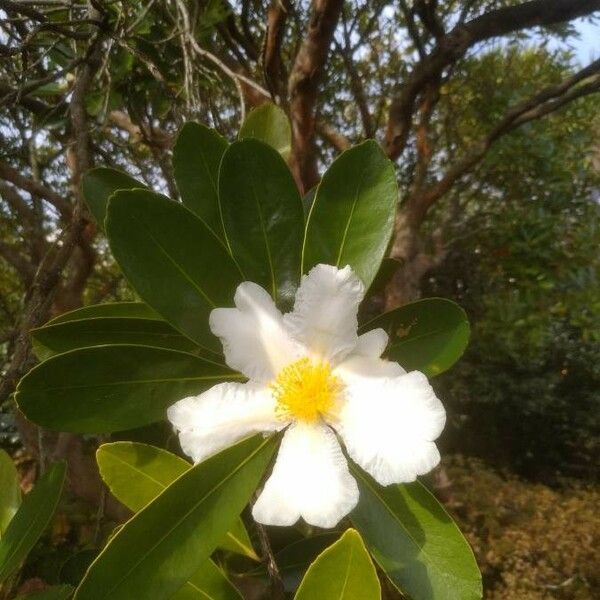
Plant Overview
Known affectionately as the "Yunnan Fried Egg Plant," Gordonia yunnanensis is a show-stopping evergreen that bridges the gap between a sturdy woodland tree and a delicate ornamental. Hailing from the misty, high-altitude forests of Yunnan, China, this Camellia relative is prized for its late-winter blooms that bring life to the garden when most other plants are still dormant. Its thick, lustrous foliage provides year-round privacy and a touch of subtropical elegance to temperate gardens.
🔍 How to Identify
- 🍳 The "Fried Egg" Bloom: Large, saucer-shaped flowers featuring five snowy-white petals surrounding a dense, protruding cluster of bright orange-yellow stamens.
- 🍃 Lustrous Foliage: Long, lance-shaped leaves that are thick, leathery, and finished with a polished, waxy sheen on the upper surface.
- 🌳 Upright Habit: Typically grows as a slender, upright small tree or a large multi-stemmed shrub, reaching heights of 10–15 feet in garden settings.
🏡 In Your Garden
- ⛰️ Highland Heritage: Because it originates from mountainous regions, it thrives in well-draining, acidic soil. If your garden soil is alkaline, it is best to grow this beauty in a large container with ericaceous (acid-loving) compost.
- 💧 Moisture Balance: It enjoys consistent humidity and moisture but "hates wet feet." Ensuring the soil is rich in organic matter helps retain moisture without becoming waterlogged, which can lead to root rot.
- ⛅ Light Strategy: It performs best in filtered sunlight or "dappled shade." While it can handle more sun in cooler coastal areas, afternoon shade is essential in hotter inland climates to prevent the glossy leaves from scorching.
⚠️ Safety & Toxicity
- ✅ Generally Safe: Gordonia yunnanensis is not known to be toxic to humans, dogs, or cats.
- 🧤 Pruning Note: While the plant is safe, the woody stems are quite tough. Always use sharp, clean bypass pruners to avoid jagged cuts that could invite fungal pathogens into the tree.
✨ Fun Fact
🐝 The Bee’s Breakfast: The massive "boss" of yellow stamens in the center of the flower isn't just for show; it produces a high volume of pollen that acts as a vital early-season food source for honeybees waking up from winter.

Detailed Care Instructions







