Plant Overview
Known colloquially as the "Worm-Slayer," Gorgonidium vermicidum is a rare and striking aroid native to the rocky slopes of the Peruvian and Bolivian Andes. Its name is a nod to the snake-haired Gorgons of Greek mythology, referencing its wild, twisting foliage, while its species name reveals its historical use in traditional medicine. This plant is a true "underground treasure," spending part of the year hidden away as a dormant tuber before erupting into a display of architectural leaves.
🔍 How to Identify
- 🐍 Foliage Structure: The leaves are deeply divided and lobed, appearing almost like spreading fingers or a crown of serpents reaching out from the central stem.
- 🎨 Patterned Petioles: The stalks (petioles) that support the leaves often feature intricate mottling or dark spotting, a common trait among many tuberous aroids that adds to its exotic look.
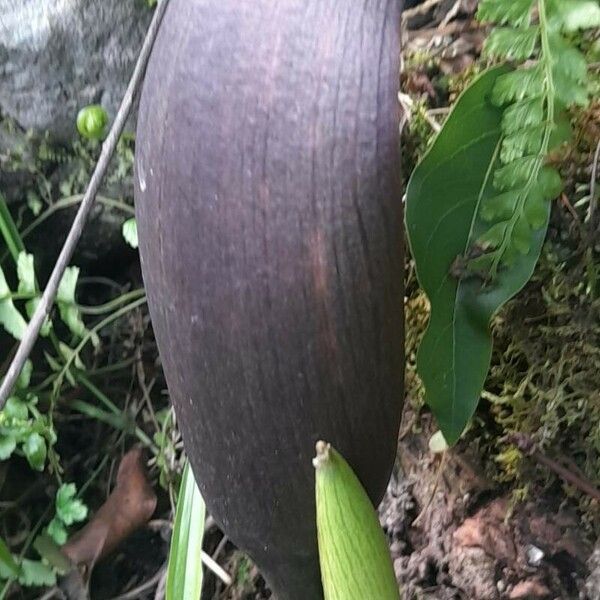
- 🕯️ The Inflorescence: Like its cousins the Philodendrons, it produces a spathe and spadix. However, these often emerge close to the soil level and are characterized by earthy, muted tones of green, brown, or deep purple.
🏡 In Your Garden
- 💤 The Dormancy Cycle: This plant is not a "year-round" green companion. It grows from a tuber and will naturally die back to the ground to rest. If your plant loses its leaves, do not panic—it is simply retreating to its tuber to store energy for the next season.
- 🏜️ Drainage is Vital: Because it originates from mountainous regions, it is highly susceptible to tuber rot. It thrives in a gritty, inorganic-heavy soil mix that mimics rocky slopes, rather than heavy, moisture-retaining potting soils.
⚠️ Safety & Toxicity
- 🚫 Toxic to Humans & Pets: Like most members of the Araceae family, this plant contains raphides—tiny, needle-like crystals of calcium oxalate.
- 👅 Irritant: If any part of the plant is chewed or swallowed, it can cause immediate swelling of the mouth and throat, intense burning, and digestive distress. Keep it well out of reach of curious cats, dogs, and toddlers.
✨ Fun Fact
The name vermicidum literally translates to "worm-killer." In its native regions, the tuber of this plant was historically crushed and used in traditional preparations to treat intestinal parasites, though this is highly dangerous and should never be attempted at home!

Detailed Care Instructions







